🌺🌺🌺🌺🙏🙏🙏🙏🌺🌺🌺🌺
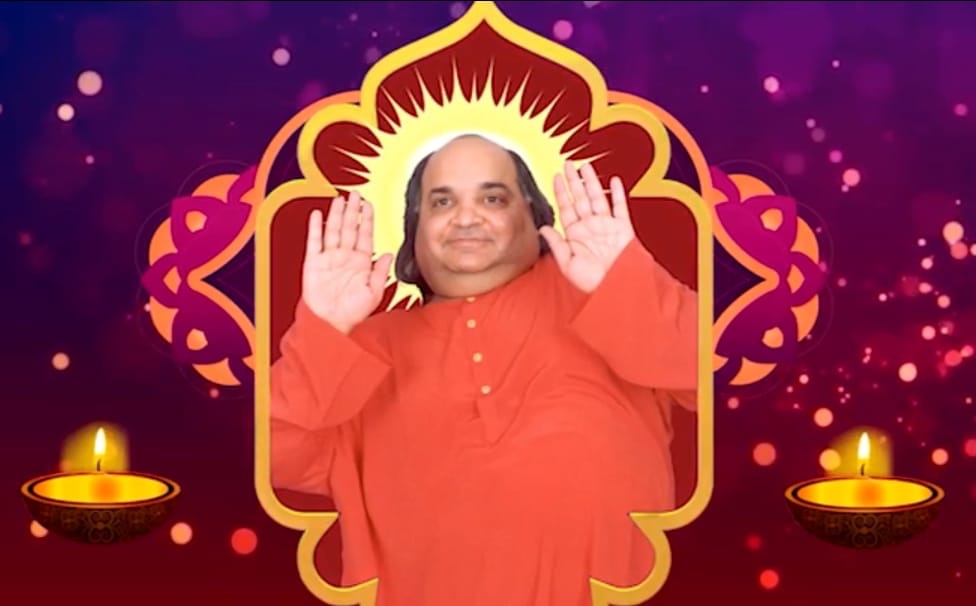
Video courtesy : Manya and Harshul Gupta
🌺🌺🌺🌺🙏🙏🙏🙏🌺🌺🌺🌺
Video courtesy : Manya and Harshul Gupta
🌺🌺🌺🌺🙏🙏🙏🙏🌺🌺🌺🌺
Video credits : Shashwat Bhardwaj

Swamiji says …
” ‘Impatience’ is, most certainly, the numero uno vice in today’s world. We are constantly rushing, overspeeding, overtaking and seeking immediate gratification. ‘Who has the time to be anything but impatient ?’ we counter. It is easy to get angry, lose control, scream and yell, but nearly impossible to exercise restraint and keep calm, when things don’t pan out the way we would want them to. It is during such moments, that the ‘impatient’ streak in us, hurtles through the checkposts of caution, patience and tolerance at breakneck speed, with complete indifference and arrogance ; as though, trying to wipe out the very existence of timid and humble ‘patience’. And, not surprisingly, it succeeds in doing so to a certain extent !”
“ Remember, it is not easy to be patient, as one needs a lot of inner strength to stop himself from reacting, in a predictable manner, in a particular situation,and, this strength is not present in each one of us. Discarded and rejected by most of us without any misgivings or regret, ‘patience’ has indeed become a rare and exceptional quality. We find it taxing and demanding to be patient; so much so, that even on being admonished by others for playing truancy with ‘it’ and not abiding by ‘its’ simple rules, we refuse to give up our rigidity and continue to behave in an impatient manner.”
” Guidelines from well wishers like – ‘Can you please be patient !’ ‘ ‘Have some patience! The best is still to come !’ prove to be totally ineffective as we refuse to change our adamant viewpoint. Foolish that we are, we fail to understand the importance of these words that are said for our good; to instil hope in us; to slow us down; to warn us; and to advise us. But, do we pause, even momentarily, to listen to the strength, hope and belief that these promising words have in them? Their resonance falls on deaf ears, as the powerful currents of impatience, makes us mock the futility of being in the ‘patient’ lane of this fast-paced world. Even our response to such advice is a nonchalant shrug, accompanied by a telling look, that speaks volumes about what we think of being patient. A look of utter disbelief that says out loud and clear – ‘What? Patience and me don’t go hand in hand ! ‘ can be read by all easily. The fear of being viewed as a ‘loser who waits’ makes us forget completely that ‘patience’ is the greatest treasure that we possess. It is not a sign of weakness, but, one that signifies endurance, tolerance and gives us the strength to face and solve problems.”
“ Patience is not to be mistaken with ‘waiting’ or ‘inaction’. To be patient means to simply accept that things will happen and occur in their own time. Perhaps the best example of this is when we are caught in a major traffic jam. There are some of us who constantly honk and create a ruckus till the traffic finally moves; and, then there are some who talk with friends or relatives over the phone; listen and sing alongwith the songs playing on the radio and take a much needed reprieve from their hectic life. Finally, all of us, do reach our destination. Some a little early, some a little later. But, it is the patient ones amongst us, who enjoy and savour their journey, be it in a car or in life.”
“‘Dheeraj’ aur ‘dhairya’ insaan mein zaroor hona chahiye, kyunki ‘sabr’ hummey doosron ke prati namr banata hai, unke dukh dard baantna sikhata hai, unki dekh bhaal karna sikhata hai aur ‘adhyatmik’ path par ‘shradha’ se chalne ka raasta dikhata hai!”

Swamiji says …
” ‘Achcha ‘bartaav’ karne se swayam ko shanti milti hai!’ After all, all ‘it’ requires from us is a genuine, sparkling smile while interacting with others; saying gentle words to one and all ; sharing dutifully and cheerfully; lending a ear to one’s woes,and, helping one in distress, in the most unexpected manner. Aren’t these the simplest and easiest things to do? But man begs to differ as the weird complexes and insecurities that nest within him, make him don an armour of anger, arrogance and atrocious behaviour. At times, the self – created ‘ashanti’, negativity and despondency within him makes him respond, retaliate and react to everyday life situations in the most aggressive and antagonistic manner.”
” ‘Bura bartaav karte huey, hum yeh bhool jaate hain ki humare ‘bartaav’ mein jo ‘abhimaan’ hota hai, woh zyaada samay tak jeevit nahi rehta hai, kyunki ek na ek din, insaan ka ghamand toot ta hi hai!’ We tend to forget – ‘Pride goes before a fall !’ ‘Parantu achche bartaav mein ‘shishtachaar’, ‘bhavyta’ aur ‘divyta’ saaf jhalakti hai ! Sab ko nazar aati hai!’ One who has acquired and harboured such exceptional attributes is always admired and appreciated by others for his surreal qualities. Blessed are such people as not only are they at peace with themselves, but also make others around them aware of the importance of ‘achcha bartaav’! ‘Aise logon ki ‘achchai’ khud ko bhi shaant rakh ti hai aur doosre logon ko bhi ‘shaant’ aur ‘achcha’ bartaav karne ka ehsaas dilati hai!’ ”
” The choice is ours to make! Do we want to win over people’s hearts and minds with our heart-warming attitude and behaviour,or, rile others with our rude and temperamental demeanour? We get what we give! One nasty, impolite word; one snigger and a smile steeped in sarcasm, from us, will definitely evoke a string of acrimonious words and a hostile treatment, from the other person, and his sudden rant could leave us dumbfounded and aghast. But then perhaps we deserved it ,too, as our ‘bura bartaav’ could have instigated him to behave in an obnoxious way. Say good and do good ; and only then will good come your way.”
” Achcha ‘bartaav’ aagey ke raastey khol deta hai!’ The indelible impression that one’s ‘achcha ‘bartaav’ leaves on the minds of others, enables the creation of new opportunities for him ; as respect and admiration for his warm and honest ‘bartaav’ makes them reciprocate in an equally cordial manner. Just try being difficult, disrespectful and disdainful and see blocks and hurdles being created for you and avenues being closed on your face. At the same time, someone else’s jibes, constant needling and poking should not disturb you to such an extent, that you too begin to replicate the other person’s bad behaviour.”
” ‘Maryada Purushottam’ – Lord Ram is remembered for His ‘bartaav’ which remained the same for a ‘raja’ or ‘runk’. Not once did He waver and cross the line of ‘maryada’ that He had drawn for Himself. He remained unfazed and unaffected by His changing circumstances. Neither did He blame anyone while giving up His kingdom to His brother; nor did He hold any grudges against anyone during His long exile of fourteen years. His attitude was filled with love and goodness for all, as He knew that ‘achcha ‘bartaav’ swayam ‘sukh’ hai!’ We learn from Him that ‘achcha bartaav’ should never be a reflection of one’s state or circumstances, but, rather of one’s character.”
“ Even in the most trying times, when the mind is tired and frustrated and the heart is craving to weep, one must ensure that his behaviour remains unchanged; as good as it always was. While in such circumstances one might feel that the act of smiling, being gracious or simply saying a ‘thank you’ might seem futile and a waste of time; it is the effort put in, in ignoring one’s own suffering,and, being mindful of how others might feel because of his actions, is what makes a person grow spiritually, as only then does he begin to find happiness in the joy of others. After all, good behaviour is an honest interpretation and expression of God’s nature itself, and He will rejoice on seeing His children imbibe His virtues and ‘divyata’!”

Swamiji says …
” There is no denying that ‘death’ – ‘mrityu’ is the ultimate truth of life. If there is anything constant about life ; about being alive – it is only that sooner or later ‘it’ will come to an end. And, that end is death; ‘mrityu’! ‘Har insaan ki ‘mrityu’ nishchit hai ! Yeh hona hi hai!’ “
” Yet, we live in an era where man is constantly seeking numerous fleeting pleasures of life ; and, is almost wilfully entangling himself in the ‘ ‘Mayajaal’ jo humara jeevan hai, aur iss sansaar ko, joh ki asal mein ek ‘mithya’ hai, issey ‘vaastavik satya’ samajhta hai, jiss mein woh sada jeeta hi rahega !’ Thus, the very thought that the life of comfort and luxuries that is being enjoyed by him today, no matter how meaningless or destructive it could be, will have to come to an end one day, brings dread, fear and trepidation in his heart. It should come as no surprise, then, that man associates death with darkness and grief; sorrow and pain; which is why any mention of death is shunned by most of us,and, we shy away from discussing it – be it at our dinner tables or in a larger narrative. Each one of us fervently nurses a silent, but, strong sense of false surety, that death can never ever touch us, and, we will continue to live for ever with those we love.”
” Why does man refuse to accept the inevitability of death ? Is man not trying to fool himself by staying distant from the idea of death; averting his eyes from the shadow of the finality of death that looms larger than life? He tries to outsmart death by setting one goal after another, planning and preparing for the future that he feels will never be cut short by death; certain that death could give him an extension by giving his unfinished goal due consideration!”
” Look at the farmer who toils in the fields.Doesn’t he also plan the sowing of seeds and watering of his crops according to the particular time period when he will reap his harvest ? Does he shed tears when he harvests his crops ? Is he filled with fear on the day he harvests his fields? No. In fact, the day of harvesting is a day of celebration for him. We do not find a farmer lamenting the ‘cutting’ of a crop that no longer stands tall in his field.Thus, like the farmer who acts in accordance with the lifecycle of his crops, we too, must live and act in accordance with the cycle of life and death.”
“We must thus, imbibe in our thoughts and actions, the eventuality of death. Because, when we do so, we will truly begin to appreciate all that really matters and pay attention to the outcome of our ‘actions’, our ‘karm’. Death highlights the transient nature of the world around us ; the positions that we hold in society and organizations; the relationships that we cherish ; even the goodwill of others – everything around us is temporary. ‘Jo kuch bhi hum dekhte hain, woh sab mithya hai !’ Acknowledging the reality of death early on in life, helps us in keeping a check on ourselves; to reflect when we overexert or spend ourselves on objectives that are not in line with our personal and spiritual development as only then do we realize that the short life that we have been blessed with has to worthy and meaningful.”
” Life appears to be a perennial source of treasures till the time we confront death.There are numerous examples of this. Men and women waste time chasing money when they already have enough,and, repent when impending death comes their way, for not having spent enough time with their family.
Then, there are those who spend so much time involved in family matters and relationships, that the chapter of their life closes, without them having achieved anything on any front – neither personal nor spiritual.”
” The most relevant teaching that the certainty of death teaches us is to value ‘time’ – and to appreciate every moment and opportunity that life presents us with during our journey from birth to death. It gives us the perspective that even though achievements, relationships and milestones are important, they will eventually fade away, but, what is of greater significance is ‘what’ we did with our lives; ‘how’ we lived our lives ? Death, too, should be filled with admiration on seeing us welcome it, well prepared to exit the world with grace and dignity, with His name on our lips, looking forward to merging with our Creator.”