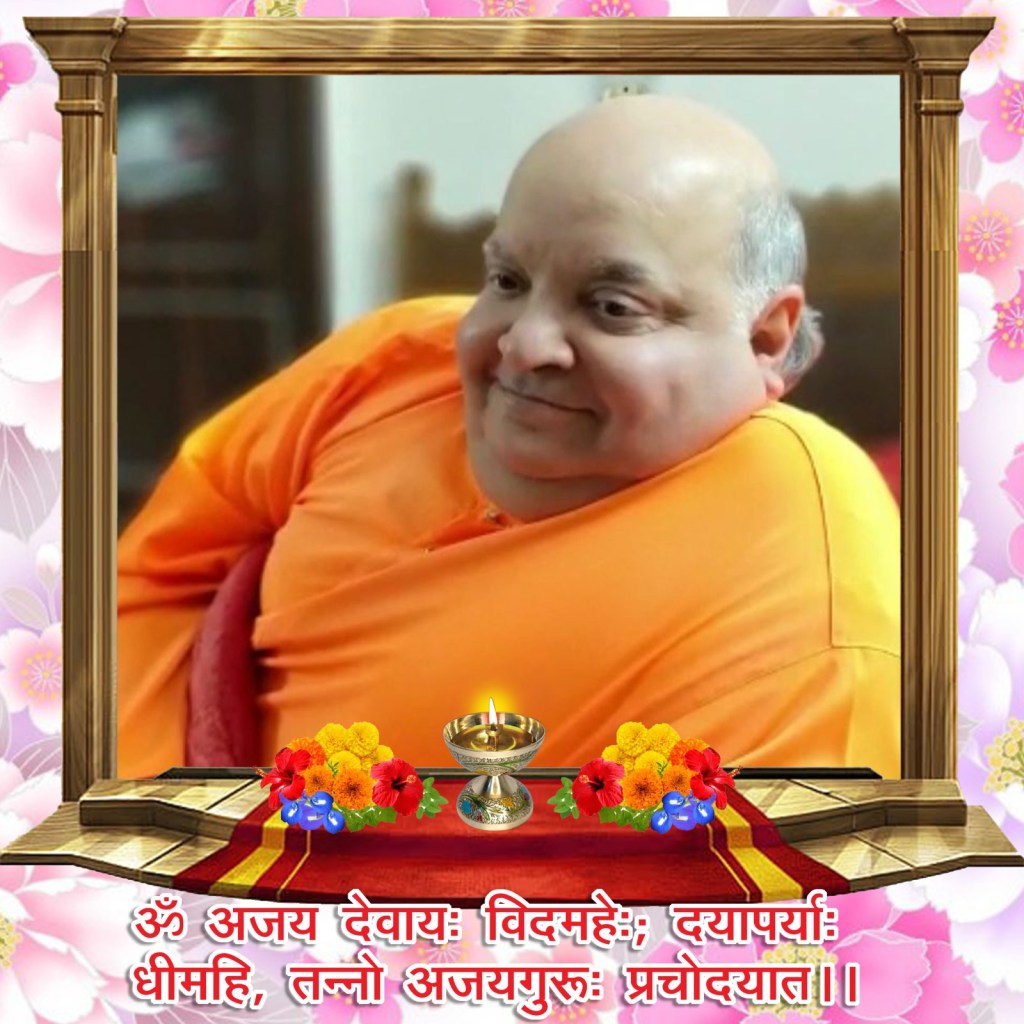
‘अपनी किस्मत स्वयं बनाओ… ‘

Swami ji said …

How many of us can honestly say that we have never said – ‘ किस्मत ने हमारा साथ नहीं दिया ‘ – Luck did not go our way. Just a handful , maybe. Most of us are guilty of having said these words at some point of our lives. Some of us have not only said this many times, but also in many different ways. We lament our lack of good fortune – which in sharp contrast – is enjoyed by the other lucky ones. In fact, some of us even while away precious time – only talking about all the ‘misses’ in our life. We love mentioning how if ‘this’ had happened or ‘that’ had not happened, our life would have been so much better. What we do not realise is – that by saying this – we are unburdening ourselves of the guilt and fear of thinking that perhaps it was we who did not give it our best when we had the chance. Our complaining is our way of turning away from facing our own truth.

But such false lamentation is nothing but a waste of time. And, to add to our woes – is the conclusion that we have drawn up about ‘kismet’ being some kind of an exotic dish – that is served hot and ready on a platter – without us having to raise a finger. What we need to remember at all times is that – ‘kismet’ will never reward us with any success – until we are intelligent to see the possibilities, and , seize the opportunity – that it unfolds before us – every day of our lives , but , we fail to see it and do not make any effort to turn the tide in our favour by following it up with determined efforts.

Life is abundant with opportunities – but we need to have the sight to see them. God gives us many blessings. We just have to keep ourselves ready to receive them. This can only be done if we are in a constant state of self-reflection and self-improvement. Only then can we catch the train of luck in time to take us quickly towards success. If we have failed in the past, it is most probably our own fault – but, we must be open to the idea of rectifying the mistakes that were made by us in the past. As long as we learn from even the times we have missed ‘chances’ and ‘opportunities’ – we are on the right track. Once we have truly learnt the cost of not being ready or prepared, it is highly unlikely, we will ever repeat the same mistake again. So instead of blaming luck, and feeling dejected by past rejections, we must use those memories as reminders of staying vigilant and sharp. This will only help us on the way ahead in life.

The power to shape our destiny lies not with the whims of fortune, but, rather within us. Yes, what we face today is a result of our past ‘karma’, but what we do in those circumstances is wholly our own choice. Even when things seem dull, and, we feel that there is nothing positive on the horizon for us, we must believe in the infinite possibilities of life. Karna lived his whole life in bitterness and resentment towards those who belittled him for being the son of a charioteer.His fixation on the past blinded him from following the path of ‘dharma’. In the end, all his skill and strength came to naught because his actions were never those of one who had gratitude and appreciation for what he had in life, but, were of one who always lamented on what could have been. Let us not be held back by the fleeting fancies of fate, but, rather –
let us take courage in the strength of our own hearts and the boundless potential of our being.

‘Rule your mind or else it will rule you…’

Swami ji said…

The mind is fickle, clever , smart and capricious – switching from one thought to another – changing shades of a thought from white to black , at its will – while throughout , it appears to sit back and mock us – watching us react and respond the way it wants us to – as it knows very well that it has complete control over us. And, this could exactly be the case with most of us ! We respond to our mind in exactly the same way that it expects us to. We are so used to being subservient to its commands – that we obey and follow them blindly, at times, without resisting and questioning it.

If any one is to be blamed for the crisis in which we find ourselves – it is us. So, what choice do we have? Either we let the mind control us and keep us adrift ; in an auto pilot state of a constant wanderer or we make determined efforts to rule our mind, harness its positive energy and remain focused on our goal.

The problem is that there are no structured lessons or tutorials that can teach us the skill of controlling our mind.But, a few practices can help us in controlling our thoughts and emotions. Remember the saying – ‘Change the way you look at things and the things you look at – change’. We will most certainly have to curtail the freedom that we have given our mind to dictate everything that we think and do. We have anointed ‘it’ as our ruler and it rules over us – unopposed and masterfully ; and we like slaves – do as it directs us to do. Why don’t we apply the rule of checks and weights to our mind ? Cross check what it is thinking. Weigh the depth of the words – the quality of thoughts – that it is feeding into our inner being – the negativity of which – we, very often , try to hide beneath a false robust exterior.

We know that a change in our inner being will demand us to control our mind – the thoughts that rise in it. It is upto us to exercise that control and make it happen …’अपवित्र विचार जैसे ही दिमाग मे आने लगते हैं, उनको वहीं पर रोक दो। लोगो की निन्दा करने के लिए जैसे ही शब्द दिमाग मे बनने लगते हैं, अपने – आप को टोको और उनकी अच्छाई पर ध्यान केन्द्रित करो…कोशिश करना बहुत जरूरी है।नफरत ki bhavnaon को नकारो और sab ke liye प्रेम ki bhavna rakho …’ We will certainly succeed, if, we begin to train the mind to ‘listen’ to us , rather than being ‘heard’ by us – and, the ensuing results – positive and constructive – would be there for all to see.

Meditation is a time tested method to help us control our mind and prevent random thoughts from popping in it – as and when they want to.Meditation helps us in exploring our destination. It is not that the mind is devoid of thoughts during meditation ; rather, we are able to venture into the workings of our mind ; our emotions – love, hate, desires and understand how the whole mechanism works. While meditating we are not attempting to achieve only a state of eternal calm , but , rather , we are aiming to pay attention to the present divine moment – without judgment – with a clear ‘mind’ – which knows – ‘who’ rules over it finally.

‘खामियाँ’ और खूबियां’

Swami ji said…

” हालाँकि यह दोनो शब्द … ‘खामियाँ’ और ‘खूबियां’ एक ही अक्षर से शुरु होते हैं….परन्तु दोनो शब्दों के मायने मे बहुत अन्तर है …’ And , each one of us , human that we are, are bound to be a combination of both – weaknesses and strengths…’ हम सब मे खामियाँ और खूबियां दोनो होती हैं…’
Fortunate are those – ‘जो खूबियों से लैस हैं…’ – who are strong, positive and cross the challenges of life with a ‘never – say – die’ frame of mind. But what about those whose weaknesses out – number their strengths ? What kind of an attitude do we bear for such family members, friends or relatives? Do we make it evident to them that they are on our watch list ; our critical eyes
constantly assessing them ; making them feel like worthless objects being subjected to silent censure by us !

When did we become so unkind – so devoid of compassion ! Why do we zero down on a person’s failings and talk only about them ? ‘खामियां सब मे होती हैं…उस इन्सान की जो खूबियां हैं, जोअच्छाईयां हैं ,उनको देखो..’Focus on his strengths ; make him aware of them, if , he is oblivious to them – as his weaknesses have dominated his strengths. He will most certainly have a few. Rather than reminding him of his weaknesses all the time – why don’t we loan him our strength ; let him know that ‘together’ we can try and help him overcome his frailty. Instead of whispering about his flaws – let us be vocal about his positives. Reach out to him with your kindness and caring words.

‘हम मे से कई शारीरिक खामियों से भी झूझते हैं ‘ … People suffer with physical disabilities, mental health issues and addictions, and, naturally, most of them are aware of the imperfection that is prevalent in them. A few, at times, could remain in denial about the problem that they are faced with.They struggle – either to be better or to muster up the needed strength to cope with the condition and affliction that unfortunately has got the better of them.The last thing they need is – in the face rejection – from us. It is not even pity that they are looking for ! All they need from people around them is love – unconditional and complete – acceptance and understanding of the effort being made by them to battle through the rigours of life with their physical or mental shortcomings. Sadly, it is this emotion, that most of us are unable to provide them with ! We need to feel and bear love for them ; appreciate their endeavours to put up a fight – ‘अपनी खामियों ke khilaaf ‘ – and laud them genuinely for their efforts.

We must not dwell on the shortcomings of our fellow beings, but, rather focus on the smallest fragment of strength, positivity, flair or talent that exists within them, and, exhort them to present it to outsiders – fearlessly. We should strive to see beyond the superficial surface and look deep into the souls of those around us who need to be made to feel stronger – with something that costs us nothing – selfless love.

For it is only when we take the time to appreciate and cultivate the strengths of others that we can truly help them overcome their weaknesses. Let us, therefore, be compassionate and understanding, like a gentle breeze that nudges the butterfly’s wings towards the light – and help them realise their true worth.

‘ ईष्र्या ‘


Swami ji said…

How many of us can truly say that we are genuinely happy in the success of others? Or are truly pleased to see others achieve something that could not be attained by us? Can we honestly say we are delighted to see an exponential growth in someone else’s fortune ? Of course, there would be a few among us who could say with complete honesty that nothing gives them greater happiness than seeing others succeed and realise their potential. Sadly, the number of such well-wishers remains small and only a few of us can claim to rejoice with all sincerity – without a pang of envy or resentment – in the feats and accomplishments of others.

Jealousy often sets in early in our lives – be it between us and our siblings or our friends. From a young age, we find ourselves in competition with those around us – at home, school , or , in the playground. And , when someone else gets more attention, is more popular or liked, we can’t help but feel envious. Age has nothing to do with this emotion – as most of us ‘feel’ it within us during all phases of our life – as children , adolescents and adults.

But, do we ever pause and introspect when the all too familiar emotion of jealousy creeps into our psyche? It is a negative and hostile feeling that surfaces instantaneously upon hearing someone’s boastful proclamation of triumph. Unless that person is dear to us, the primary emotion that engulfs us is – jealousy. It is regrettable that we often surrender ourselves to this envy whenever we encounter someone else’s success, especially, if we view a particular domain as our exclusive forte. We cannot fathom being surpassed, outperformed, or , overtaken by any one else and jealousy ensnares us easily. We appear powerless to restrain it – and allow it to deplete our energy and transform our outlook into one that is bleak, negative, and sombre.

But , perhaps , it is worth considering that giving in to jealousy is the easy way out , for most of us. While it is baffling to see the way in which jealousy tends to sneak up on us so easily – almost without us realising it – we must train the mind to check itself , when it sees our heart being engulfed in the flames of envy. Instead of resenting the good fortune of others, we must try to observe and understand what they have done right to deserve their success. We should, in such situations, be motivated to learn and emulate the exceptional traits that made others more accomplished than us and excel in a field of their choice.

Jealousy stems from the ‘ego’ – as it is that which greatly values and desires worldly success and validation. When we allow jealousy to take hold of us, we are essentially surrendering to our ego and closing ourselves to any further spiritual development. However, we can choose to transcend this negative emotion by cultivating awareness and mindfulness in our thoughts and actions – and be free of jealousy and filled with love for all.

Finding peace and contentment in any and all situations is what we must strive for, if, we are to rid our hearts of even the slightest trace of envy. We must stop measuring our own lives’ worth by seeing what others achieve and acquire. We must make ourselves more humble and accept that wherever we are in life – it is solely due to God’s grace and our previous ‘karma’. So, it is not in our right to feel bitter , when God rewards someone with what they have earned and deserved in His eyes. ‘ ‘ईष्र्या’ ki aag mein hum khud hi jalte hain…aur sabse zyaada nuksaan apna hi karte hain… ‘ईष्र्या’ ne Duryodhan ko andha bana diya tha…Ussey antt mein kya mila ?’

” ‘गुरु – ज्ञान’ को रोज़ के जीवन में उपयोग करें…”

Swami ji said…

Every incident, occurrence, happening, or , interaction that takes place in our life ; plays out the way it does – was meant to happen that way. The element of surprise or shock, smiles or tears, elation or woe – every emotion experienced by us – had to happen that way. Recall the times when, against all odds, fate suddenly shifted in our favour, delivering us from the brink of defeat to the heights of triumph – all of it was fated to be so.

Everything that happens and takes place in our lives is providential – planned much in advance by the Almighty. Nothing happens by chance. No meeting is coincidental. We cross paths with every ‘soul’ – every individual who is destined to enter our lives during our sojourn in this mortal realm. But, apart from all those we meet and greet – be it in our personal and professional lives – the ‘meeting’ most sacred, holy and divine is when an individual’s – “भाग्य” और उसके kai janmo के अच्छे ‘कर्म’ उसे एक ‘सच्चे संत’ के द्वार पर ले जाते हैं… ‘गुरु’ भी अपने ‘सच्चे भक्त’ का बहुत समय से इंतजार
कर रहे होते हैं। जो divy तार ‘गुरू’ और शिष्य को जोड़ते हैं, वह उस नीली छतरी वाले की मर्जी और तय करे हुए समय पर ही मिलते हैं।’

The ‘Guru’, on accepting a devotee, takes upon himself the responsibility of ensuring that… “उनका कोई भक्त दरबार से खाली हाथ नहीं जाए।” He knows what his devotees want and he gives them what he knows is the best for each one of them. “एक ‘गुरु’ भी अपने भक्तों के प्रेम से बंधा होता है! एक आत्मज्ञानी ‘गुरु’ अपने भक्तों को सात मांओं का प्रेम देते हैं’… and much like a mother – cleanses their ‘being’ , but, he focuses on purifying their ‘inner’ being – अपने ‘ज्ञान’ से, अपनी पवित्र नज़र से.” It becomes the duty of the ‘guru’ to share his knowledge with his devotees – and after doing that, he leaves it to them – whether they are willing to embrace his teachings or remain unaffected by them and forget them within no time at all. Nothing would give a ‘guru’ greater happiness, than to see his devotees, eagerly, put into practice his words and teachings at the earliest.

Often times, those of us who are fortunate enough to have a ‘guru’ – are given a small instruction by the ‘guru’ – that appears to be seemingly insignificant on the surface. While, in the divinity of the sacred moment , we eagerly agree to abide by our ‘guru’s aadesh’, as time passes by, we do not pay much heed to it. We remember it, but, do not do much about it. We fail to realise that a task that was deceptively inconsequential – had been significantly given to us by the ‘guru’ – as it was most suited to us. We fail to realise that our ‘guru’ might have created a tailor-made solution for our problems; might have given us the ‘key’ to unlocking our own happiness.

After the Pandavas emerged victorious in the Kurukshetra war, they visited sage Vyasa to seek his blessings. Curious to know as to how they had succeeded in achieving victory, the sage posed a question to them. Arjuna, filled with pride, boasted that it was his skills as a great warrior – that had secured their triumph – and that Krishna’s role had been limited. This response did not sit well with Vyasa, who was disappointed by Arjuna’s arrogance, and , ingratitude towards Krishna. In a fit of anger, the sage cursed Arjuna that he would forget all the teachings that had been imparted to him by Shri Krishna on the battlefield.

This tale serves as a cautionary reminder of the consequences of disregarding one’s ‘guru’s’ teachings. After all, if , forgetting these teachings is deemed punishment enough, why would a spiritual seeker willingly inflict such a penalty upon himself by failing to follow and imbibing the wisdom imparted by his Guru? Would a worthy devotee find it demanding to walk the path shown to him by his ‘guru’ ? ‘Kya ‘satya’ ke marg par chalna , ‘nek karma’ karna’ , meethi vaani bolna, ‘aatyadhmikta’ ko apnana – bahut mushkil hai…’ Would it not be akin to walking off a cliff – inviting certain doom ?