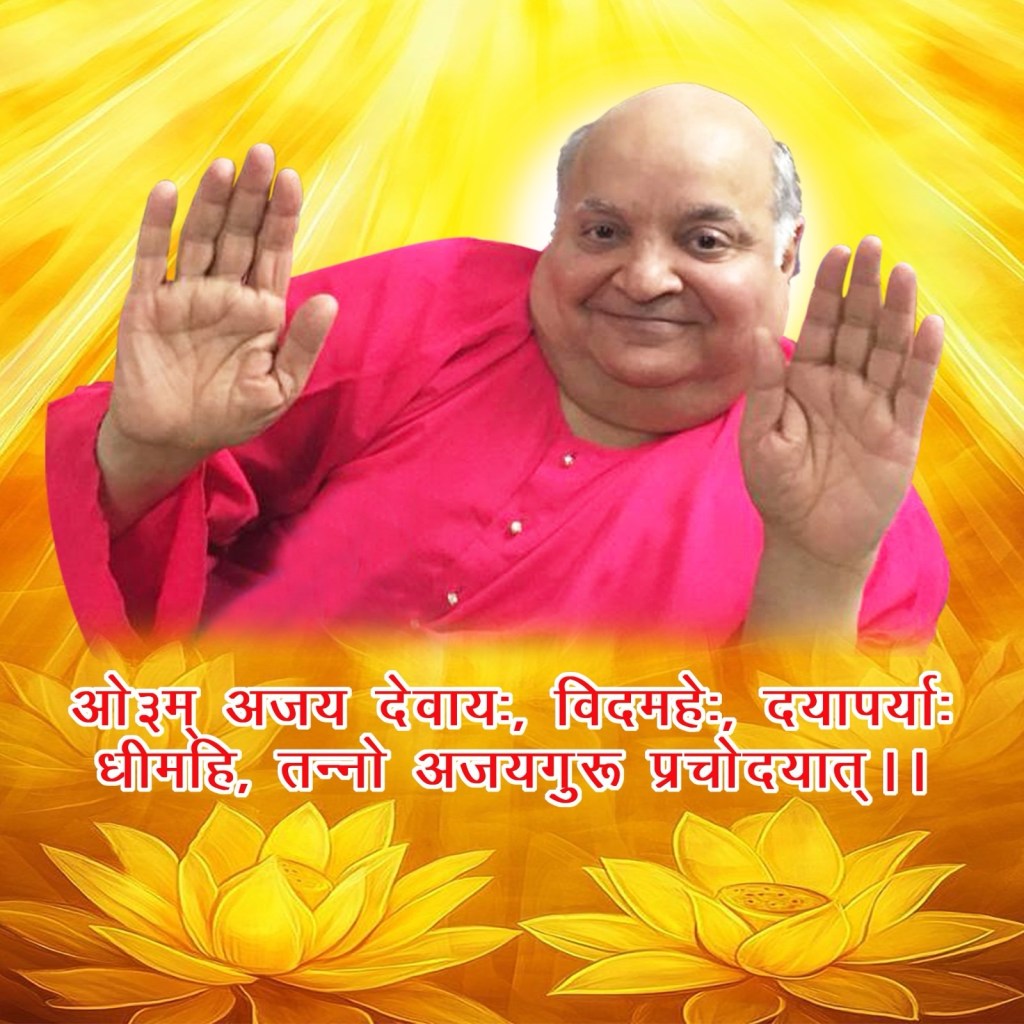
Swami ji said…
When one reads the newspapers, watches the news, or, simply scrolls through one’s phone, there seems to be nothing but conflict, unrest, and suffering all around. The world appears increasingly troubled, and the future uncertain. And so, one begins to plan. One decides upon a course of action that one believes will lead to a better, more secure, and happier future.
If we are unhappy with where we live today, we plan to move tomorrow to a place we believe will be better. If we are dissatisfied with the people around us, we seek the company of others whom we consider more agreeable, more understanding or simply better. There is almost always a seemingly foolproof plan in our minds, one that we believe will serve us well in the years to come.
But who has seen the future? Who can say with certainty what circumstances await us tomorrow? How can we be so sure that the changes we seek will bring us the happiness and peace we desire?
Yet, despite this uncertainty, people devote enormous time, effort, and resources to devising elaborate plans for a future they cannot foresee. And yes, planning is often necessary. One must sometimes chart a course, make difficult decisions, and take steps towards a better destination.
But in our eagerness to secure a better tomorrow, have we forgotten the importance of living a better today? How are we conducting ourselves today? How do we make those around us feel? Do they feel loved in our presence? Do they feel cared for, respected, and understood? Are these not the very feelings that we ourselves seek from others? How good a citizen are we? Do we genuinely contribute to the welfare of society? Do our actions reflect concern for the people with whom we share our surroundings and resources? And what of the society we so readily criticise? What are we doing, in any way, to make it better?
In reality, we seem to have become people who are more concerned with counting the other person’s mistakes- instead of correcting our own. We are quick to recognise the faults of others, to question their conduct, and to condemn their shortcomings. Yet, how seldom do we subject our own thoughts, intentions, and actions to the same scrutiny!
We take comfort in believing that we are better than someone else, simply, because we have not committed the same wrongs. But another person’s dishonesty does not make us honest. Their arrogance does not make us humble. Their cruelty does not make us compassionate. The absence of another person’s faults in us- is not, by itself, proof of our own goodness.
Perhaps, then, the secret to a better life – lies not so much in changing the world around us as in changing what lies within us — our perspective, our attitude, our thoughts, and our behaviour.
Those who are steadfast in their spiritual practices — in meditation, prayer, and ‘jap’ – gradually come to recognise this profound truth.
They begin to understand that it is the mind, and, the thoughts that arise within it, that must undergo a transformation if one is to experience life differently.
Through meditation and prayer, they discover that a change in external circumstances does not necessarily bring about a change within. Our wealth may increase or diminish. Our health may improve or deteriorate. Our material possessions, our homes, our surroundings, and even the people in our lives may change. Yet, through all these changes, the mind may continue to remain just as it was — burdened by the same fears, desires, anxieties, and expectations.
A person who is perpetually dissatisfied may remain dissatisfied even after acquiring everything he once desired. One who constantly finds fault with others may continue to do so, regardless of how often his surroundings change. For it is the mind that shapes so much of our experience of happiness and sorrow.
And so, it is the mind that must first be trained. Its impulses must be restrained, its restless desires brought under control, and its thoughts gradually purified. It is this inner transformation that changes our attitude, refines our behaviour, and ultimately improves the quality of our lives.
Man seems to have forgotten that the true purpose of life is not merely to live well, but, to live in a manner that makes him better — spiritually, morally, and inwardly.
Our material possessions, our lifestyle, the places we inhabit, and the comforts we enjoy – should serve as aids to our spiritual development. They should help us grow in wisdom, kindness, humility, and devotion to God.
Our spiritual growth must not become secondary to the pursuit of these worldly comforts. Rather, these comforts must remain subordinate to the higher purpose of our existence.
When we begin to approach life in this manner, our choices naturally change. We no longer ask merely what will bring us the greatest comfort, wealth, or, personal advantage. We begin to ask what will help us become better human beings, what is morally right, and what will bring us closer to God.
Such an outlook becomes our guiding principle, helping us choose paths that are not merely convenient or rewarding, but righteous.
The world outside may appear overwhelming, uncertain, and at times almost devoid of hope. But one must neither be overcome by fear nor be deceived by the illusions of this ever-changing world. Instead, one must find the courage to move forward, guided not merely by worldly calculations, but, by a sincere and unwavering quest for God.
When we seek His guidance with faith and humility, when we allow our decisions to be shaped by that higher purpose, we may begin to discover paths that once seemed impossible and opportunities that we could never have imagined. For the future is not entirely within our control, nor can we ever be certain of what tomorrow will bring. But what we can change is – who we are today.
And perhaps that is where the journey towards a truly better tomorrow must begin — not with a change of place, possessions, or circumstances, but, with a change of heart, a purification of the mind, and a life lived in ever-closer communion with God.

