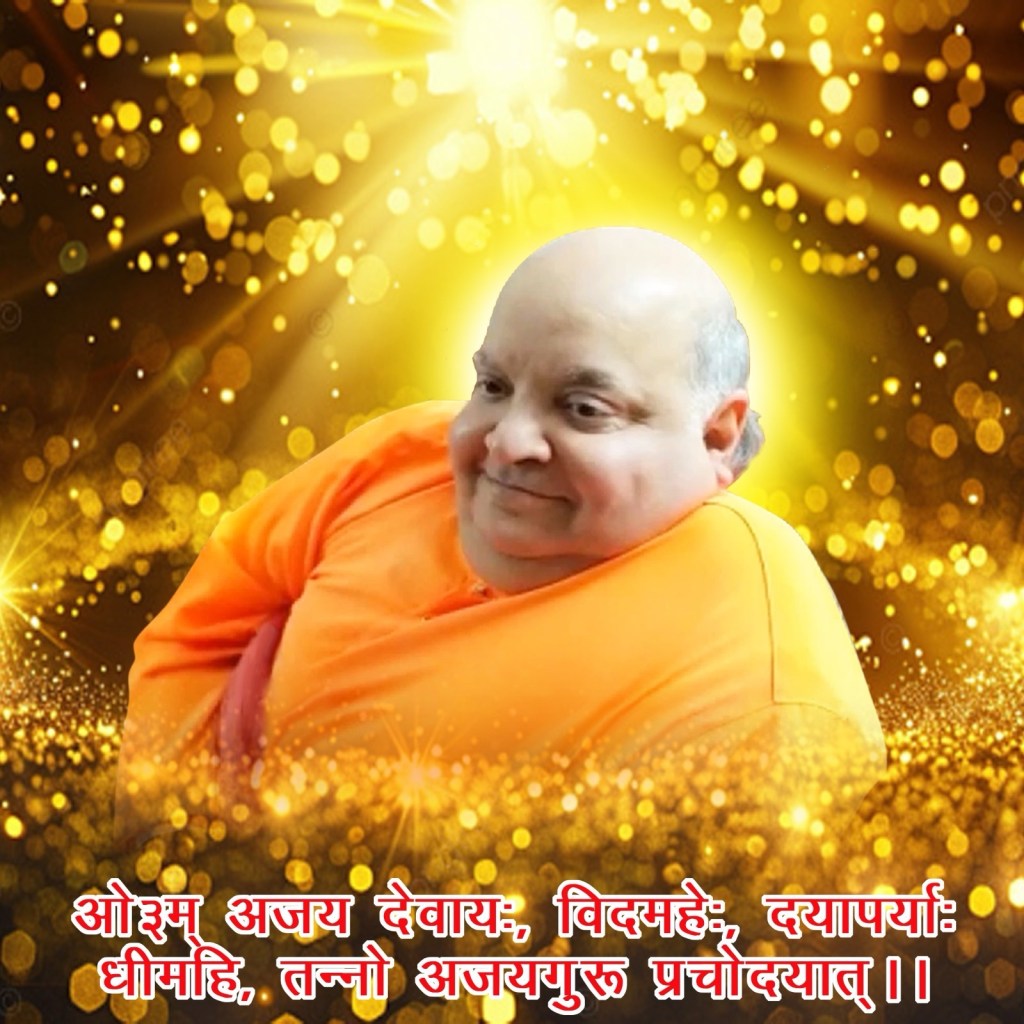
Swami ji said…
Has the craving to possess more—even when we already know that we have enough; the impatience to acquire more—even when we can clearly see that our present and future needs are adequately provided for; and the urge to own everything that catches our eye—set in motion within us strong currents of disenchantment and discontent, creating a deep disconnect from the truth that life is not meant to be spent merely in collecting material possessions?
Are we here only to become hoarders of inanimate objects, or are we meant to learn the far greater art of being content, of being satisfied with what we already have?
How many of us can honestly say that we have reached a state of contentment with whatever we have as – “ हम ने ‘और’, ( more ) ‘थोड़ा और’ पाने की होड़ में जीवन बिताने के बजाय, ‘ हमारे पास जो भी है, काफ़ी है’- (enough) कहना, समझना और मानने में ही समझदारी समझी है?”
How many among us can truly relate with such a sublime feeling—an emotion so deeply rooted in contentment that no outer object, no glitter in the world – can disturb our peace of mind? True wisdom lies in recognising that peace does not come from having ‘more’, but from understanding that what we already have is ‘enough’.
The spiritual seeker must understand this—but in a nuanced form. The idea that “I need no more” or “What I have today is enough” is truly liberating for those who gradually realise that chasing material gains in life has little value. But this does not liberate one from one’s duties. One must still perform one’s best. The motivation that once made one work hard, make sacrifices and strive to have more must not disappear altogether. It is only that- the reasons that motivate a person must change.
A student should not study hard merely from the point of view of securing a good job in the future, but, must do so because it is his duty to gain knowledge to the best of his ability. That student must nourish the mind’s thirst for knowledge. The action and effort remain the same, but the reason must change. And why so? One must wonder.
Acts – ‘karma’ – that are committed from a place of contentment and duty are always correct and good in nature, for they are not corrupted in principle by greed or gain. A businessman who conducts his business not keeping in mind only his own profits, but, also the contributions of his staff and the support of his customers, is one who is performing his duties to the best of his ability. He is motivated not merely by his own well-being, but by the well-being of all. He trusts that what he has today is enough, and that by acting correctly and righteously, he will also have enough for tomorrow.
An unscrupulous businessman, on the other hand, looks only at how much more he can save for himself— even at the expense of others. This motivates him to cheat, to lie, and to take shortcuts. He has no faith in the Divine that he will be looked after.
Contentment is key to a divine life. Only when one is content, when one has learnt to ignore the constant calls of the mind towards worldly desires, can one learn to focus solely on God. Only then can one give oneself wholly—in action and in thought—to God.
Contentment is also not to be confused with giving up. Yes, there are many material things which we all feel would make our lives much easier if we possessed them today. The discontented mind grieves over this. But those who have learnt to be content are not blind to what they lack—no, not at all. It is simply that they choose not to fret over it. They believe that what they have today is what God has equipped them with to face life, and who are they to question God’s choices? They are thus unbothered by what they have and what they do not have. They simply go about doing the best they can with what they have as they believe- “हमारे पास जो कुछ भी है पर्याप्त है …”


Dhanyawad Gurudev 🙏🙏🙏
LikeLike
Pranaam Gurudev 🙏🏻
LikeLike
Beautiful message
“what we have today is enough for today and by acting righteously today , there will be enough tomorrow also”
Jai Gurudev
LikeLike
Swamiji aapki jai ho 🙏🙏🙏
LikeLike
Jai Gurudev
LikeLike
Om Shri Ajay Guru Devaya Namaha..🙏🙏
LikeLike