‘Santushti’

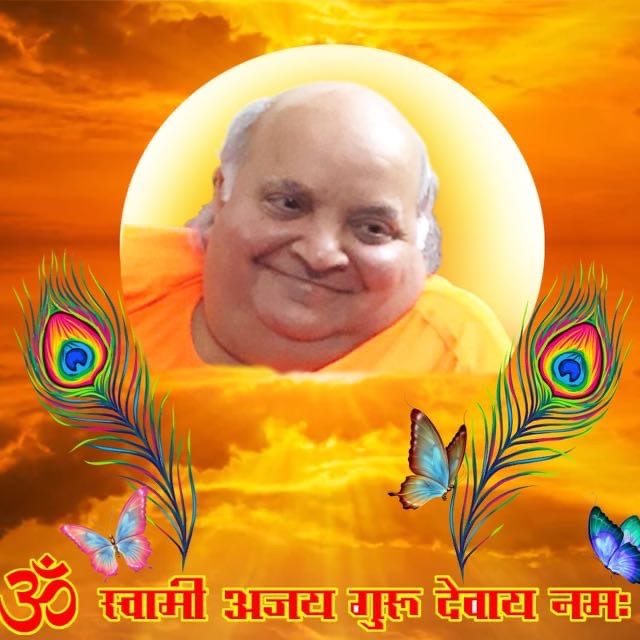
Swamiji says…

” Mujhe yeh chahiye! Mujhe woh chahiye! Mujhe aurr chahiye! Woh cheez mil jaati, toh mujhe santushti ho jaati! I want this! I want that!” These words sound very familiar. Don’t they? Each one of us is surely able to vividly recall the excitement that we had experienced – as infants – on seeing the colourful little toys that were used as a bait by our parents to distract us, to stop us from crying; and how we used to, through our tears, look astutely, with great interest at those fascinating objects – stop crying and throw our tiny arms in the air to get a hold of that toy. And then again would resume crying, disconsolately, until we had acquired possession of that toy. We had to possess it and let it be known to one and all that we possessed it. The game of contentment and discontentment had thus begun. One could argue, but it was right from then that these traits that we possessd had come to the fore !”

“This craving, longing, constant pining to own, possess and hoard more and more, festers within all of us. It is up to us to either let this gross ‘desire’ grow within us, gnaw at our peace of mind, or,get rid of it for once and for all, by simply saying ‘No! I am content and happy with what I have. I don’t need any more of anything !’ Words that are so rare to hear in today’s materialistic world. A few fortunate, sensible ones are able to draw a line and reach a conclusion – ‘I am happy with what I have, and I have enough of everything. No more!’ “

“The ability to say – ‘I have everything that I need and ever wanted, and don’t desire anything more!’ – needs a strong will and courage and, believe me when I say, that it is possible for us to say – ‘No!’ and to understand that the cause of our unhappiness is the desire to possess, acquire and own more – and it is this desire that tempts us, lures us towards itself – and we fail to see that we are wasting our precious lives by procuring inanimate, lifeless objects, senselessly. The irony is that instead of considering our lives as priceless ; we value things to be priceless.”

“Try to visualize the physical and mental state of a person who is satisfied and content …’ joh apne jeevan ke haalat aur paristhitiyon se santushtha hai…” Life is perfect for him. He couldn’t have asked for anything more and is in a constant state of gratefulness to God for giving him all that he ever needed, without him asking God for anything. He is more than satisfied with all that he has and has nothing to complain about. His mind is clear, free of the clutter of the never-ending profit and loss analysis of life. He is in a state of bliss, at peace with himself, and also with others …’Aise insaan ko mann ki shanti hoti hai! ‘He is cheerful and happy as he doesn’t carry the crumbling burden of discontentment, that could have otherwise wreaked unwanted havoc in his life. Frowns of worry find no reason to wipe the smile of pure joy from his face. He doesn’t have to be tense about unpaid loans or lose sleep over troublesome issues that could otherwise have kept him tossing and turning, wide awake through sleepless, nightmarish nights. Dark, depressing thoughts are unable to touch him, as he has customised his recipe of a ‘good’ life – as that is the quality of life lived by him – with an equal measure of positive attitude, happiness in ‘what I have’ and mental peace. He remains unaffected by the changing tides and colours of time and life and welcomes each new day with the same enthusiasm and equanimity.”

“We desire something or the other, always, and find it very difficult to control ourselves on coming face to face with it. We are as helpless and weak as dry leaves, when it comes to gaining an upper hand on our desires. We are puppets in their hands , and once hypnotised by them, move in whichever direction they take us. But once we succeed in thwarting them, not pay any attention to them and let them know that their entry in our inner being is prohibited – they will sheepishly disappear. Let us be Masters of our faculties and not be subservient to illogical, whimsical desires.”

” ‘ Ek santushtha insaan, achcha jivan vyatit karta hai …’ “The time and energy that is lost in focusing on the list of ‘wants’ by a disenchanted person , can be converted into productive, rewarding and satisfactory moments, by a ‘ santushtha’ person , by attending to the rituals that he believes in , with a peaceful mind and heart. Pertinent issues that loom large over various segments of society become relevant for a person who is content and satisfied, as he is able to work on them with sincerity and complete involvement …’aur aisa insaan nek kaarya karta hai, aur nek raaste par badey utsah se chalta hai ‘ – as desires cease to exist for him.”

“The choice is ours to make. We could either continue to hanker and obsess over everything that we do not have, be dissatisfied with the way our personal or professional lives are shaping out, make our lives miserable and meaningless by constantly complaining and cribbing,or, understand the uncertain, transient nature of life, value every precious second of it ; rejoice in being alive, be content and satisfied…’ santushtha’ with His divine plan and everything that He has provided us with, in this birth !”

”Niswaarth ‘kaam’ aur ‘seva'”

Swamiji says …

“Niswaarth kaam alaukik anand deta hai …”
“The rewards of selfless service are divine in nature …”

” I am sure most of us remember the days, when as stubborn tiny tots, almost all of us had selfishly conveyed our annoyance, on being distracted from whatever it was that we were doing, and said the words – ‘Ruk jao, main abhi ‘kaam’ kar raha hoon ! ‘ – very often , and had actually appeared to be very busy with the task that we had set for ourselves. So deeply engrossed would we be with the issue at hand, that we had neither paid heed to what was being said to us by others, nor had we shown any inclination in changing our mind from the set task. The message was clear. We had to give topmost priority to the all important ‘kaam’ that we had set out to do as we were deriving pleasure in doing so. Our ‘kaam’ might have been as mundane as dressing up a doll or adjusting the carriages of a toy train on a track, but we had remained steadfast in our efforts and budged from our objective only after giving it the final touch. The heart-warming innocence and naive simplicity of the words uttered by us, then, had always brought a smile of joy to our parents’ face. We would do our ‘kaam’ putting our heart and mind to it, as that is what we had wanted to do, and it was attended to perfectly by us, since it was done out of our own choice and will.The end result had to be good as we would get a reward, in some form, from our elders on completion of that task.”

” It is here that we need to reflect deeply and think – ‘Will we work with the same drive, the same sense of involvement and pleasure – while doing some good for someone else, without gaining any benefit from it, without a selfish motive.’ Can we truly serve others selflessly, without looking for anything in return? Can we make ‘Service, before self’ our motto? Can we motivate ourselves to help others with enthusiasm and eagerness knowing very well that we will not benefit in any way by either helping them or serving them? Can we stop being selfish ?”

“Our attitude, mental make – up and outlook towards life and others can undergo a tremendous transformation the very minute we understand that –
” ‘Niswaarth kaam hamesha alaukik anand deta hai.’ Once the essence of these words is absorbed and implemented by us, then any act, or any work done by us for someone else, irrespective of its nature, can make us experience the Divinity that lies behind the sacred purpose of making us do something for someone else. Our entire perspective changes when we see God’s hand in everything that He makes us do for someone – using us as His instruments in His Master Plan of assisting and serving our parents, siblings, friends, acquaintances and even strangers. Every opportunity given to us by Him, to help others should be welcomed humbly, with open arms and a bowed head, thankful to Him for making us balance out our ‘karmic’ account – putting the needs and requirements if others before ours, and responding to their call for physical, emotional or financial help. No matter how busy we are, we must find that enriching, self – satisfying, rewarding time – to extend a helping hand to others, without looking at the economics ; the profit or loss involved in the time invested, in doing whatever we can do for others, selflessly. Remember, we serve God whenever we help any other living being, and the bountiful blessings that we receive from Him take us closer to Him.We experience pure bliss when our old, aged parents bless us in quivering voices for taking care of them selflessly…for our ‘seva bhava’. Could anything be more rewarding than their blessings? “

“Humein niswaarth kaam karne mein joh adbhut anand praapt hota hai, uska bayaan karna mushkil hota hai! ‘ Let us think for a moment whether it is possible for us to describe all that our body, mind and soul experience while worshipping Vaishno Devi Ma! Can mere words do justice to the vibrations, the energy, the blessings that are received by us in Her divine presence? Similar to the manner in which we find it difficult to describe the emotions that are experienced by us when we are enveloped in Her divine aura; we fall short of words to express the immense satisfaction, pleasure and genuine happiness that is experienced by us when we do anything for someone else. But , yes , there is a common factor between the emotions that are experienced at the divine ‘darshan’ of the Goddess – and on being selfless, ‘aur niswaarth ‘seva’ or ‘ karma’ karna!’ The intensity of pure, divine joy and true happiness that is derived by us,in both instances, is one and the same.”

“Selfless acts take us a step closer in understanding that Divinity is an inherent part of each one of us and since we have originated from the same consciousness – there is no difference between us.Thus, it becomes easier for us to empathize with the concerns that plague others and on visualizing and placing ourselves in the difficult situation in which the others find themselves, we go all out to draw them out of their discomfort, by forgetting about our personal comfort for once – be unmindful and uncaring of our personal gain, but serve others generously and selflessly. Finally, selflessness wins over selfishness !”

‘Niyam, Sanyyam’

Swamiji says …

“Being disciplined, following a routine and exercising self – restraint over oneself keeps the heart happy and beautiful …”

” ‘Niyam’ aur ‘sanyyam’ mann ko sunder banate hain…’ “

“Nature is the greatest teacher. It teaches us silently, but visually – the important lesson of ‘niyam’ – of following a routine; of doing things that are beneficial for us. And what better example could there be than that of the Sun rising, unfailingly, in the east and setting in the west every day. The seasons that change with clockwork precision, ushering in wondrous winter, glorious spring, august autumn and sultry summer leave us marveling at the synchronicity of Nature! ‘ Srishti ka yeh niyam hai.’ “

“Wouldn’t our lives be much better, more productive, more result oriented if we too led regimented lives as well? Surely most of us remember the words said by our parents and elders to us … ‘ Beta, yeh niyam se kiya karo! ‘ – whether it was going to bed early at night and waking up early in the morning , bathing in the morning, offering water to the Sun, saying our prayers or reciting our ‘mantra’, completing our homework at night , solving some math problems every day to hone our mathematical skills. Young and immature that we were then, it is possible that we might have resisted or maybe, even rebelled against their wise words, and retaliated by not adhering to their advice. ‘After all it was so mundane, so mechanical to be so regular and follow a routine – we said to ourselves!’ None of us wanted to be so boring, so predictable! “

” Believe me when I say …” ‘Niyam’ aur ‘sanyyam’ mann ko sunder banate hain…’ Initially, we might find it difficult to motivate ourselves to venture out of the comfort of our beds, early in the morning to exercise, to bathe in time, or to worship God regularly – but the second we make up our minds to do this, we experience life changing rewards. Happiness befriends us and becomes our constant companion.These habits are addictive and give a new purpose to our lives. The warm feeling of being happy, both externally and internally, helps us acquire a hold on our ‘self ‘ that was otherwise running aimlessly, in a wayward manner. Happy is the heart that beats and dances joyfully while singing ‘aartis’ and ‘ bhajans’ and on seeing spectacular visions of Gods and Goddesses while meditating. The sense of mental peace and calm that we experience on performing rituals that we had always wanted to perform, regularly, makes us feel stronger and closer to God, in the initial phase of our religious growth.” And if we make a regular, repeated effort to climb the spiritual ladder with sincerity, unfazed by our failed attempts and meditate regularly, take His name whenever possible and see His Grace in everything that happens with us, we will undoubtedly be rewarded in a manner most profound and divine.”

” ‘ Sanyyam mein shakti hai !” The silent but constant tussle that goes on between our heart and mind – as each pulls us in different directions when confronted with an irresistible temptation – makes us dither, unsure whether to succumb to it or to stand strong against the waves of desire that intend to engulf us. But once we are successful in exercising self-control over ourselves, no temptation can lure us and melt our steely resolve.The time that is otherwise wasted in calming a heart that gets disturbed and over – excited over trivial issues, is now able to withstand the pressures of life.’ Koi bhi haalat, koi bhi kathinai. mushkil nahi lagti hai …’ as our control over our senses , makes us feel stronger and happier. We begin to understand that it is our sacred duty to stay happy, as the soul is in an eternal state of happiness, and thereby benefit greatly, spiritually. The words – ‘Happiness is a state of mind’ sink deep in our mind and we decide to focus our energies in creating a mindset that is devoid of negativity and unhappiness.”

“Remember, it is better to be blessed with a beautiful heart, than with a beautiful face. Keep it happy and healthy.”

‘ Moksha … Jannat ‘

Swamiji says …

” ‘Moksha’ … ‘self realization’ is attained not only by the child who walks the spiritual path , but his parents too benefit from their child’s spiritual bent of mind and attain ‘moksha’.

” ‘Moksha’ … ‘jannat’…uss insaan ko hi praapt nahi hoti hai jo ‘aadhyatmik’ marg par chalta hain, parantu unke mata-pita ka bhi uddhaar ho jata hai aur unhe bhi ‘moksha’ praapt hota hai …”

“As we evolve from a young child into an adult, each one of us gets acquainted and intimately involved with the teachings, rituals and practices of our religion. We are familiarised with the importance of worshiping God in either a temple, a mosque, a church, a ‘gurudwara’, a synagogue or any other place of worship and we learn to pray regularly and reverentially, to Our Creator. We learn that wonders can be achieved by talking to Him; forgiveness can be sought by confessing to Him and that we will be provided with what is right and suitable for us, miraculously, when we ask Him for what we desire.”

“Apart from a few great, noble, enlightened souls, none of us have seen God but we do know ‘of ‘ Him. We have heard about Him – His greatness, His glory, His strength, His forgiving nature, His love for us and we too love Him … but do we make a genuine attempt to know who He is?”

” A child – inquisitive and constantly seeking to clear the never-ending stream of doubts that arise in his mind – questions the relevance of the rituals involved in honouring, pleasing and appeasing God. He expresses his eagerness to learn more about the possibility of gaining proximity to God by adopting a different, simpler approach – to establish a closer, individual personal rapport with Him. And in order to do so, he begins a journey on a path unknown and mysterious to him. The firm resolve in the child’s mind makes him adventurous, resilient and patient. He wants to rise above the immediate gains and rewards that are showered on him by the Grace of God and craves, instead, for Divine Grace to allow him to get a glimpse of God, to be accepted by Him, enfolded in His embrace and to be merged in Him forever.”

” Fortunate and blessed is a child who lives a life based on the strong foundation of good values, abides by his sacred, religious institutions, performs the required rituals and decides to veer off from the road taken by all – as the sense of peace and contentment experienced by chanting ‘mantras’, and reciting prayers motivates him to further develop a spiritual bent of mind. He places his undying faith at the Lotus Feet of His Supreme Master certain, that his spiritual thirst of wanting to ‘know’ God, will be quenched,one day, and that God will reveal Himself to him, in all His splendour and magnificence.”

“The earnest effort made by a child or any other member of a family – to make his life meaningful by experimenting with the spiritual dimension by constantly focussing on thoughts of God … Bhagwan, Allah, Jesus Christ, Guru Nanak ji – by serving Him selflessly, loving Him unconditionally, do not go unrecognized and unrewarded by God, and He not only guides them towards the portals of ‘ jannat ‘, but also ensures that the parents of such a blessed child too are rewarded by Him in an equal measure.”

” ‘Insaan ka vishwas jab ‘parmatma’ par atoot hota hai, aur ‘bhakt’ Bhagwan ki aaradhna mein samay vyatit karta hai, tab woh sirf apna hi nahi , parantu apne mata-pita ka bhi udhdhaar karwa deta hai.’ “The divine cord that binds the spiritual connection between ‘ iss tarah ke nek jeev’ and ‘parmatma’ is so strong, that God takes upon Himself the responsibility of ensuring that not only is his ‘bhakt’ given the rarest of rare privileges of rejoicing in the visual delight of His glorious presence, welcomed by Him personally in ‘jannat’, allowed to merge with Him and attain liberation from the countless cycles of birth and death; but his parents also, attain the very same blessing of ‘moksha’.”

“The world would certainly be a much better place if more of us opted to tread the spiritual path with tenacity and sincerity, determined to live a simple, pure, purposeful life and merge with Him finally.”