“अपनी ‘क्षमता’ पर गुरूर मत करो …”

Swami ji said…

We are all unique and have our own skills and talents. Some are born with them , while , others develop and hone them with time. Whatever the case may be – these abilities are what, rather often than not, enable us to earn a living, become wealthy, or even become famous. Some of us have artistic talents ; some are blessed with physical and mental prowess, and, others have exceptional gifts, that serve them well in their respective circumstances and situations. The tonal quality of a singer’s voice can win him fame and acclaim. The sharp mind of a stock trader could make him fabulously rich. Greater oratory skills could make a politician a great orator and extremely popular with his countrymen. Smart managerial abilities could make one a CEO of an international company. Hours and hours of practice at improving one’s skill or ability can pay rich dividends over time, and , there are many of us who are doing so now – enjoying the fruits of our abilities and skill. We are confident of our abilities and thereby assured of the successful outcome of our actions.

But, in all this hay and glory, we often let confidence turn into arrogance; and let our success make us feel invincible. The ego takes control over the mind, it tells us – ‘ See what YOU have achieved. Only YOU could have done this. This is all YOUR doing.’ And suddenly we hold ‘ourselves’ in great esteem and develop an air of self-importance. We hold our heads proudly and show the world what WE have created. This is the time that काल is hovering around our head – for it takes away our ‘बुद्धि’. We forget that our abilities and skills are God’s gifts to us and instead of attributing all our joys and successes to God’s grace – we instead congratulate ourselves and put ourselves on a pedestal. Our actions and words follow suit – they are egoistic and arrogant. We behave like know-alls.

The humility and patience that was once our trademark and which had helped us to reach where we are today, seem to have been shed off by us during our ‘ego trip’. We reach a stage when we refuse to listen to anyone but ourselves. Those days of the past appear to be lost somewhere , when we had always been eager to listen to others’ perspectives and feedback.
Businessmen who believe they know more than their customers; artists who feel they know better than the audience – such is the typical behavior exhibited by those heady in their own success.

It is said that the poet-sage Valmiki was once informed that even the great Hanuman had written a Ramayana. Intrigued, Valmiki ji set out to lay his eyes on Shri Hanuman’s Ramayana. On reading the words that had been written by Shri Hanuman, tears rolled from his eyes and he began to cry in sorrow. When asked by Shri Hanuman as to why was He crying , it is said that Valmiki ji confessed, that Shri Hanuman’s Ramayana was much better than his own and that he was convinced that no one would be interested in his Ramayana once they had read Shri Hanuman’s treatise. It is said that on hearing this Shri Hanuman immediately tore his own writings, leaving Valmiki ji all the more bewildered. On being asked to explain his actions, Shri Hanuman told Valmiki that he had written his Ramayana only for Shri Ram and not to receive any praise from anyone. If his Ramayana had caused grief to Valmiki ji , there was no reason for the world to see it, as he did not need the fame and accolades of writing a great epic. All that mattered to him was Shri Ram’s blessings and love.

We must learn an everlasting lesson from this story. Not once did it occur to Shri Hanuman that he was the ‘better writer’ nor did he once think of enjoying the fruits of his labor as a writer. He did not take any pride in his knowledge and literary prowess. He did not seek any recognition. What he did, he did only for Shri Ram. We too must learn to attribute all our achievements to God’s grace on us. We must accept that whichever abilities we have – are only a means to an end that God has given us. What we achieve from them are also God’s gifts to us.

हमे हमेशा यह याद रखना चाहिए – ‘ ‘क्षमता’ और ‘ज्ञान’ को, अपना ‘गुरु’ बनाना चाहिए, अपना ‘गुरुर’ नहीं…’
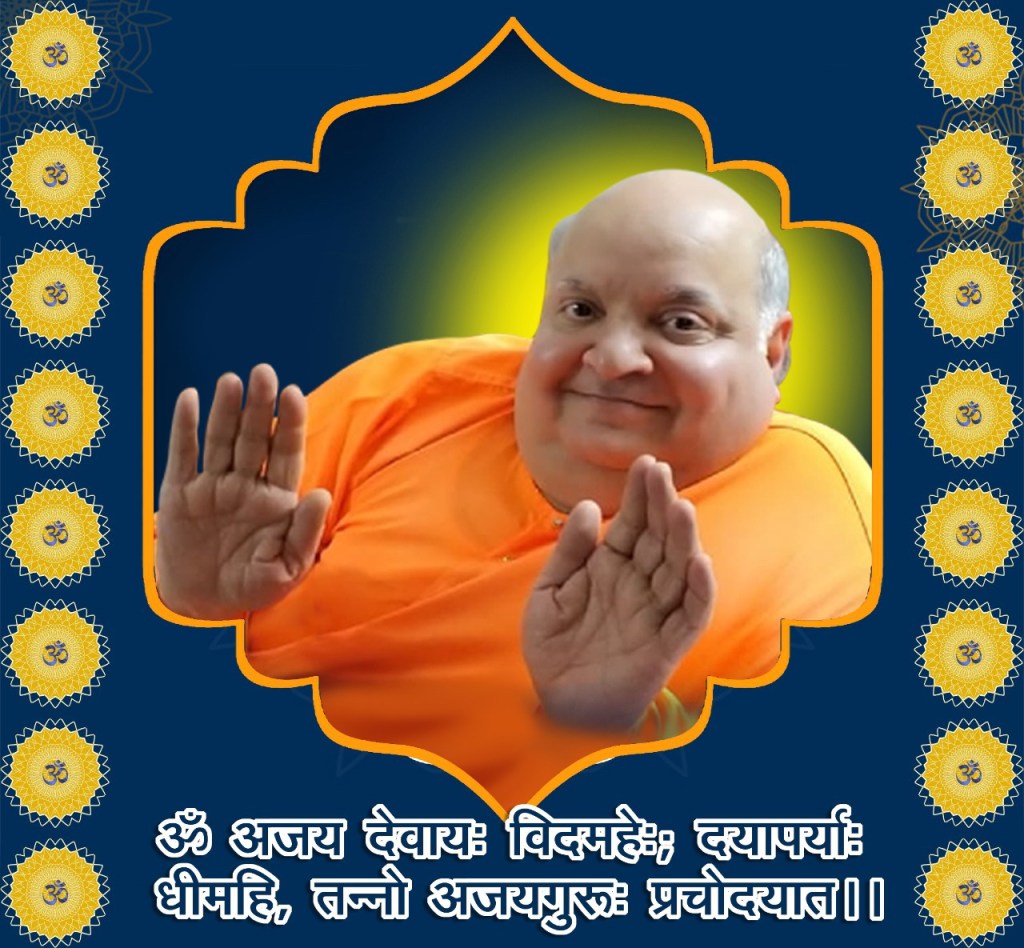
“अपनी ‘आत्मा’ की आवाज़ सुनो…”

Swami ji said…

The soul is what truly exists… the rest – body, mind, family, friends, society etc. all are destructible and temporary. Yet, we all love to talk and interact with the world around us – rather than making an attempt to interact with our soul. We want to tell others about ourselves – to acquaint people with – what and who we are – our ambitions and achievements. We take it for granted that it is essential for us to make our presence felt. Be it in a social gathering or through social media – there is always an urge to say something. Even if we are too shy to speak up in a large gathering, the mind still thinks of what could have been said. A suggestion here – a piece of advice there.There is always something that can be said or added – we feel.

Yet, all this talk, all this noise is of little value as the world around us is only ‘maya’ – an illusion. It cannot give us true knowledge. True knowledge, however, can only be gained from that which has existed forever, that which has known the world from before its creation – the soul – the आत्मा | Have we ever heard of saints who spent their time like the rest of us? Why did they observe silence – मौन? Why did they meditate in isolation ? ‘ध्यान’ को इतनी महत्वता क्यों दी जाती है ? It was simply to let them hear the voice of their inner self – their soul. They learnt to switch off the thoughts of the mind, the voices of others and simply hear what their soul told them.The greatest spiritual books of the world do not tell us anything new – they only reveal what the soul already knew. The joy and ecstasy we feel on attaining knowledge is not because we have obtained knowledge, but , that the veil of ignorance has been lifted to reveal a little more of what the spirit knows.

This does not mean that we must not talk at all. Such a thought in itself is absurd. But all talk must be thoughtful. Words must be spent wisely, and , that can only be done by one who has had time to think, to reflect well , before speaking. Our words should be a reflection of what our soul reveals to us , during the time, we listen to it attentively – when we are conscious of its communication with us. That is what makes our words truly worth being listened too.

Prayers themselves are a form of dialogue between God and us. Here, it is we who do the talking and God who does the listening. But how much time do we give to the reverse ? Meditation is us listening for God’s signals – our soul’s message to us. Only on listening keenly are we able to understand what we must do, what direction we must take that will be good for us. The answers to our prayers come only in contemplation. Without contemplation, prayers only amount to wishful thinking.

It so happens, that , many a times the mind prods us to ask God to fulfil a desire …’मन’ हमे अक्सर उकसाता है कि ‘ईश्वर’ से कुछ मांग लो, ‘आत्मा’ रोक देती है यह कहकर – कि प्रभु ने जितना दिया है, क्या हम उसके काबिल भी थे।’

Swami ji’s Sandesh …

Faith, confidence, conviction – enable us to push ourselves and achieve more than we might have ever dreamed of. विश्वास – trust in oneself, trust in a higher power, trust in God – is empowering and makes us move forward in even the darkest moments of life. It uplifts us in times of failure and despair. One with true faith is like an eternal beacon of light – no amount of darkness can cast a shadow on his optimism and belief in emerging triumphant – one fine day. No obstacles, no hiccups, no losses can truly put down one with faith in his heart. Faith, thus, can truly move mountains…’ हमारा विश्वास पर्वत को भी हिला सकता है…’

However, a person filled with dubiety and suspicion, forms self – imaginative mountains of troubles and problems, even when there are none visible to the naked eye. To such a person – danger lies in every nook and corner ; deceit and fraud roam the streets ; there is no opportunity that is not a hidden scam ; and to make matters worse, there is no person who is trustworthy and reliable. In such a person’s world, even a walk in the park becomes a mountain to scale. Thus, we need to be watchful and cautious, as the heart that is filled with faith in itself – of being sure to move mountains and achieve the impossible ; that very heart can be knotted up with suspicion, doubt and mistrust and create misery for itself …’ जिस प्रकार हमारा विश्वास पहाड़ों को हिला सकता है …उसी के विपरीत मन की शंका दुख का पहाड खड़ा कर सकती है।’

It thus becomes important to develop faith – in God and in ourselves. We must learn to truly believe that we are worthy, capable. We must choose to see goodness in the world and believe that good things will happen to us too. Every action must be done with the hope that the best will result from it, and if not – then the best is only yet to come. It is not that failures will not occur – they are bound to occur even in the lifetime of the supremely confident. But those with a positive, winning outlook will only learn from those failures and better themselves for the times ahead; while those with a negative, suspicious outlook will only feel vindicated in their scepticism and qualms – furthering them away from any sort of growth and success in life.

In the ‘Ramayana – suspicion borne by the common folk of Ayodhya regarding Ma Sita’s piousness, resulted in Her being sent to the forest. Inspite of knowing that Ma Sita had passed the ‘agni pariksha’ – the doubt that had started gnawing the people’s mind, only blinded them further, and led them to commit a great travesty.The darkness of suspicion prevented them from seeing that their Queen was Goddess Lakshmi herself. Suspicion brought them sorrow, whereas, in comparison, when Shri Ram set out for Lanka – with faith in God , ‘guru’ and in himself – to rescue Ma Sita from Ravan – He returns to Ayodhya triumphant after killing the demon king.

A seeker of The Truth ; of God – should remain undaunted by the challenges and changes that await him as he walks the spiritual path and instead focus on his jap, tap, dhyan ; follow his ‘dharma’; place himself and his faith in his Creator Hands and see divine magic unfold before his eyes as He blesses him with His divine ‘darshan’.

” ‘मन’ और ‘मकान’ – दोनो ही साफ और स्वच्छ होने चाहिए …”

Swami ji said…

Festivals are associated with joyful celebrations, gaiety, fun, laughter and cleanliness. A whole lot of detailed planning goes into the manner in which festivals are celebrated; the offerings that will be made to God; dishes that will be cooked; the gifts that will be exchanged; the outfits that will be worn ; the decoration of the house – and all this is done, while giving equal importance to the cleaning of our home. Cleanliness of our home and surroundings is carried out on a war footing and reaches a feverish pitch with all the unwanted material being thrown out of the house in abundance – without a second thought. It appears as if all of a sudden we are in a great rush to discard and get rid of things that have lost their utility for us.

Every nook and corner of our residence is scrubbed and cleaned. All that is visible to the eye – has to be spick and span , we feel. But why do we do this ? ‘ त्योहारों के दौरान घरों की इतनी सफाई क्यों की जाती है? हम ऐसा इसलिए करते हैं ताकि घर का कोई भी बेकार सामान जगह न घेरे | ‘And, It is always good to make it a habit to do so, periodically. Moreover, the words – ‘ The old gives way to the new’ – if applied in this perspective, too, could hold a realm of meaning , as, after all that cleaning , dusting and mopping – our homes do emerge clean, fresh and uncluttered – as though welcoming us with open arms, for the next innings of our lifetime, free from all the negativity that the unused items had accumulated over them.

But while cleaning up the interior and exterior of our home , we should not get distracted from the main issue which is – ‘जिस प्रकार हम समय-समय पर अपने घरों की सफाई करते हैं, उसी प्रकार हमें अपने मन को सभी फालतू के विचारों, गलतफहमी से मुक्त करना चाहिए…’ At times, in our foolishness, a slight misunderstanding is all that is needed to create immediate rifts and cracks in a relationship – that last for a lifetime. What about evicting them too from our heart? Why do we find it so difficult to let bygones be bygones ? We must clear the cobwebs of past issues and start afresh and not let negativity occupy our hearts and minds.’ ये ‘गलतफहमियां’ बेमतलब की होती हैं … उनका न सिर है और न पैर। लेकिन हम उनसे बेवजह अपना मन भर लेते हैं।’

While cleaning up our homes, we go all out to remove every cobweb that is visible to us – without thinking for even a second about the painstaking effort that had been put in by the spider to create its home – its web. So, why don’t we with the same detachment – without giving importance to our ego and misguided notions – let go of all misunderstandings and lighten our heart, unburden it of the weight of anger and darkness and instead fill it with love, compassion and understanding for others.

The celebration of a festival is not only about displaying outward fervour and holding excited festivities – but to also live, absorb and follow the hidden core message – the subtle nuances of the festival in its true letter and spirit – enrich ourselves and live a life … ‘ जिसमे हमारा तन, मन, घर और विचार – सब पवित्र, शुद्ध और स्वच्छ रहे। “

” ‘मन’ में ‘ईश्वर’ का होना अति आवश्यक है…”

Swami ji said…

We worship God, pray to the Almighty, perform rituals, go on pilgrimages and try to seek God’s blessings in every possible way from a very young age. As children we follow the instructions, pertaining to our religion, that are given to us by our elders and do – as we are told – while offering prayers etc. in our sacred places of worship. We grow accustomed to going to various religious institutions on certain special and sacred days of the week and year and do so dutifully. But , what we need to ask ourselves is that when we make an attempt to follow religious directions – do we do so as if they were a mere formality ; treat them purely as regular religious practices that we are supposed to perform outwardly – or do we attempt to understand the ‘sacred’ nature of the divine moment that we are fortunate enough to be blessed with – while praying to Him? Do we feel connected with ‘divinity’ and experience His sublime presence within us ? It is possible that, at times, while offering prayers, we could momentarily feel, that our prayers and worship of God would be incomplete – unless we did so – in a specific place of worship, like a temple for instance.

It is during such moments of dilemma and confusion that we need to search for answers deep within ourselves. On reflection we might recall the words – ‘ Your body is a temple in which the soul resides and it is your duty to keep it clean.’ If we were to deliberate on the essence of these words – then – the need to keep our hearts pure would be foremost. The ‘heart’ is the seat of God and it is here – in the heart – that we must find Him, place Him and experience Him. The heart in which God resides would but naturally be suffused with love, joy, purity – one that wishes good for others and is happy in their happiness and progress. We go to ‘external’ places of worship to offer prayers to Him , but , tend to forget that He is ‘internally’ within us, with us – all the time. It is thus essential for us to understand this eternal Truth at the earliest and feel His presence in our heart. We need to remember…’ प्रार्थना करते समय ये जरूरी नहीं है कि व्यक्ति किसी पूजा स्थल में ही पूजा करे … आवश्यक यह है कि व्यक्ति के मन में ईश्वर की उपस्थित का एहसास होना चाहिए…”

Thus, all out earnest efforts should be made by us to not sully our heart and make it impure in any way. Would God wish to reside in a heart that is filled to the brim with grievances and anger for others, thinking of destructive ways of causing another person’s downfall ? We will fail miserably in all aspects of life , if , we are unable to draw God within us. No prayers in any specific place of worship can come to our rescue until we have seated God on the throne of our heart. We would live a life most fulfilling if we did this – as every action , every thought and every word said by us , henceforth , would have a pure intent ; selfishness would surrender to selflessness and dishonesty would give way to honesty – as God would not want to see it happen any other way than this.

The revered depiction of Lord Hanuman baring His heart , showing Ma Sita and Lord Ram – seated in it , conveys a very deep meaning. That God chooses to stay in the heart of the pious, devotional and loving; and that a true devotee carries God and Guru in his heart, and need not look anywhere else to find them.’ ‘Ishwar’ ko agar hum apne ‘mann’ mein utarenge toh woh avashya utrenge…’