” शुद्ध विचारों से कर्म करने का निर्णय लो …”

Swami ji said…

What we experience today – is due to the actions of the past , and , what we experience in the future is because of our actions of the present time. Such is the inescapable law of ‘karma’. Whether, we choose to believe it or not, it applies unequivocally to each one of us. Following this logic, we , should realise that our ‘fate’ – then – is in our own hands. While what we face and go through today – is not entirely in our hands – for we cannot undo deeds of the past – we certainly have a say – in how our future should unfold.

We are thus, quite certainly, responsible for ourselves ; for everything that is done by us. Every action of ours – be it today, yesterday or tomorrow – comes about from a thought process. Whether we are mindful of that or not is a separate issue altogether. But, it , is our mind that gives birth to every action of ours – and , thus, we , cannot , but, be responsible for every action of ours.

While this seems very simple to understand – we have always found it extremely difficult to adopt it ; to practice it in everyday life. One might think that such is not the case. After all, we go around making decisions everyday about something or the other. But, a true litmus test of this would be – how we behave when we have major decisions to make. Decisions – the results of which are not evident, not obvious and cannot be foreseen immediately. Decisions – the repercussions of which can have significant , long term effects. Do we keep asking for others opinions during such moments? Do we feel agitated when faced with situations which need us to make such decisions ? Do we try to push these decisions on others who we trust?

Why do we behave this way? Is it possible that we are afraid of making the wrong decision? Are we trying to shield ourselves from taking responsibility of any kind , in case our decision does not give the best outcome? Are we scared from taking ownership of our own fate?

Such behaviour only comes about in those who feel – that they can somehow absolve themselves of the results of their actions. Even letting someone else guide us in our actions – is an action of our own ; a decision taken by us to seek his help. Everything that happens from then on – good or bad – is ultimately our responsibility.
There are those who blame their parents for not having guided them well enough in life.They too must realise that it was their past ‘karma’ which brought them to their parents in this life.

Thus, there is clearly no escape from responsibility for one’s fate. But , simply accepting this and living life is not easy either. What happens when something bad comes out of a decision that we had taken with due diligence from our end ? Many times people lose confidence.They are afraid, and stressed at every turn in life. In fact, they would rather see things remain unchanged. Such a life can be dreadful – where one is only wondering – whether what they have decided to do will bear fruit or not – where they can congratulate themselves on their success , but , will resent themselves on their failure.

The truth is that we can never be really sure of the outcome of anything we do in our lives, and , yet, we will have to take full , complete responsibility for everything that is done by us. The solution to such a dilemma – lies with God , and , God only. One who surrenders to God ; one who seeks His blessings in all actions ; one who trusts that all and any outcome – are not their own personal failings. but , a direct reflection of His wishes – such a person only truly understands how to approach and live life. When we decide to place God in our mind and heart above all else – we begin to do that – which brings us closer to Him. If we decide to chase a dream, we must first place that dream at God’s Lotus feet ; reveal what we intend to do and ask Him about the right way to achieve this dream. We must ask Him to bless us and make us His instrument.

Only this way will our actions, our decisions become the ‘right ones’. Whatever the outcome, we will begin to see His ‘will ‘ in it and we will realise that it is for the best. We will no longer be plagued by self judgement, and , will be able to see His plans for us in all that happens with us. What the world might see as an unfortunate outcome – or , as a failure – we will see it as His ‘will’ – including His approval in our successes too. The pressure, stress and tension that we take while living life ; trying to take responsibility for everything – will no longer afflict us – as with time passing by , we begin to understand that – the more we surrender to Him ; He takes over everything – our thoughts , our ‘karma’ , our decisions – and helps us in becoming a better human being.
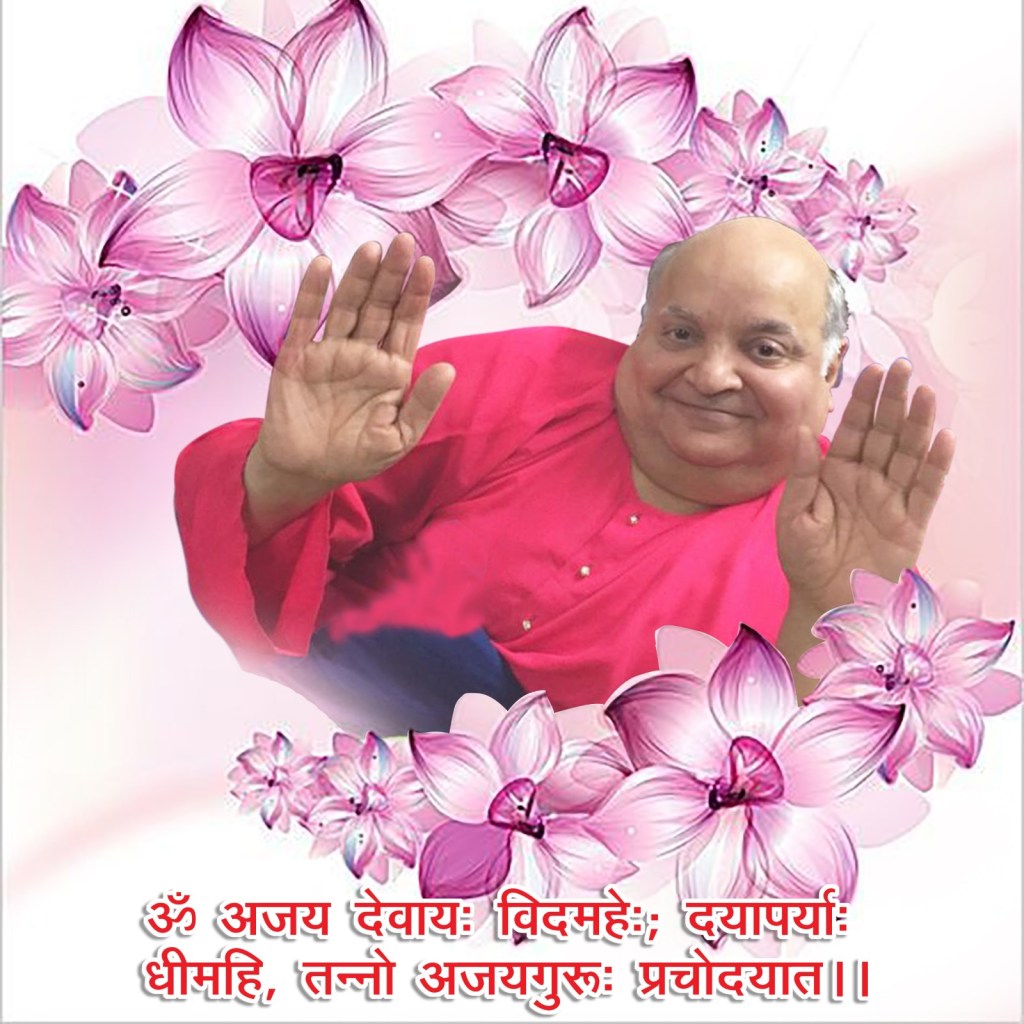
” ‘अशांत’ क्यों रहते हो, ‘शांत’ रहो…”

Swami ji said…

It is routine for us to go to bed at night, apparently, to sleep soundly for eight precious hours – which for all practical purposes is a must , if , we want to stay healthy and happy. We were always told that a deep sleep does wonders – as it prepares us physically and mentally – to meet the bad or good that awaits us the following day. But , how many of us can honestly say – today – that we have a truly restful, rejuvenating, refreshing peaceful sleep at night? Are we able to relate with the wondrous nature of the words – ‘ I slept like a log’…? Or, do we envy those who say that they sleep like a baby? It is not uncommon to hear the words -‘I couldn’t sleep last night !’ ‘ I tried so hard to sleep but I just couldn’t !’ – being said by many of us as we stifle a yawn or two while saying so. But, we must try to find the main reason for the state of
wakefulness in us.

A good, sound sleep could be as distant as a long lost dream for most of us. Surprisingly, we don’t have to look too far to find an answer to this problematic question; as the answer is within us – ‘गहरी नींद तभी आएगी जब हमारा ‘चित’ शांत होगा , और , चित शांत तब रहेगा जब हम पूरी कोशिश करेंगे अपने आप को शांत रखने की

  • irrespective of what has taken place throughout the day.

The cure for ‘अशांति ‘ – lies within us.We might have to put in every ounce of our will power to keep calm ; to remain unaffected; not get perturbed – by all that is happening outside of us; around us. There is bound to be friction between us and people who matter the most to us; things might not turn out the way we would want them to; our efforts might not get the desired result; we could have borne the brunt of someone’s anger; got a dressing down for no fault of ours; feel that life has not been fair and square. We can go on and on , and, keep counting the number of times we were treated unfairly. But , doing so will only add to our misery. ‘बार-बार इन्हीं बातों के बारे में सोच कर, हम अपने आप को ‘अशांत’ करते हैं कि ऐसा क्यों हुआ?’ Is it possible for anyone to sleep with a mind which is flooded with questions – which do not have immediate answers ?

The only way to counter this negative, cynical way of thinking is by bringing about a transformation ; a change in ourselves and be determined to remain unfazed in the face of any such developments that expect a volatile reaction from us. We have to accept – that things will happen the way they are destined to. It is our past ‘karma’ – working in the present moment. Worrying excessively about what tomorrow has in store for us ; when we start feeling that we are the ones who can control our lives and on seeing our over – ambitious dreams fizzle out – ” यह चीजें काफी हैं हमें ‘अशांत’ करने के लिए…ऐसा लगता है कि ‘अशांत’ रहना कितना आसान है; परंतु ‘शांत’ रहना बहुत कठिन…”

The worst part is that the sense of disquiet and anxiety that should have been alien to us – sits comfortably within us – and succeeds in banishing calmness and serenity from our being. Can anything be stranger than this? ‘ एक अशांत,अस्थिर
मन की सोच कैसे ठीक हो सकती है ? Doubt , despair and despondency are bound to cloud our thoughts and decisions. Weren’t Duryodhan’s anger ; agitated and restless mind – ‘ उसके ‘अशांत’ चित और अशांत मन ने ‘- which constantly hungered for more – responsible for making him blind to reason and for bringing his end at the hands of Bhim ? We need to always remember…” ‘शांति’ की ‘इच्छा’ हो तो पहले, ‘इच्छा’ को ‘शांत’ करो…”

” बार – बार गलती करने से हमारा ही नुकसान होता है…”

Swami ji said…

Mistakes are bound to occur. It appears as though they are just waiting to be made by us – unknowingly , accidentally or deliberately – at the spur of the moment. They spare none. Mistakes have been made by – ‘The Infallible One’ too. So, then, how can – we, the fallible ones – not err ? The way we are – nowhere close to perfection ; lost in the allure of temptation – it doesn’t take us too long to make mistakes – and although, we too, can see the negative consequences of our mistakes – as they are visible to us – we find it difficult to put a stop to them. It becomes essential for us to accept that we are making repeated mistakes and , if , so how do we plan to stop ourselves from doing so in future ?

A mistake is made by us when we do something,
unintentionally – which has unfavourable consequences.
And, yes, such unintended mistakes are made – by all of us. Sometimes at work ; sometimes while interacting with friends and family. But, what when we start making the same mistake one time too many ? Are those mistakes – truly mistakes , if , they are made time and time again by us ? Surely, it means, that we have not learnt from them if we are still making them repeatedly. And if we aren’t consciously making the effort to not repeat our mistakes, it is quite possible, that we are not truly bothered by these mistakes and their consequences.

If we forget to do something that causes inconvenience to others ; hurts or offends others – then, it can be passed off as a mistake the first time; but, doing it repeatedly, only displays our lack of empathy towards others, and, a disregard for their well-being. Many times we feign ignorance and forgetfulness for making the same mistake ; but , in reality, we do not want to make the effort to change; and , are too lethargic – mentally, and physically, to go through a process of change in our behaviour.

The magnitude of our ‘mistakes’ and their ‘consequences’ also impact our reaction to them. The smaller they are – the more likely we are to repeat them. Infact, the mistakes that we make on a personal level – by wasting time ; not preparing in advance for the next day ; misplacing things – are laughed off by us as just carelessness – as we have learnt to live by making these ‘mistakes’ everyday.

Making a mistake once – can be called a mistake, but, making the same mistake repeatedly – can no longer be called a mistake, but, rather – a ‘decision’ taken by us – to repeat the mistake again. Why we do this – could only be known to us. Small mistakes committed again and again – further deepen the possibility of making incorrect, wrong , poor decisions. It is natural that we might lie in order to save our skin – but on seeing the ease with which we were able to get out of a ‘situation’ by lying – we could take shelter in untruth and dishonesty regularly. It is then that we ‘decide’ to lie in the future too. We must learn to distinguish between making a mistake ‘unintentionally’ – and our ‘decision’ to make a mistake. One might take a ‘bribe’ – the first time – maybe, to meet the expenditure of an unexpected medical emergency – but, if , he continues to do that in the future to maintain a lavish lifestyle – then it is obvious that he has made up his mind – decided – to become corrupt.It is certainly not difficult for us to recognise the life affecting difference between the two.

The true challenge would be to overcome them successfully. How can we stop ourselves from making mistakes over and over again ? Because, after all, repetition of mistakes, too , might lead us to do something very wrong – which would amount to bad ‘karma’.

When we make a regular ‘mistake’ and are called out for it – we often respond with anger and agitation. This is a sign of our guilt, and, our anger is only an attempt of the ego to cover up for this guilt. We should, however, be grateful to those, who call out, on seeing such behaviour from us. We must reflect immediately and try to understand as to why are we doing something repeatedly that bothers others. And why do we remain unaffected – not bothered at all as to why people are checking us ? Are we simply too lazy to change ourselves ? Or is it because we do we not want to change ? Is this so-called mistake of ours something that we actually want to do ? ‘ हम ने क्या ये निर्णय ले
लिया है कि हम बार बार गलती ही करेंगे …’ We tend to forget that by doing so we are harming ourselves the most – ‘बार बार गलती करने से हमारा ही नुकसान होता है…’

We, should, at such times, consider the consequences of the mistakes made by us. And, we must put ourselves in the shoes of those who suffer from our repeated mistakes. We will gradually realise that we do not want to be someone who causes harm or suffering – either to others or to ourselves. A decision – a promise to oneself – to not repeat our mistakes – will, without any doubt, motivate us to change ; to improve ourselves – not only for our own betterment , but , for the sake of others too.Such a process is very demanding and requires us to be patient with ourselves – as getting over a bad habit – of any kind – is a very difficult task. But, we must look at such endeavours as spiritual endeavours – as when we take a firm decision – ‘ जब हम ये निश्चय करते है कि आगे से हमारे ‘निर्णय’, हमारे ‘फ़ैसले’ ऐसे नही होंगे जो कि बार – बार हम से गलती करवाऐ …’ no one could be happier than our Creator – on seeing His child make an honest, earnest attempt to turn into a new leaf.

Swami ji’s Sandesh… ” ‘ईश्वर’ पे भरोसा और विश्वास रखने से ही हमें हिम्मत मिलती है…’

Swami ji said…

‘Have faith in God.’ ‘Everything will be fine !’ These are words – said to us – whenever we are in times of difficulty. Are these comforting, soothing words said – superficially – just because they are supposed to be said ? Or are they said from a heart that sincerely believes in the truth of these words ? Do all those people who try to apply balm on our agitated nerves – themselves believe in the deep significance underlying these words ? Have they practiced and experienced the ‘true’ effect of these words in real life situations ? Is it their unshakeable faith in these words – ‘ Have faith !’ – that makes them say it, or, do they say it because they’ve grown up hearing these words being said around them all the time? Do their voices have conviction when they say so, or , is there a tinge of doubt , uncertainty in their voice when they say – ‘ Have faith’. But, if , this is the case – then why is it so?

If we look at our personal experiences, we will understand ‘why’. In moments of darkness, when life is seemingly difficult – it might be extremely difficult for most of us to have faith in someone , or , in something that we have not experienced ever before . For most of us, blinded by ‘maya’, it is very difficult to believe that there is someone – who we have never met physically ; never had a conversation with face to face – is ‘the’ only one who ‘can’ and ‘will’ make things right. It is only during such moments that – our belief in God – to whatever extent it might be – is severely questioned and tested by the ‘logical mind’.

Many a times, whatever little faith, belief one has developed in God – breaks away in times of severe distress. But, the statements still stand – ‘Have faith in God.’ ‘In God we Trust.’ To start having faith in God, right in the middle of a crisis, could be next to impossible and could also be laughable to the sages of old. But, to be truly able to have such faith, and, to gain strength from it – we must start somewhere.Thus, for the non – enlightened souls, the best way forward is to muster up courage and strength. They must battle with the mind and ignore its alarming, chaotic thoughts.They must, if needed, forcefully, submit themselves to God. Even if they cannot feel His presence, they must place their trust in Him and wait patiently.

Just like in every other field – mastering the art of having complete faith in God – also needs practice. Ironically, our past ‘karma’ does ensure that we run into deep, troubled waters time and time again – and thus gives us ample opportunities – to repose our faith in God repeatedly – which we must do with firm conviction. Many attempts will have to be made to perfect this skill.
It is bound to be challenging in the beginning. The mind will be restless and fearful. It will tell us that prayer is a waste of time and that our doom is near. In fact, the mind will only recommend hasty, unplanned action – one after another – making us behave like a crazy person. But we must resist. We must first tell ourselves – ‘ Since God has brought us into these circumstances; He will guide us away from these too.’ We must patiently wait for His guidance. We must pray to Him for guidance. Only then will we be able to think straight, and , do what is best for us, keeping in mind the conditions in which we find ourselves.

Gradually, with time, we will begin to be less and less fearful. The mind will gradually cease to panic in times of ‘uncertainty’. When the road ahead is unclear, we can simply meditate on God – with a mind and heart filled with faith and devotion – and ask Him for guidance, and, it will most certainly emerge in some form or another.

We will then realise that we can also do the same with the smallest of our worries. Complete surrender to God will put to sleep the smallest of niggles in the mind. We will realise that faith must be placed in God – not just in troubled times, but, also in those that seem good. Yes, undoubtedly, we will face losses in life.There will be setbacks for sure. We will lose loved ones, and, will also have to leave loved ones behind. But, how we emerge from these – whether with God or without Him – believing completely in His divine will or by losing faith in Him at unexpected losses, tragedies – depends completely on how deep rooted is our devotion to God and Guru ; our implicit belief in His teachings and Him…’ ईश्वर’ पे हम कितना भरोसा और विश्वास रखते है …’

” सच्चे संत हमें केवल ‘समझाते’ ही नही हैं, परंतु हमें ‘समझते’ भी हैं…”

Swami ji said… ‘ They just don’t understand me !’ ‘ Why can’t they understand me?’ – is a cry straight from the heart – when we feel that we have been misunderstood by those, in particular , who matter the most to us, and, who – we, assume, should be the first ones to understand us. We are left wondering as to why are they unable to understand us at all – our temperament ; our habits ; our shortcomings ; our perspective. There are bound to be differences between each one of us, and , it is these differences that should be accepted and understood by all. We blame others for not understanding us but, then, don’t we wear an identical hat of – lack of understanding others. In all honesty, if we want to be understood by others ; we need to understand them first. All of us bear a typical characteristic of being judgemental – and that perhaps explains the root cause of unhappiness in many of us. All relationships that we share and have with others – rest on the pillars of understanding and acceptance of others. The minute there is a tremor in these pillars – cracks develop in relationships due to our inability to accept people the way they are ; in our failure to distinguish the differences between them and us and by putting an end to drawing unnecessary comparisons all the time between people. Only then could there be some scope for improved and increased understanding between all of us. Parents are heard complaining, very often, about the difficulties they face in comprehending their children and vice versa.They admit , sadly , that all attempts made by them, to make their child see perceived wisdom and goodness in the world – is mostly met with stiff resistance from their child’s end. Children at the same time infer that their parents have little understanding of them. Whatever be the provocation – for causing such an unfortunate sequence of events between parents and children – and in many other relationships – ‘ जब लोग एक दूसरे को ना समझ पाते हैं ,और ना ही समझा पाते हैं …’ – whether it is due to lack of respect , lack of trust – it ends up causing great distress for the concerned people equally. Wouldn’t life be wonderful if this wide rift of – mistrust – could be bridged by giving a patient hearing and trying to understand one another – for harmonious relationships between all ? However , among all the relationships that we live through in this lifetime – one relationship in which – we seem to fare better than all other relationships is – the divine relationship that develops between – a ‘सद्गुरु and His ‘शिष्य. The divine, pure love that a ‘saccha sant ‘ bears in his heart for a ‘सच्चा भक्त – on being experienced by the devotee – not only makes him lay his heart out in the open before his ‘guru’ – but he is also willing to listen, obey and adhere to his ‘guru’s’ instructions. The reason for doing so is plain and simple. The devotee begins to understand , over a period of time , that there is nothing that he will be able to hide – about himself – from his ‘सद्गुरु’s divine sight. No thought, no sin , no desire – nothing about the devotee – can remain hidden from the ‘सद्गुरु’.The ‘गुरू’ has no material expectations from his devotee and from the moment ‘He’ sets His eyes on him – He accepts him the way he is – with all his attributes and weaknesses – and from that moment the ‘गुरू’ takes his devotee’s responsibility on himself. Much like a mother who loves her child unconditionally, the ‘गुरू ‘ too loves his devotees equally , and , once ‘he’ has placed his hand on his devotee’s head…’ और जब एक बार अपने शिष्य का हाथ थाम लेते हैं…’ never does ‘he’ forsake him after that. The weaker the devotee ; more resolute is the ‘गुरू’ to lift him from the depths of darkness. ‘He’ is well aware of the past and present ‘कर्म of his devotees – which have made them the way they are in this lifetime. ‘He’ understands the complexes they suffer from and guides them to overcome, not only, their complexes, but also, their shortcomings. A devotee, who in the past had assumed, that all roads of life led only to material pleasures – is willing to be introduced and being led to the beauty of the spiritual path – on being directed by his ‘गुरु to do so. Wasn’t Guru Dronacharya aware of Eklavya’s desire to make ‘him’ – his ‘guru’ and learn archery from ‘him’ ? Guru Dronacharya had committed ‘himself’ to Arjun, and, thus, asked Eklavya for his thumb as ‘गुरू dakshina’. Didn’t Shri Krishna eradicate the confusion ; the dilemma that raged in Arjun’s mind, at the thought of raising his weapons against his cousins, at the Battle of Kurukshetra by imparting ‘ गीता ज्ञान ‘ to him ? ” ‘गुरु’ से बड़ा हितेषी हमारा कोई नहीं हो सकता – क्यूंकि वह हमें ‘समझते’ भी है और ‘समझाते’ भी हैं…”