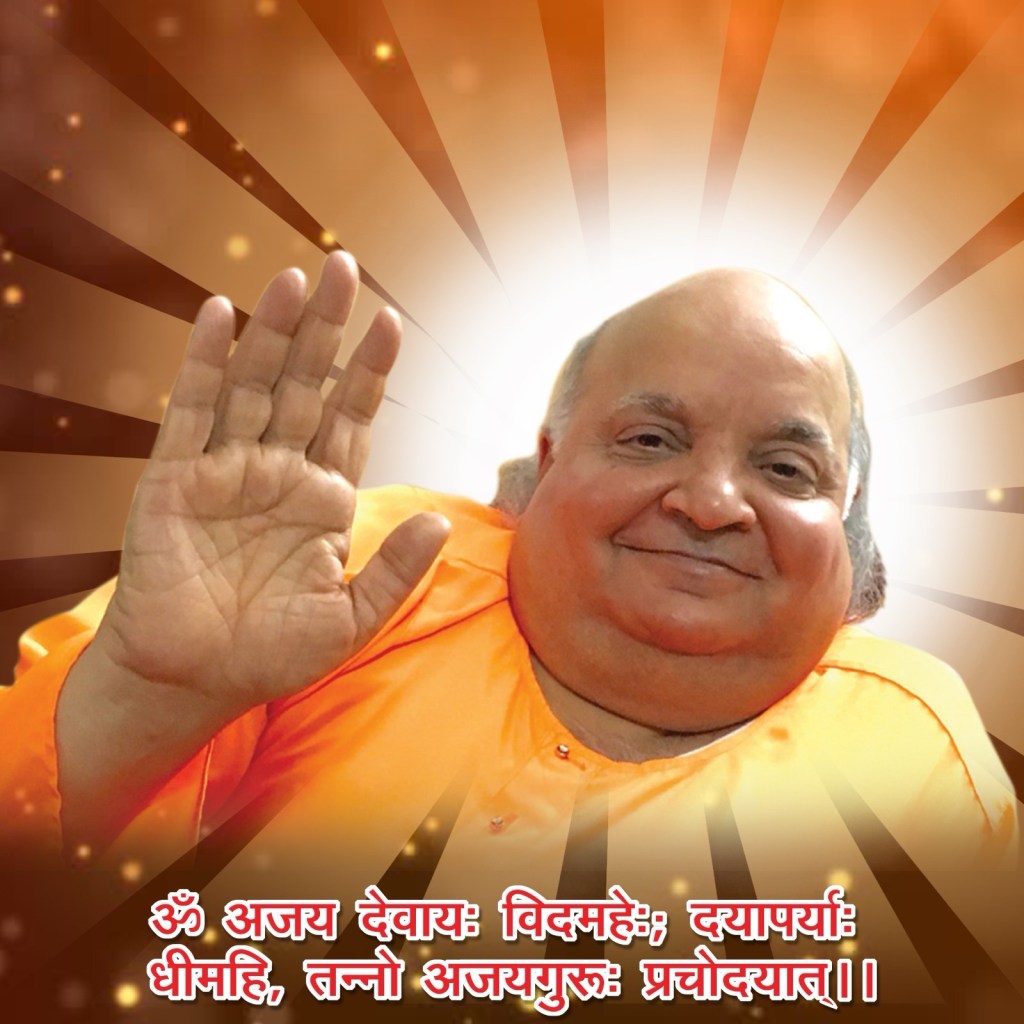
Swami ji’s Sandesh … ” जीवन में हमेशा दूसरों को देने की इच्छा रखो …”

Swami ji said…

” हम दूसरों को कुछ भी देने में इतना घबराते क्यों हैं ? चाहे वह कोई वस्तु हो, प्रेम हो, या मान-सम्मान…” And, we , wouldn’t be too surprised to realise that we were, apparently, born with this trait. In fact, it might not be very difficult for us to recall the copious tears that would flow from our eyes – on seeing another baby take our most coveted toy, or, to be honest, anything at all from us. The fear of losing what belonged to ‘me’ … ‘ यह मेरा है …’ and to see it being taken away by someone else — even if it was merely for a minute or two — was enough to make us weep our heart out. We would be at peace only after getting it back from the ‘offender’ and finally hold it in our hands once again. That is how difficult we have always found it to ‘give’ or ‘share’ with others – anything – that belonged to us. We could blame it on the possessive streak that all of us have, or , it could be because we are small-hearted. The thought of ‘giving’ makes us feel that, “अगर मैंने उसे अपनी कोई चीज़ दे दी, तो मेरा क्या होगा…” and imaginary images of facing a shortage and scarcity of those very things make us behave in a stingy manner. But, on the other hand, we are always ready to ‘take’ from others and, at times, might show no inhibitions in demanding — respect, acceptance, assistance, and love from them.

” किसी को कुछ भी देने के समय हमारे दिल में इतनी उथल-पुथल क्यों होती है?” Why is it that we are filled with misgivings, doubts and our mind swings like a pendulum – oscillating between thoughts — “If I give him the monetary loan that he is asking for, how can I be sure that he’ll return it to me?” “Why should I show any affection or love for him when he has always treated me with indifference?” “Why should I treat him respectfully when all that I’ve received from him is disdain and contempt?” All these doubt-filled, mischief creating thoughts – cloud our mind and fill us with selfishness, and we begin to think of our personal growth and interest, which makes us say, “Why should ‘I’?” “Should I ‘give’ or not?” And thinking on such narrow lines — “हम अपनी छोटी सोच के बाहर आ ही नहीं पाते हैं…”

In that moment of dilemma, what seems to slip from our mind completely is that rather than being thankful to God – for making us reach a position – that makes it possible for us to help someone, support someone ; when we are able to ‘give’ someone, something that is needed by them, in which ever form – we still have the gall to mull over – “मैं कुछ अच्छा करूँ या न करूँ ? उस की मदद करूँ या नहीं ? उनका सम्मान करूँ या नहीं ?”

What we seem to forget completely is that God, on seeing us do ‘ नेक कर्म’, endorses our act and gives us manifold in abundance — ” हमारी झोली उसी चीज़ से भर देते हैं…” – with that very thing that we give to others. If we decide that we want to spread joy and make others happy – wherever we go – we will always find our lives filled with happiness and laughter. What will we gain by clinging on to happiness all by ourselves – without sharing it with others ? Can happiness be enjoyed that way ? Wish good for everyone and see how good things keep happening for us. The more we give, the more we get. But that should not make us ‘give’ with vested interest. We shouldn’t be telling ourselves, “Let me ‘show’ that person some respect. It will be of some use to me later.” Similarly, love begets love. Love all, irrespective of whether you stand to gain something from them or not. People will love you unconditionallyand can there be a better reward from God than that.

Is a ‘saccha sant’ frugal or miserly while imparting ‘gyaan’ to His devotees? He ‘gives’ to each devotee of His – what he is meant to receive in this lifetime – without expecting anything from him. But , even then, doesn’t the ‘guru’ get unflinching loyalty, pure love, and respect from His devotees?

The spiritual seeker must learn to ‘give’. This is much easier said than done – for our fear of ‘loss’ holds us back. But this can be overcome with empathy. When in doubt, think about why someone might benefit from being given your materials or even your effort and time. Put yourself in their shoes, and, try to understand how your giving someone something – might ease their fears or troubles. One must make this a practice, and surely enough, you will be moved to ‘give’. You will yearn to ‘give’ to those who are ‘in need’.

We must realize that to be able to ‘give’ in itself is an opportunity given to us by God – to achieve a sense of fulfillment. ‘Giving’ is God’s work. Those who ‘give’ to ‘show’ others and want to be seen as magnanimous – do not realize that the true gift they have received – is being able to participate in God’s work. When one ‘gives’, one must never expect anything in return, neither from the recipient nor from God. The fact that they have performed a near divine action, which is excellent ‘karma’, is in itself a reward.

Swami ji’s Sandesh… ” ‘पराजय’ से घबराने के बजाय, उससे सीखो और दोबारा जीतने की कोशिश करो…”

Swami ji said …

“जीवन में हम हमेशा जीत तो नहीं सकते… पराजय का सामना हमें करना ही पड़ता है और आगे भी करना पड़ेगा…” Life runs only this way – as the scales of life cannot maintain a perfect balance at all times. They will tilt one way or another. And so it is with victory and defeat. One follows the other. Just like night follows day.

The most valiant warriors, greatest sportspersons, and renowned actors — who are cheered and spoken of with awe and admiration for their remarkable courage and valour ; for their record-breaking feats and acting prowess — one day, are ridiculed and mocked the very next day – when they fail to deliver as expected. That’s just the way the cookie crumbles — but is that how we too should behave ?
Crumble under the weight of being tagged a ‘loser’ – develop an inferiority complex ; begin to feel that we are incapable of achieving anything and make a desperate attempt to hide from others filled with a sense of shame ? And, also, derive sadistic pleasure in making others squirm in humiliation by ‘applauding’ their ‘defeat’ – by making snide remarks on their inability to pass the litmus test – ever. What will we gain by adopting an attitude in which we not only demean ourselves – but others also -” जब हम स्वयं पराजय का सामना करते हैं या जब कोई और पराजित होता है…”

We should not allow defeat and failure to push us off the edge, or , make us feel overwhelmed at the thought of being branded a ‘failure’. Paying heed to the inner voice that tries everything possible to make us feel small by mockingly reminding us — “Oh, you cannot be victorious! What is the point of trying, when you know you can’t win?”- will only ensure that we fade away and give up without trying again. And, is that what we really want within heart of hearts ? Who doesn’t feel the need to be recognised for his accomplishments by attaining them as quickly as possible?

“पराजित होने पर हम निराश हो जाते हैं … सोच में पड़ जाते हैं कि लोग हमारे बारे में क्या सोचेंगे…हम अपने आप को दूसरों के सामने लज्जित महसूस करते हैं…”Why is it that we think more about what others will think of us – instead of motivating ourselves to try again – sure that we will succeed ?”
“How will we face all those we know ?” – is a question paramount in our mind. All these senseless thoughts weigh heavily on our mind – the burden of which – unsettles us with dark thoughts of self – doubt and worthlessness.

We feel as though we are frozen ; caught off guard and are unable to chalk out a plan of action that might give us the strength to believe in ourselves ever again. We can and must try once again and will certainly be successful – should be our motto. We need to erase the words –
‘पराजय’ -‘defeat’ and ‘failure’ from our vocabulary ; and instead focus on the lesson learnt from failing – and put in determined effort to win ; be victorious – ” aur parajay ko kal ko aane wali jeet ka kaaran banaye…”

Swami ji’s Sandesh … “क्या हमें भरोसा है कि ईश्वर हमारी ज़िम्मेदारी संभालते हैं ?”

Swami ji said…

Right from early childhood, we are taught to fold our hands and take God’s name — and nearly every parent makes his baby repeat this act whenever they interact with others — be it family or friends. The happiness and pleasure with which tiny tots perform this act is a sight to behold, as their innocence and purity shine through. They sit atop their father’s shoulders, take His name with joy in their hearts, focusing more on repeating His name alongwith the newly introduced action of folding their hands – as they surrender themselves completely to just getting His name right. Unknowingly, our sole focus is on God’s name during ‘those’ idyllic days of babyhood – as babies don’t and can’t have any ulterior motives. Can they ? They have not a care in the world, certain and absolutely sure that their parents will ‘carry them’ — and ‘everything to’ them, ‘for’ them — and will be with them constantly and always.

But as time passes and we grow up, varied interests distract us. We begin to centre more on these, as we feel that – the fame, money, power, and position that we could be ‘enjoying’ at that moment – have been created by ‘us,’ by only ‘our’ hard work, ‘our’ dint of merit. We start assuming that — “वो हम ही हैं , जो सब कुछ कर रहे हैं …” The gay abandon with which we used to perch ourselves on our elders shoulders, in our childhood, appears to diminish greatly during our adulthood, as we take it for granted that the responsibility for every thing rests on us, and ‘we’ are the ones who painstakingly bear and carry everyone’s burden — our parents, children — on ‘our’ shoulders. We fail to see that it is not we, but “वो ऊपर नीलीछतरिवाला जिसने ‘हमारी’ सारी ज़िम्मेदारी अपने कंधों पर ले रखी है …” But what is it that makes us hesitate to accept the fact that — “जब एक पत्ता भी उनकी मर्ज़ी के बिना नहीं हिल सकता है तो क्या हमारे जीवन में कुछ भी उनकी इच्छा के बिना हो सकता है?” Where and why does that childlike innocence, love, and faith in God vanish as we mature? Very often we hear people say… “मैं करूँगा…” and thump their chest on achieving their goal. It is wonderful to be elated on realising a dream, but , do we realise that – it could only happen because – He allowed it to manifest ; to materialise – by taking upon Himself the responsibility of equipping, empowering, and enabling us to see its fulfilment — and this is exactly what our ego and ‘अहंकार’ blind us to.

Do we honestly ask ourselves — “What is it that makes us take His name?” Why do we offer prayers to Him?” Is it out of pure love and respect for our Creator ? Is it out of fear – that if we don’t pray – things would not work out well for us ? Or is it more need-based ? Don’t we keep on asking Him for something or the other all the time ?Barely is one wish fulfilled by Him when we put our next request to Him. Do we ever feel that we should give up the ‘give and take’ policy that we seem to have formed with God – by trying to win Him over with the ingratiating words – “ईश्वर ! आप मेरी ये इच्छा पूरी कर दीजिए और मैं आपको ये चढ़ाऊँगा…” Why have we formed a business relationship with God? Does He really need any adornments or bribes from us? But we somehow believe — the heavier our offering to Him, the more our coffers will fill.

What if we changed our ‘desire-riddled’ relationship with God – with one, instead , that sees love overflowing from us for Him ? Let us feel love for Him — only love — divine and pure, which makes us so blissful that materialistic desires seem inane and insignificant in front of Him. Did we ask Him for anything as a baby ? Didn’t He rejoice in hearing us baby-mouth His name and fulfil all our needs without us giving a voice to them? It is only when we reach a blissful state like this — when we stop asking from Him — that we will be able to see the divine manner in which He bears our burden and gives us what should be given to us in this lifetime — without our having to ask Him for anything.

What we all fail to understand is that if our relationship with God were purely transactional, and, if our offerings got us what we wanted, then we would never truly understand God — or His power and grace. No matter how well we think we know what we need, God alone knows best.

We often misinterpret surrender to God as a sign of weakness or passivity — as though we are resigning ourselves to chaos or helplessness.
But that is certainly not what surrendering to Him entails.
Surrendering to Him means having faith and belief that He is making everything happen for the best. Such a mindset is truly empowering, as one is able to act with confidence and also know that some grand surprise or revelation is just around the corner for us. Such a way of thinking helps us see His miracles more clearly and make us enjoy life’s moments to the fullest.

Swami ji’s Sandesh… ” हमारे ‘कहने’ में और ‘करने’ में इतना फ़र्क क्यों होता है?”

Swami ji said…

“I will do it…” “I will look into it… That’s a promise…” “Rest assured it will be done…” – we say with such promise in our voice that the person concerned – who has a problem at hand and is looking for a solution – feels energized and hopeful with just these reassuring words, and , feels as though a great weight has already been lifted from his shoulders. Such is the power of words that ring in a promising tone, expressing support and strength to —
” उन डूबते हुओं के लिए , जिनको तिनके का सहारा ही काफी लगता है…”

But how many of us, to be honest, live up to the expectations that we create in whosoever it could be – be it a family member, a friend, or maybe an acquaintance too – by promising to help them in which ever way they had wanted help from us ? Were we sincere while extending our support to them? Did we actually mean to do whatever we were capable of doing for them? Or had we said so, as, momentarily, we got carried away ; became emotional in the spur of the moment and had impulsively promised to stand by them – but, on realising later that we would not be able to help them, we had just melted into the darkness of unkept promises and set a perfect example of those who just say anything and promise anything as – ‘कहने में क्या जाता है…’ – all the time knowing very well that – ‘जो वो चाहते हैं हम ‘कर’ ही नहीं पाएंगे…” Doesn’t matter that – ‘हम ने ‘कह’ दिया था कि हम उनकी मदद करेंगे…”

Apart from promising to rescue others from a challenging situation – what about the instances when we promise to give up a vice, and, on persistent reminders and questions from others, we lie to them by saying that we have given it up – even when we are nowhere close to trying to give it up?

We are in such a hurry – ‘दूसरों की वाह -वाही कमाने में … वो कितना अच्छा इंसान है , हमेशा सब की मदद करता है…Yeh sab सुनने में…’ that it becomes easy to make a promise, even if it’s a false one – and when it is time for us to deliver – well, the disappearing act is never very difficult; particularly for those who are exceptional at creating a deceptively good’ image of themselves.

It is only when we become aware, conscious of the underlying import of the words – ‘कहना कितना आसान होता है, पर करना उतना ही मुश्किल …’ and assimilate the hidden significance of these words – it is only then that we are likely to pause, think, and deliberate – before making a commitment, a promise – and prevent ourselves from becoming the cause of creating false hope within the other person. Instead of ‘showing’ our willingness to help others – when we don’t intend to do so – we should ‘promise ourselves’ that, if, in the future, we give our word to anyone – we will abide by what we say. When we make this a habit, we will see a change for the better in ourselves – as we will think twice before falsely committing ourselves to others; weigh and watch the words that are said by us, and once we promise something to others – we will make it a point to keep it, fulfil it.

A spiritual seeker stands to gain absolutely nothing , if, in order to please his ‘guru’, he makes false promises to Him – while being instructed to take certain steps that will help him progress on the spiritual path. In all earnestness, a devotee might promise his ‘guru’ – “मैं ऐसा ही करूंगा…” “मैं ये सब करूंगा…” – but later, for whatever reason, he fails to follow through on those promises. He must understand that a promise or a commitment made to his ‘guru’ is as good as an offering made to the divine. Breaking that promise is not only a colossal lapse on his part but it also becomes a cause of
failure in spiritual discipline.
Eventually, our actions must match our words. It is as simple as that.

Is the ‘Ramayana’ not a profound lesson in this truth ? King Dasharatha honoured his promise to Queen Kaikeyi – to grant her two boons that she had asked for , from him. Even though it broke his heart and led to immeasurable sorrow, he kept his word. And it was this very promise – painful though it was, that set Lord Rama on his path to the forest, and , ultimately to conquer Ravana.

A moment of truth upheld, a promise honoured, led not just to personal trials but to the triumph of ‘dharma’ over ‘adharma’. The story reminds us that integrity in speech and action – form the very foundation of character and of destiny.

Swami ji’s Sandesh… ” अपने ‘गुरु- मंत्र ‘ को अपना सबसे प्रिय मित्र बनाओ…”

Swami ji said…

” I am getting bored…थोड़ी देर जरा उस से गप- शप लगा के आता हूँ…” – we say eagerly , with happiness lighting up our face, at the prospect of talking to a friend. How many times in our lifetime have nearly all of us spoken in a similar manner? Boredom sets in very easily in all of us ! And, this, even when we talk about the never-ending struggles and labour of life which apparently should have kept us occupied. We complain about the rapid pace at which life is passing by – leaving us with no time for ourselves. But, since we are easy on the ‘ears’ – which is known to ‘them’ – the need to hear ‘all’ that is happening around ‘them’ – makes ‘them’ propel us to gossip keenly with others and know the latest tales of those who are both, known and unknown, to us and, thus, we, are somehow always able to ‘find’ some time to chitter – chatter.

But, then again – till when, for how long – will we continue to overcrowd our mind with all that unnecessary information – which could be of no use to us ? Of course, we need a change in the course of our day and having a light-hearted conversation is not a crime ; but, the problem arises when the ‘talking points’ refuse to leave our mind – specially those related to materialism. If, we are honest to ourselves, we must try to recall the last time we were fortunate enough to hold conversations that were inspirational ; worth emulating and spiritually uplifting ? Aren’t we influenced and affected by what we hear ? Talks centred around material prosperity will make us sink in the mire of materialism further – as there is no end to our craving for material luxuries.We need to understand that there is more to life than comforts and conveniences – and our mind needs to be purified with thoughts focussing on cleansing our ‘soul’ and making ourselves worthy of experiencing His divine ‘दर्शन’.

Can a spiritual seeker who has been initiated by a ‘सच्चा संत ‘ ; received his ‘गुरु -मंत्र’ – benefit in any way by knowing about ‘all’ that is happening in the personal lives of others? Just getting upset and distressed at the events unfolding in their lives – but knowing about his limitations at the same time ; his inability to help them – will not solve the problem. Rather, ‘ the thought ‘ on getting lodged in his mind- tends to fix itself there – unless and until the ‘साधक’ is mentally strong enough to let go off the thought ; release it and replace it with the sound and syllables of the ‘गुरु -मंत्र ‘. He needs to remember that he has had his fair share of enjoyment in the ‘संसार’ before being blessed by God and ‘गुरु’ – with the ‘गुरु- मंत्र ‘, and, now is the time for him to focus on his spiritual growth.

The power of the ‘गुरु- मंत्र’ and the positive effect that it has on us – in an unfathomable manner – in every aspect of our life , can only be realised , once we make it a habit of repeating it , silently , within us again and again.
Thoughts – happy and sad ; illuminating and depressing – will flit through our mind. Let them fly by. We must be particular to entertain them, if, at all, for a fleeting second only ; make ‘them’ our temporary guests only – but remember to make our “गुरु -मंत्र ‘ a permanent resident in our mind – as it alone makes us understand why we suffer pain one day, and, see a day most joyous the very next day. We begin to comprehend that whatever is happening in our lives – is happening for a reason – and had to happen only this way. Every incident in our life – whether it was good or bad – had to take place and lead us to the point where we find ourselves today. We stop questioning life – and ‘resistance’ and ‘arrogance’ – give way to ‘acceptance’ and
‘humility’. The repetition of the ‘गुरु- मंत्र’ takes away the darkness that envy, anger and hatred had covered us in – when the light of knowledge makes us aware – that we are and will always be where we are supposed to be – as per His wish.

The internal strength that a ‘गुरु मंत्र ‘ provides us with cannot be provided by anyone else. In thankfulness and despair – ‘it’ stands by us and rejoices with us – while at the same time gives us strength to face any crisis. Unlike a best friend – who could part ways due to a misunderstanding – the ‘गुरु – मंत्र ‘ stands by us, stays with us – guiding us at every step – till our last breath.

‘गुरु – मंत्र’ makes us believe in the presence of God – as the more we repeat it – the closer we feel to Him. We take His name, pray to Him and expect Him to listen to us – and so involved do we become in laying out our list of wishes and requirements before Him that we are unable to understand that the ‘गुरु- मंत्र ‘ is silently and quietly enabling us to hear Him.