“अपने को अच्छे के लिए बदलो …”

Swami ji said …

” Oftentimes we read or hear about the stories of great personalities – of how principled, disciplined and the epitome of perfection they were ; long before they gained prominence and success. If we learn from history, we learn from every day life situations too. When we see how our friends and acquaintances, who have worked hard, struggled and persevered early on in their life, have now moved ahead and are doing well for themselves.This more often than not makes one feel that he has ‘missed out’, that his chance is ‘lost’ and he is now doomed to drudge along in life no matter what he does. One can often hear people say – “If I had done this then ! if I had known better !”अगर मैंने ये किया होता …’ These words only express regret and repentance. Opting purely for this path, without changing for the better, is of no use and people begin to live their life in despondency and depression.”

” And, while it is true that one has erred by possibly not making the best use of his time or by bypassing great opportunities – it is also important to remember , that the time we have ahead of us , is even more precious than that which has passed by , and , if utilised in the right manner one can make up for his past mistakes.”

” Mistakes are often made when we do not know better ; but, we do repent, when we realise about our foolishness.The real tragedy of life would be to not begin improving ourselves when we are aware of our faults and shortcomings, and there is no better time to start than ‘now’.”

” However, we find this hard to accept. Often we are simply paralysed by the idea of the amount of effort we will need to put in to begin afresh. These ideas arise as we wrongly begin comparing ourselves to ‘others’. For example, a student could feel that there is no point in studying hard for an exam at the final stage, as he is convinced that even his best efforts will pale in comparison to that put in by the students, who had taken their studies seriously right from day one. People convince themselves that taking up exercise or yoga at a later age will be of no use for them, as only those who have had these healthy habits life long, could enjoy their benefits.”

” These wrong, ill – conceived ideas stem from the fact that we keep comparing ourselves to others and their successes. We feel that we have to ‘catch up’ wirh them and only then will our efforts to live a better life be ‘rewarded’.This is a wrong approach towards life in itself.The struggle to better ourselves must be a continuous process ; one that we must embrace and accept wholeheartedly. If an avid smoker decides to quit smoking in the last stage of his life – his decision might possibly not help him live longer , but, he would still have lived a few days of his life free of an addiction, feeling victorious that he had overcome his weakness. If an employee at a company decides to become a more sincere, dutiful version of himself, albeit at a time when he has been surpassed, and, that too deservedly, by his peers in the corporate ladder – does it render his efforts to turn into a new leaf useless? It is possible that he might not be able to ‘catch up’ with those promoted over him, but, he, nonetheless will become a more trustworthy and reliable worker.”

” Not all monks get enlightenment in a lifetime. Does that mean that their lives are wasted? Does that mean that their spiritual struggles have been for naught? Are they not already in a much purer state of mind than most in the world ? Do they not have a much better influence on those around them? God does not care about what we achieve – ‘every thing’ that we ‘get’ is what ‘He’ has planned in store for us. What God truly cares about is our ‘karma’ – and the struggle to better ourselves is ‘good karma’ in itself.”
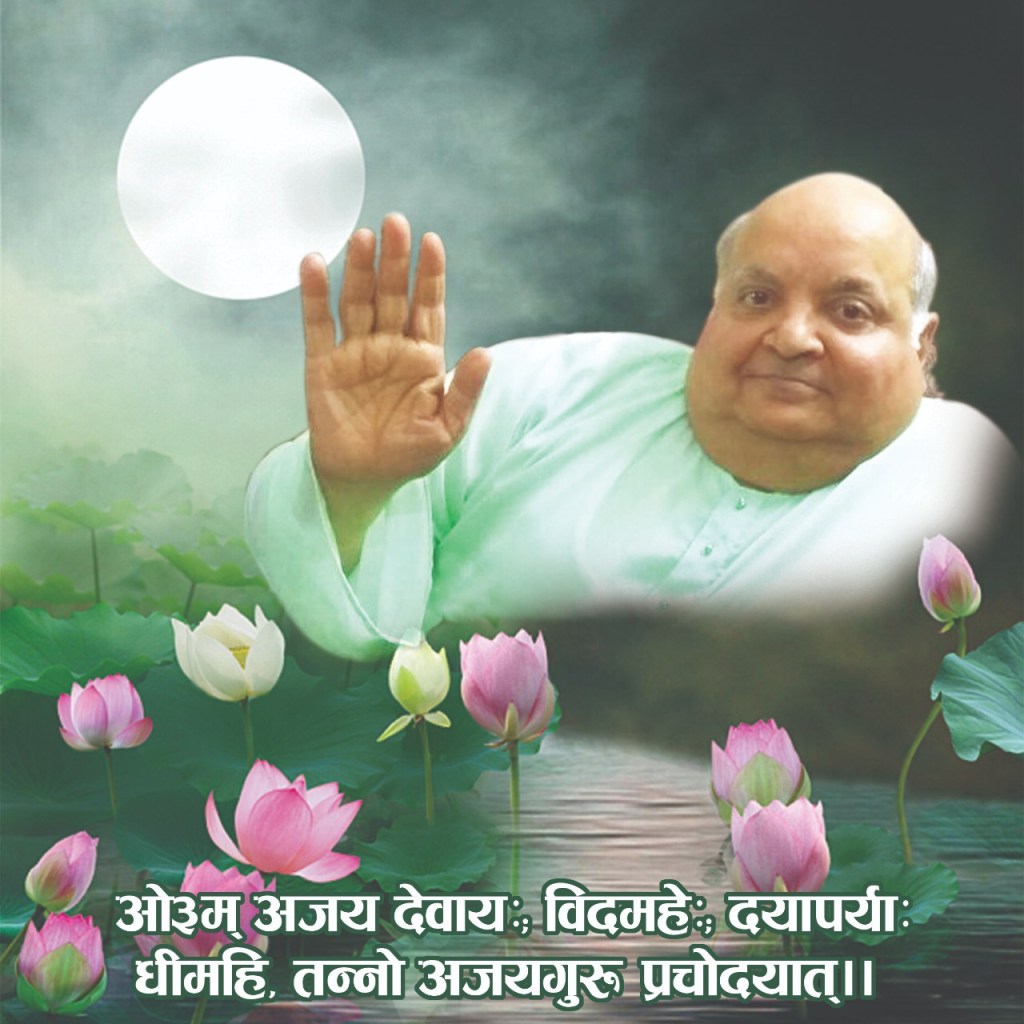
” ‘गुरू – वाणी’ मे आस्था होनी चाहिए …’

Swami ji said …

” All are equal in the eyes of the law of ‘karma’. Even, the great sages, and, powerful kings of old, could not escape from the fruits and consequences of their ‘karma’. Good or bad – all the manifestations of one’s past ‘karma’ have to be experienced in this lifetime.There is no escape from this – ‘chahe woh ‘राजा’ ho ya ‘रंक’…’ It thus becomes important that we strive to perform good and pious actions as the fate of one’s soul depends solely on his ‘karma’ – good thoughts , deeds and words.”

” Although we do have a fair understanding of the word – ‘karma’ , yet, in a strange way we pay a deaf ear to the immense significance of it , by continuing to behave in a manner that suits us at a particular moment of our lives. We pretend to be oblivious to the outcome of our ‘karma’ ; bad ‘karma’ in particular. It is as though we find it so easy and convenient to let lies after lies tumble out of our mouth, concoct one story after another, commit fraud – knowing very well that it is so simple to speak the ‘truth’, to be honest and be above deceit. But, being the complicated lot that we are, we opt for the treacherous path without blinking an eyelid, somehow convinced that this route of short cuts will benefit us more. The noble path of righteousness and honesty doesn’t hold any appeal for us.”

” In this dark world of मोह-माया, a Guru’s teachings are like lamps showing his disciples the way towards the divine light of enlightenment. These teachings appeal to us to let our ‘good’ and ‘pure’ side emerge. A sadguru extols honesty, hard work, humility, discipline, other noble virtues and guides us to imbibe these in us.”

” But, life, as we know, is an amalgamation of good and bad situations – a sea of numerous crests and troughs – highs and lows. During the good days, even a thief can be generous and giving; yet, it is during the bad days that even an illuminated soul can question the word of God. Similarly, in trying and tough times, devotess and students often face situations where ‘doing the right thing’ seems further more painful and sometimes even illogical. It is in such times that the struggle between fight and flight appears. The ‘fight’ against the urge to cave into one’s self – serving, self – centred nature that often leads one to take decisions and actions that are selfish and inherently wrong.”

” To win this ‘fight’ a disciple must have faith in his Guru’s words when He reassures him with words which are not empty, but , ring with commitment and promise when He tells the ‘bhakt’ … ‘सब अच्छा होगा…’ ‘अमृत बरसाऊंगा।’ ‘तुम चिंता क्यों करते हो मेरे बेटे ।’ मै सब कुछ ठीक कर दूंगा।’ One must focus on only the Guru’s words and ignore the fears of the mind. Yes, this is much easier said than done, but , this is a disciple’s own personal struggle – the result of which dictates the direction his spiritual life takes in future.”

” One way of doing this is by remembering at the end of the day the smallest of blessings that one’s Guru has bestowed upon him. One must try to remember that a Guru is always there for his disciples in one way or the other. We must see that a Guru always provides a solution at the ‘right’ time and even the ‘bad times’ do not truly hurt us. It is the stress and tension that we let our unguarded minds create that make the experience ‘bad’. The trials and tribulations of life will definitely take place, but , a Guru ensures that we emerge from them unscathed and stronger. If a disciple simply remembers this about his Guru, he will remain unfazed and not commit bad ‘karma’ even in the most difficult circumstances.”

” ‘श्रेष्ठता’ जन्म और परिवार से नही, बल्कि अपने ‘कर्म’ से प्राप्त होती है…!”

Swami ji said…

” More often than not we hear grand proclamations – ‘ I am of royal blood! My father is a leading industrialist of the city ! My mother owns a chain of salons !’ We hear such utterances being made, not only by others, but by us too, when we get carried away and are in a rush to create an impression on others about our wealthy lineage or the ‘bankable’ name that our family has or even the power that the family name wields. And, then we wait eagerly to see the impact that our weighty words have on others. The satisfaction and pleasure that we derive on seeing some kind of recognition and acknowledgment from them makes us feel good – needlessly. During such moments we tend to forget the extremely meaningful words…’ What’s in a name!’ These words should actually serve as a reminder that it is not only our birth or the name of the family in which we are born that ascertains and reflects ” ‘हमारी ‘श्रेष्ठता’ as an individual, बल्कि हमारे कर्म, हमारी कला और हमारे गुणोंं से ‘श्रेष्ठता’ प्राप्त होती है!”

” Anything in excess can never be good for us. Neither fame nor fortune. The pleasing thought that we belong to a family which has lockers filled with all that one can dream of, can be very comforting and reassuring, but, it can have a detrimental effect on us too. It can make us lethargic, less imaginative and at a loss of innovative ideas – as we can always feel that the rock solid support that our family has provided us with in the present, will continue to take care of us in the future also. And, thus, there would be no point in us trying to be enterprising. In such circumstances, the thought of upskilling ourselves in any field might not interest us at all, as we could be happy with the picture pretty scenario in which God has placed us and continue to enjoy our ‘prarabdh’ without raising a finger.”

” But is this how one would like to live his life? Twiddling one’s thumbs ? Doing nothing ? ‘ जन्म तो सभी लेते हैं किसी न किसी रूप मे।’ But, not for a minute should we forget that our existence on Earth is remembered by the ‘karma’ done by us – our deeds, actions and thoughts.”

” इंसान तभी श्रेष्ठ बनता है, जब वह पवित्र ह्रदय से नेक कर्म कर्ता है, अपनी कला में निपुण होता है, अपनी कला की वजह से एक अलग पहचान बनाता है और अपने गुणो से सबको प्रभावित करता है।’ We have to carve an identity for ourselves ; to create a name for ourselves, rather than falling back, and, depending on the name and fame of the family to which we belong. One’s life can only be called exceptional if one has succeeded in touching the lives of those who had forgotten to smile; puts others before himself and is remembered for his selfless service to mankind.”

” Can we ever forget Duryodhan’s fateful end in the Mahabharata ? Born to Dritharashtra, he was certain that he would be crowned King, as he saw it to be his birthright. But, his lineage, of which he was extremely proud, could not help him, in any way, in the end. He saw all that he coveted, slip away to the Pandavas, who with humility, sacrifice and great effort earned their right to rule the kingdom. Wasn’t Duryodhan’s ‘karma’, his arrogance, stubborness and greed responsible for his downfall ?”

“अच्छे ‘कर्म’ और सच्ची ‘भक्ती’ – ‘ध्यान’ के लिए महत्वपूर्ण है।”

Swami ji said …

” The divine beauty of meditation ; the spiritual wealth that ‘dhyaan’ enriches us with – can only be understood when one begins to devote some time to meditation. Meditate on God or ‘guru’. The time spent in isolation, when one tries to be in a state of external ‘maunn’, notwithstanding the ‘maunn yuddh’ that breaks out internally between positive and negative thoughts – is the time most sacred – as we try to be one with Him during these moments. It is the internal strife that battles within us, that needs to be subjugated and controlled. Believe me , when I say, we are capable of dousing out the fire of rage and envy with a few drops of spiritual nectar that He showers on us , when He sees us making a humble, but, honest effort to know – who we truly are, where have we come from and where will we finally go – through meditation. “

” It takes years of practice to master and conquer the divine challenges of the spiritual path of meditation. There are days when one feels and senses the presence of God or ‘guru’ within the first few seconds of meditation ; but, then there could be days when inspite of our repeated, furtive efforts, we are unable to feel proximity to God. It is during days and moments like these that we need to reflect on and analyse the manner in which we had conducted ourselves during the day. What positives and negatives had we done through out the day ? Had we done something wrong deliberately – knowing very well that what we were about to do was wrong , but , had still gone ahead and done it , silencing our conscience that had tried to protest against the bad ‘karma’ that we were about to do. Had we knowingly hurt someone with our searing words, uncaring about the destructive effect they could have had on that person ? But, we had continued to rant and rave, heedless of the humiliation that we were heaping on him. Do we for a moment think that our ‘अंतर आत्मा’, which is a witness to such harsh behaviour from our end, will be at peace and allow us to experience God’s presence anywhere close to us.”

” But , when our ‘karma’ is noble and good – ‘ हमारी रूह’ that is further purified by ‘humare achche karma’, enables us to see the glory of God or ‘guru’ as He manifests His divine form and love for us in ways, which can only be experienced to be believed, while meditating.”

” All of us pin our hopes on achieving some target or the other , and , on acquiring it , our happiness knows no bounds. We praise the greatness and glory of The Master , worship Him, offer prayers and meditate on His name with great faith and devotion, glowing in the comfort that He is always around us, paying heed to our fervent appeals and fulfilling our wishes.”

” But, does our faith and devotion in Him waver when our desires and ambitions are not met, as and when, we want them to.We have a tendency to question His magical powers and ask ourselves whether our faith in Him – complete and absolute – is actually worth it. Can a mind as doubtful, distracted and suspicious as this think of nurturing ‘ bhakti ‘ , leave alone ‘sacchi bhakti ‘ and centre itself on God out of pure love , devoid of desire even for a few seconds. The Supreme bliss and divine joy that is experienced while meditating cannot be measured in terms of wealth , but , the wealthiest person is one, who has succeeded in cleansing his ‘soul’ from all the impurities that had accumulated over it , in the previous lifetimes, by meditating – earnestly and religiously, and , is recognised by His Creator as being worthy enough to be merged with Him – thereby attaining liberation from the never ending cycle of life and death.”

“सफलता – ‘खुशी’ में निहित है …”

Swami ji said …

” Society today is obsessed with ‘success’. We are constantly told that we must be ‘successful’. We idolise and worship anyone who society considers to be ‘successful’. Money, wealth, beauty, fame, power – are the general parameters used by us to measure ‘success’.”

” Where are you in your career? How much money do you make? What hold and influence do you have over others? It is answers to these questions that tend to define whether or not you are successful. And it is these questions that drive man to keep toiling and working hard at whatever he decides to pursue.”

” Let us think of success in terms of money. Is having a large bank balance ‘success’ in itself ? For some period of time, it could be. But, then will the joy of this success last forever ? Would it not feel better to have an even larger bank balance? Why are we comparing ourselves with others who are richer than us? The chase would hence begin again. Are joy and happiness thus supposed to be only temporary pit stops in this race towards success? And, what if we are unable to achieve the standards that we have set out for ourselves? Has then all our effort and toil been a complete waste?”

” It would thus appear that we live life only to ‘achieve’ certain results – with much time spent in only hoping and praying that we ‘make it’. It is such a way of living ; such an approach towards life that creates stress and tension.”

” Today, people are constantly stressed. In a world where everyone knows what the other person is upto – they put in everything to be one up. They work hard tirelessly – only with the constant pressure to outdo others and to make a name for themselves. Such a life, though initially thrilling – is one that is shortlived in terms of mental peace and joy – as everyday there will be someone doing better than us at work , or , in their social life, or , in some other aspect. On the other hand being unhappy with our personal set up, status and slow success rate ; and envying the other person’s fate will only keep us up at night leading to further unhappiness and ill health.”

” It is thus important to understand that happiness is not something we need to earn or receive from external factors. it is something we need to bring about ourselves ; find it within ourselves. Just because we did not hit a target today, or, some unexpected obstacle presented itself – does not mean that we cannot be happy. We make life morose and depressive by sweating about every other problem or shortcoming we face. Instead, we must learn to shut our minds from all these at the end of the day , and , simply seek to enjoy the time we have to ourselves. Infact, we must strive to smile even in the trenches. Facing and solving problems with a smile more often than not sees half the battle won.”

” We live only in the present moment and if we are not happy in that moment, then we should be asking ourselves – why that is so ? Life must be lived with the aim to be as joyous and blissful as we can be.This will direct us to perform our actions in a better and thoughtful manner. We will automatically gravitate towards good ‘karma’ and no matter how hard the task – we will be motivated to tackle it efficiently. Our actions will make us ‘happy’ and ‘joy’ will drive our actions. A happy mind is one that knows it is not doing anything wrong. We will thus work as hard as we must; we will stop when we know we must; we will also be responsible and dutiful, as our conscience will not allow it otherwise. At the end of the day- if our heart is satisfied with our efforts – we will be happy – and that would mean being ‘successful’.”

” It is thus important for us to recalibrate and think in terms of ‘true’ happiness. It is only then that we will no longer feel the pressure to ‘compete’ and always ‘win’. We will instead simply be doing what we had come to do in this world happily – God’s work – and, that in itself, is all the reward and ‘success’ in this world.”