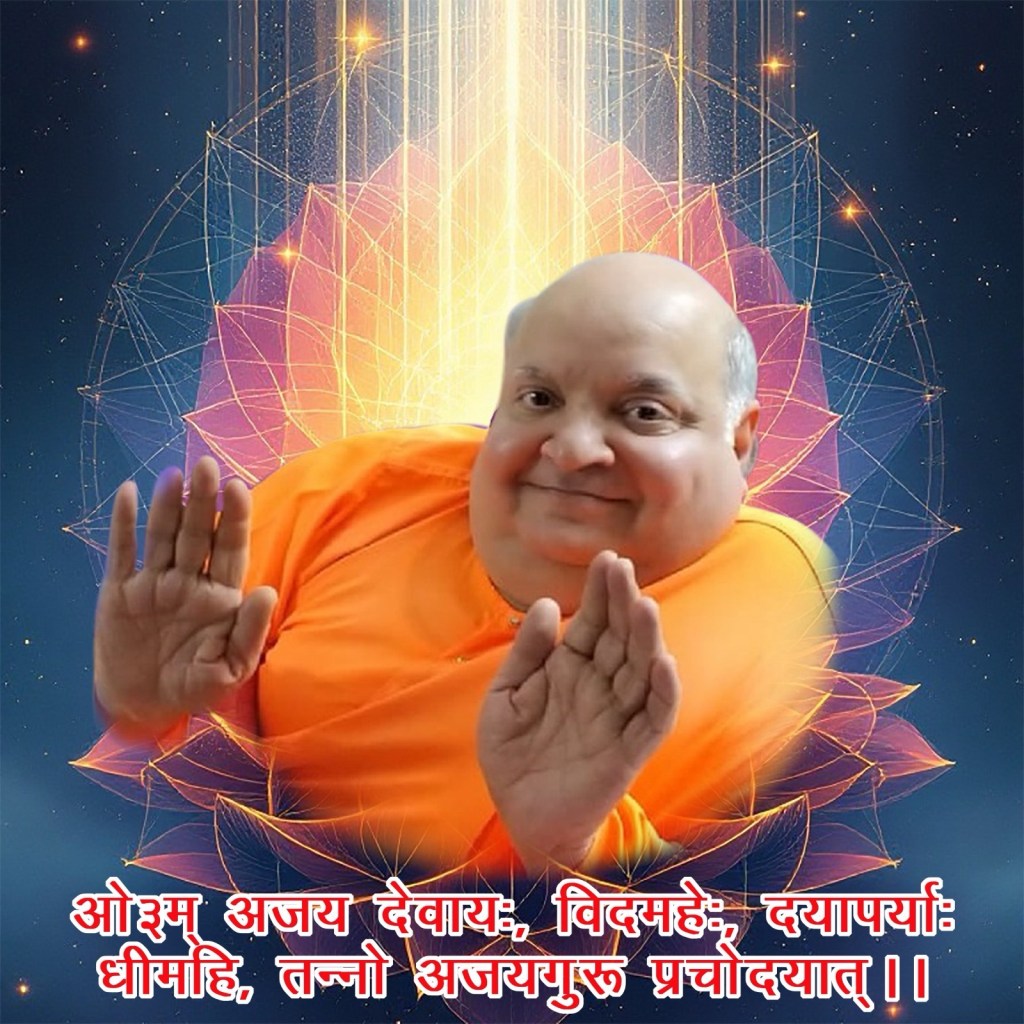
Swami ji said…
The lip-smacking glee that we experience, that wicked pleasure, that self-centred smugness, and the faintly malicious smirk that becomes visible on our face—“जब हम दूसरों को गलत साबित करने में, और अपने आप को किसी भी हालत में सही साबित करवाने की होड़ में लग जाते हैं…”— is an undesirable trait- widely prevalent among many of us.
It is perplexing to analyse the reasons that make us behave in such a pompous and authoritative manner , as though we have won a contest and been declared victorious. But victorious over what? The issue itself becomes irrelevant – as what seems to matter to us is whether we have emerged triumphant or not.
But why are we constantly engaged in this mental war with others? Even with our family and friends, we often find ourselves stating opinions and insisting that they are the truth. In fact, we seem to have rebuttals ready for anything said by others that contradicts us. To an outsider, it would appear that we are not conversing, but rather engaging in a heated verbal debate.
The opinions and perspectives that we hold and are willing to fight over- are as varied as the many aspects of life— politics, health, wealth, and relationships. We are ready to argue and prove ourselves right over anything and everything under the sun. Whoever has our ear, whoever we feel we can influence—we try to impose our views on them, without making an effort to understand theirs.
To be successful on the spiritual path, it is essential for us to check this behaviour within ourselves. But this is easier said than done. When we engage in such behaviour repeatedly, we are, in effect, feeding our ego and inflating our pride.
How then can one, who has all his life convinced himself that only he is right, open his mind and heart to others? How can he accept that he might be wrong, and that perhaps he does not have the complete understanding of what he speaks?
If this is the tendency within us, how do we correct it? It is essential to practise humility. When hearing someone say things that we do not necessarily agree with – we must first check our emotions. The urge to interrupt, the urge to disagree immediately, must be controlled. This in itself is a great practice to improve ourselves, for it enables us to observe and control the emotions that arise within us. We often realise that it is inexplicable, deep-seated anger and frustration that make us constantly disagreeable with others.
The next step is to learn to accept what is being said. It may surprise many of us that this is not as difficult as we think it to be. To simply nod in agreement, to try and see someone else’s point of view, does not mean that our ‘अस्तित्व’— our basis of existence— is erased. It means that we are accepting that someone else can hold a perspective different from our own. It means that we are accepting that their experiences have shaped their beliefs in ways that are different from our own.
Such thought and reflection make us realise how vast the world is, and how small our own lives and experiences are in comparison. This makes us more humble.
It is this humility that makes us realise that no matter how grand a life we live, we will never fully understand how this world truly works. We begin to see that what we consider right – may appear wrong in someone else’s eyes. This humility gradually leads to the realisation that no amount of intellectual analysis can ever fully explain the world to us, and, that we must ultimately surrender to God’s will.
Do not let the mind believe that it knows everything. Yes, we all need a system of thinking, a way of analysing and our own personal code of conduct. These are what define us. But it is important to understand that these are limited to us. Just as we believe in ourselves, others do so too. And we have no right to impose ourselves in any way on them.
Lord Vishnu took various ‘avatars’ when He came into this world. Did every ‘avatar’ have the same personality? Did they preach the same principles? Were Lord Ram and Lord Parshuram the same? One was calm and composed— the epitome of a king; the other supremely fierce—the epitome of a warrior. Lord Krishna, at times, set aside rules for the sake of ‘dharma’. For Shri Ram, following rules and traditions was ‘dharma’ itself. Can we ever say that one was wrong and the other was right? Not at all.
Why then question the differences between us? We too are God’s children, made in His very reflection. Who then are we to say that one child knows better than the other?
 Dedicated to Swamiji Ajay Jain ji
Pranaam Gurudev 🙏🏻. Dhanyawaad Gurudev 🙏🏻🙏🏻
LikeLike
Pranam Gurudev for the guidance
LikeLike
Om Shri Ajay Guru Devaya Namaha..🙏🙏
LikeLike
Jai Gurudev
LikeLike