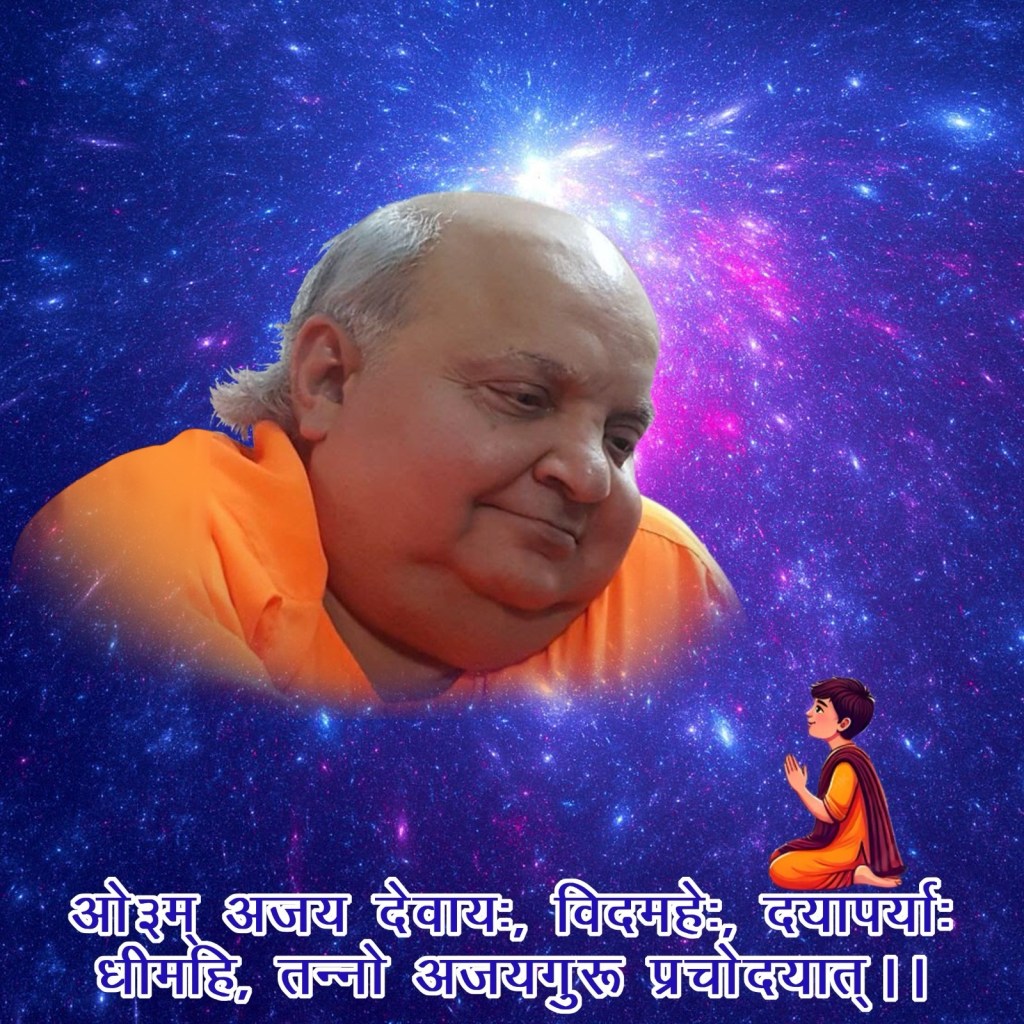
Swami ji said…
What is our reaction on seeing a well-groomed person step out in style from a customised car, donning the most expensive accessories, leaving behind a fragrance of a limited-edition perfume – as he strides past us, oozing confidence? Most of us stop doing what we were attempting to do, and, thoroughly distracted by his commanding, attention-demanding presence – gaze at him with wonder and awe. We soak in the sight of luxury – worn with such elan, marvel at his good fortune, his luck, his ‘kismet’, and are left saying—often enviously -“ कितना किस्मत वाला है ये…”
“कितना भाग्यशाली है…”
“सब कुछ है इसके पास…और हमारे पास कुछ भी नहीं है…”
Sadness and quiet misery creep in as we think of the modest wealth and material possessions we hold. Almost instinctively, we begin to compare – ‘अपना बुरा भाग्य दूसरों के अच्छे भाग्य से…’ which only worsen matters further for us.
Man has always had the habit of believing that the grass is greener on the other side. And in doing so, we mostly see our side as barren and bare. But, this tendency should, at least once in a while, compel us to pause and ask ourselves: “How do we truly define a ‘भाग्यशाली इंसान’?” What is our own definition of good fortune and luck?
Has the pull, sway, and glamour of wealth and material success shaped our understanding so deeply that we equate fortune only with what is visible to the eye? क्या धन और दौलत की चकाचौंध ने हमें यह मानने पर मजबूर कर दिया है कि भाग्य केवल बाहरी समृद्धि का नाम है? We forget that appearances can often be deceptive. Instead of looking for that which merely shines, we must look for that which has a light within. Wealth can come at the expense of health, at the expense of love and relationships. Money can also be obtained through immoral means and by deceiving others. Those who possess great material wealth and comfort can still be burdened by fear, sleepless nights, broken relationships, or a restless mind.
Thus, the question – Who is fortunate and who is not – is a rather complex one. And for us to ponder over it— by comparing our own journey with that of others—is largely irrelevant. How can we ever be certain that what we perceive as an unfortunate event in our own life is not, in fact, a blessing? How do we know that the ‘good luck’ someone enjoys today is not a precursor to ‘worse luck’ tomorrow? Even the greatest minds have never been able to decipher the divine play unfolding before our eyes. Why, then, should we attempt to pass judgment on it?
If someone’s wealth or success inspires you, that is far better. Success in the material world often makes one aware of how little control we truly have over the outcomes of our best endeavours. Those who are genuinely successful—if honest—will admit that whatever they achieved was ultimately a result of God’s favour, and nothing else. Their hard work and sacrifice—while not irrelevant—never guaranteed certainty. And again, how can we truly know who is blessed by God and who is not?
While we often point to Ravan for his folly, his pride, and the fate he met as a consequence, can we truly say that he was unfortunate? He ultimately met his end at the hands of Shri Ram. He became the cause for Lord Vishnu to take a grand avatar, and in his final moments, Lord Ram revealed His true form to him. Was Ravan, then, not bhāgyashālī—even though his end is often viewed as tragic?
In the Ramayana, Vibhishan went to Lord Ram’s camp because he believed it to be his ‘dharma’. Eventually, he was made the King of Lanka by Lord Ram Himself. Yet he is often portrayed as one who betrayed his brother for a kingdom. Was he, then, bhāgyashālī or not?
Perhaps outcomes, outward appearances, sentiments, and opinions are not the correct measures to judge whether a person is blessed by God or not.
Perhaps it is the simpler signs—a gentle smile, a calm and wise countenance, an honest and compassionate demeanour—that reveal whom God favours.
Peace and quiet of mind, mental fortitude and inner strength, unwavering faith in God, and the blessings and guidance of a Guru—these are the true signs of a bhāgyashālī person. Such a person is blessed with contentment and gratitude. He remembers God at all times and remain unperturbed by the changing seasons of life. And while he may not shine brightly with the jewels and gems of this world, he radiates the far greater light of God from within.
 Dedicated to Swamiji Ajay Jain ji