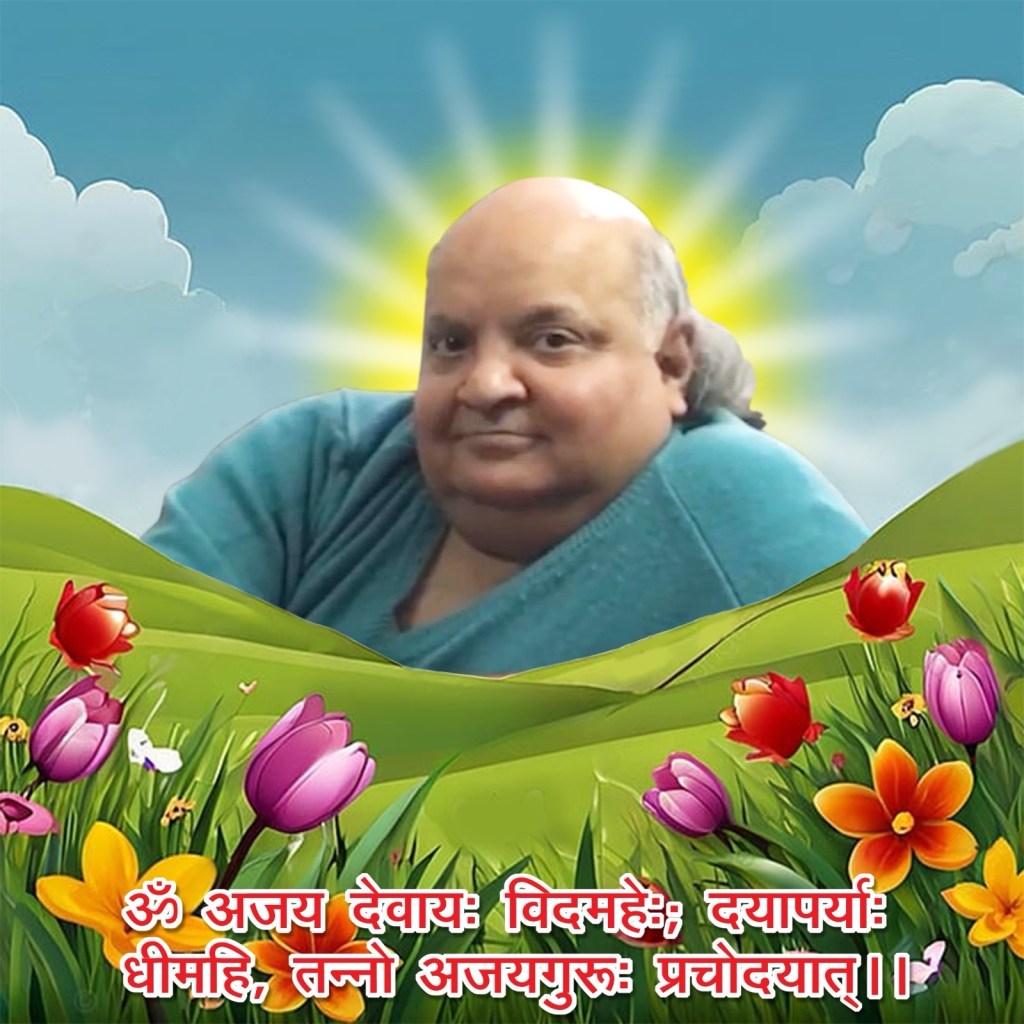
Swami ji said…
“I can’t wait for this to happen!” “I can’t wait for this to end!” “How much longer?” More often than not, we hear these expressions from people – hoping that either some uncomfortable or unwanted circumstance will come to an end soon, or , that something desirable and wonderful will happen quick and fast in their lives. In essence, there is always something that we want and are waiting for to happen — something that constantly tugs at our thoughts and mind.
Even in the best of circumstances, man ends up thinking that something will inevitably go wrong, and, he begins to hope to foresee and overcome such problems immediately. He wants to overcome even those problems that are only imaginary – in that very instant; immediately.
Such anxiety and fear will only lead us down a path of depression and sadness. Irrespective of the circumstances—good or bad— we are unable to find a moment of peace. We are unable to savour a single moment of joy, or, even of reflection, because we are never able to appreciate what we have in the present moment.
“Patience is key” – is a phrase we have often heard or been told. But a key to what? It is, in fact, the key to happiness. People often mistake patience for ‘suffering’— for simply bearing whatever they are going through and waiting for things to change. This, however, is a morose description of an otherwise noble trait. What patience truly means is having complete faith in oneself and one’s Creator, and knowing that everything will happen at the ‘right’ time. It means accepting today as it is— humbly and respectfully— without losing sight of where one wishes to be tomorrow. It also means – joyfully accepting that – what one has today is what God feels is enough for him at that moment in time.
Patience is not about waiting. It is a practice of dealing only with the present. It is a practice of focussing more on one’s actions in the present, and, not being preoccupied with what they will yield, or , when they will bear fruit in the future. Our ‘wait’ could last an eternity. The waiting period could try the limits of our patience – but once we develop firm faith in the words – “Sabr ka phal meetha hota hai…” – it is only then that we will understand later as – life unfolds before us – the ‘whys’ and the reasons that had made us wait for ‘that’ certain thing to happen, to be achieved or acquired by us.
The spiritual seeker needs along with personal discipline – a large reservoir of patience – as a foundation for spiritual growth. As he evolves spiritually, he should understand and accept that each belief, each principle, and each teaching that he has absorbed – will be tested by life – at every turn. Yet, the seeker must not react in a manner that is unprincipled or untrue to his faith. He must pause, reflect, and listen within. Oftentimes, he will feel reassured even in the most trying of circumstances. He will be confident that – “This too shall pass.” He will soon realise that patience is the art of surrendering oneself to God — of giving up the urge to control outcomes. He will understand that the practice of patience is not about wasting or whiling away time in the hope of a better tomorrow, but, is rather the art of careful and patient preparation. He is of the firm belief that it is only his patience that will reveal the very reason – behind every wait of his – in his lifetime.
 Dedicated to Swamiji Ajay Jain ji