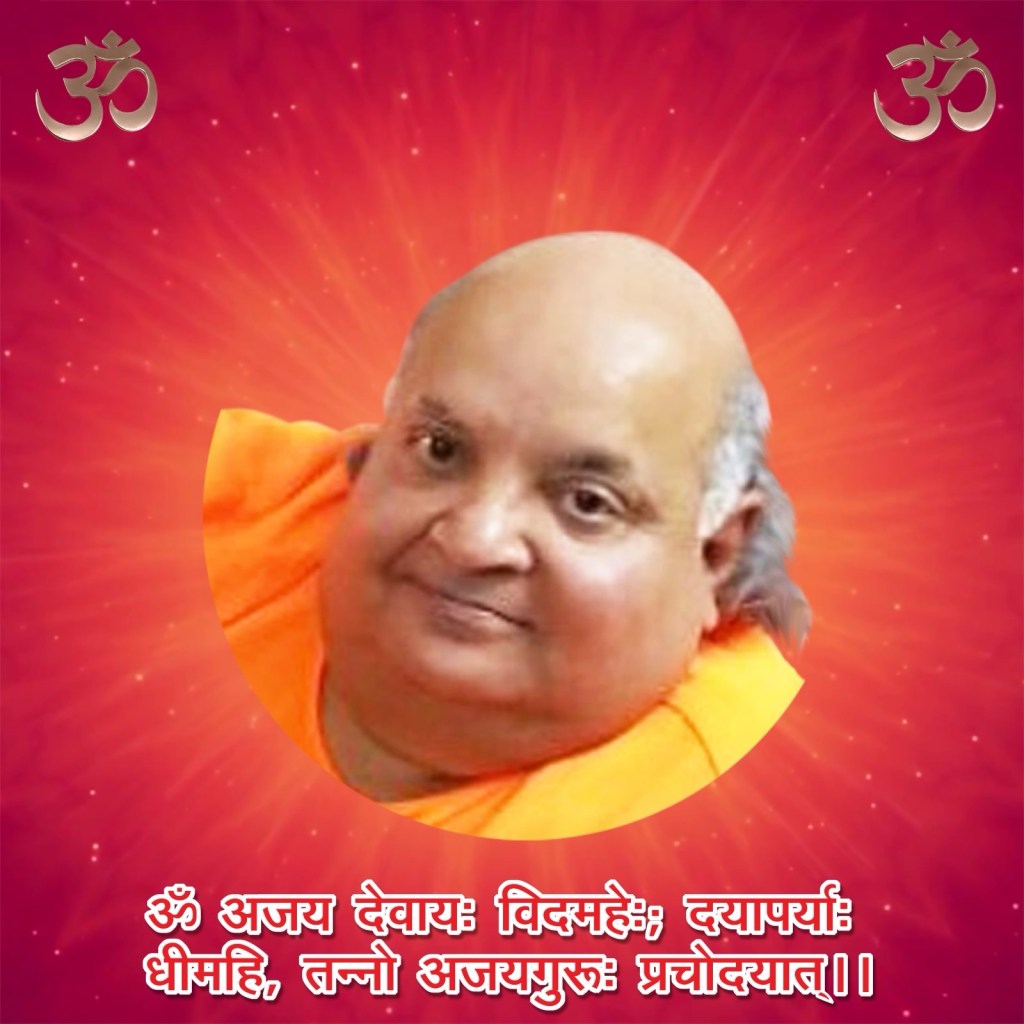
Swami ji said…
” Land. Houses. Property. Financial assets.” The very thought of inheriting material assets, one day, in any form, movable or immovable, has the power to light up our eyes. It makes us heave a sigh of relief at the visual of a perfectly comfortable, anticipated future with wealth and monetary assets by our side. A slightly sour taste may linger in the mouth for a minute or two – at the thought of having to ‘share’ one’s parental property with other siblings – but, then acceptance of the fact that riches, wealth and worldly goods have to be shared with one’s siblings, and, that worldly goods can always find more than one successor- sets in.
And yes, it is here that we must remember that although — “धन, दौलत, संपत्ति के उत्तराधिकारी अनेक लोग हो सकते हैं… परंतु हमारे हर कर्म के लिए,
केवल हम स्वयं ही उत्तराधिकारी होते हैं…” The ringing truth in the stark finality of the words above may sound ominous to some, and they may reject it outright by saying, “I don’t believe in the theory of karma…” “I have never done anything wrong…” “I have no idea about my past karma…” — and they may go on and on thus – defending their stance and viewpoint. But, at the same time, there are others who accept the same statement as a simple truth and find nothing amiss in acknowledging that ‘they’ themselves are — and will always be — accountable for every ‘karma’ of ‘theirs’.
The fruits and consequences of our actions, our ‘karma’ – past and present – are to be carried and borne only and only by us. They are solely our Cross to bear. God, ‘guru’, parents, relatives, or friends — none can take away this burden from us. When Lord Vishnu came to Earth in His various ‘avatars’, He too was subject to this law of ‘karma’. Whether as Lord Ram or Shri Krishna, even ‘He’ was subject to the effects of His actions.
But, if, we learn to internalise and acknowledge this — accept it and act accordingly — the quality of our actions and our approach to life will drastically change for the better. Knowing that we shall reap what we sow, we will become focused on the quality of our deeds. We will be mindful and will take care of what we say and do. We will try to cleanse the mind of thoughts that might lead us astray. The awareness of the consequences arising from our own actions will keep us ‘morally’ vigilant, and, this will create the ‘self-discipline’ needed for those seeking the path of enlightenment.
We need to remember that neither can we inherit our parents good deeds, nor, can our children inherit ours. This is an important learning because many times we mistakenly hold ourselves responsible for what has happened and is happening to others. No amount of good intent, sacrifice or effort on our part – has even an iota of effect on what others around us experience. What it can do, however, is inspire them to act in a similar manner.
Our lives are nothing but an opportunity — given to each one of us — to perform good deeds in devotion to God. If we try to devote every little act to God, or, remember Him during every deed and every action, then we will also reap the great reward of His acceptance and His love in return. Why will He not love us when He sees us remain steadfast to the values of truthfulness, honesty, ‘nek vichar’ ‘satya ke marg par chalne ki poori koshish karte huay’ ; volunteer to walk the path ‘difficult’ – instead of taking the easy way out by lying smoothly; by being deceptively deceitful to fool, please and hoodwink everyone? All we need to do is to – Do good. Be good. Think good – as that is the ‘karma’ He wants to see His children do.
 Dedicated to Swamiji Ajay Jain ji