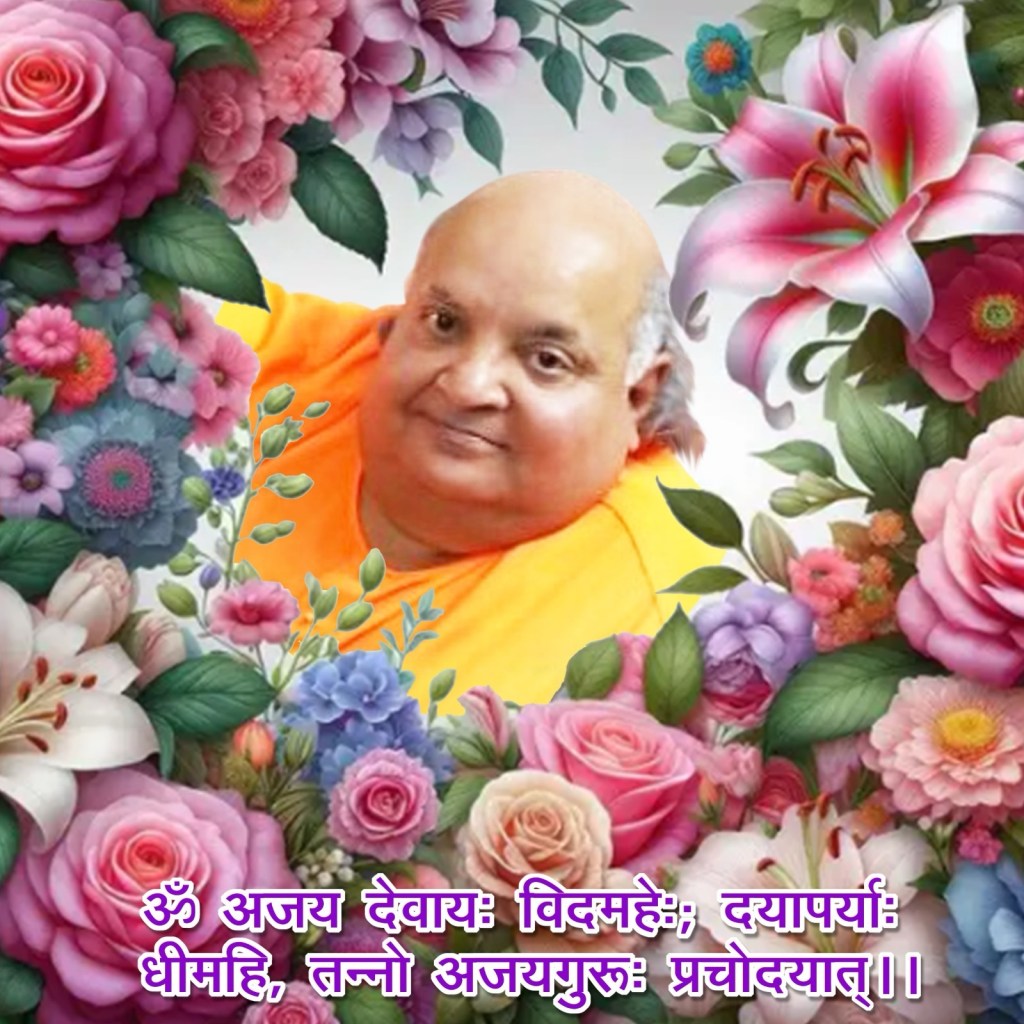
Swami ji said…
Our relationships are formed from the moment we are conceived in our mother’s womb, and , every family member immediately begins developing a bond with the yet-to-be-born infant. Strange as it may seem – strong ties of love and affection are formed between us and a tiny, evolving individual – who is completely unknown to us— not seen, not touched, or held by us as yet — but a fascinating pull makes us already feel attached to the unborn baby. Every family member begins planning and preparing with great excitement, waiting impatiently for the little one to make his entry into the world.
“वो समय जब सारे परिवार के सदस्य शिशु के जन्म की तैयारी में लगे रहते हैं, तब ऐसा लगता है कि सब ‘साधना’ कर रहे हैं, और शिशु के जन्म के बाद भी ऐसा प्रतीत होता है जैसे उसके माता-पिता का ख़ासकर पूरा ध्यान अपने शिशु पर ही है…वह अपनी ‘साधना’ में लगे हुए हैं…” There is a tenderness, softness and concern in the way the baby is handled by us, as we know that there could be none more helpless than a newly born infant or a toddler. The little child receives everything possible from everyone —unconditional love, undivided attention, and unlimited care— as the elders go about doing
whatever they can do for the little one – without laying down any conditions or without expecting anything from the little one. It is as though all of us know what the baby needs – and we provide everything without a grimace.
But, then, why is there is such a marked difference in our behaviour and attitude – when we meet and interact with those – who we are not particularly fond of ? Where does that tenderness and selflessness vanish ? We find ourselves becoming very choosy, moody, and selective in maintaining relationships with various people, whether they are family or friends. We read too much into the mannerisms and attitude shown by others towards us—be it a slightly rough inflection in one’s voice, a peculiar or indifferent look in their eyes, or a cold greeting.These clearly visible and questionable mannerisms are taken to heart by us and looked upon as a personal insult. Without giving the other person a second chance, we are ready to turn away from that relationship forever. This shows how touchy we have become. A relationship that was rock-solid till yesterday breaks into fragments – and surprisingly
it makes no difference to us. Furthermore, instead of quelling the needless doubts within us, we add fuel to fire, by developing an antagonistic attitude towards them. Can such behaviour ever succeed in ironing out the differences between us and make us work on improving our relationship with others ?
Why are we unable to understand and accept the simple fact that differences are bound to exist between each of us? It is not possible for us to be similar – let alone identical. Why do we create such expectations within ourselves and then feel let down? Why do we let the other person’s aggressive behaviour provoke a hurt or aggrieved reaction in us?
What happens to all the love, patience, and joy that had overflowed from us when we had taken care of a baby— when we now find ourselves filled with impatience, displeasure, and even anger – while trying to take care of our elderly, ageing parents ? Is it because they are no longer a source of joy to us? Or because they are incapable of doing anything for us anymore ? Why do we feel as though they are a burden on us ? The silent treatment meted out to them by us is more effective than our ‘loudest’ words – conveying to them clearly – how difficult it is for us to take care of them day and night. Why is there such a visible difference in the way we rush to attend to a crying child – and the blatant disrespect shown by some of us – towards our elders – when we pay a deaf ear to their feeble cries for some kind of assistance. “हमारे व्यवहार में इतना फ़र्क़ क्यों होता है?”
The real measure of love is not in how we treat those who bring us happiness, but, rather in how we serve those who need our compassion the most. We must have patience and understanding in all our relationships. While we mustn’t accept ill-treatment or disrespect, we must always be particularly mindful of ensuring that we remain the most respectful, even in the most trying circumstances. Our ability to forgive, to extend warmth despite distance, and to speak kindly even when we feel misunderstood – transforms ordinary relationships into something more special. Every time we choose grace over ego, patience over irritation, or , sincerity over sarcasm, we make a relationship a little stronger. Not everyone we know can be affectionate towards us, but, we must not hold back from giving joy and showering praise whenever we can. That is how we can nurture any and all relationships—be it family or friends—with a sense of genuineness and make them sanctuaries of comfort and happiness for ourselves and others.
 Dedicated to Swamiji Ajay Jain ji