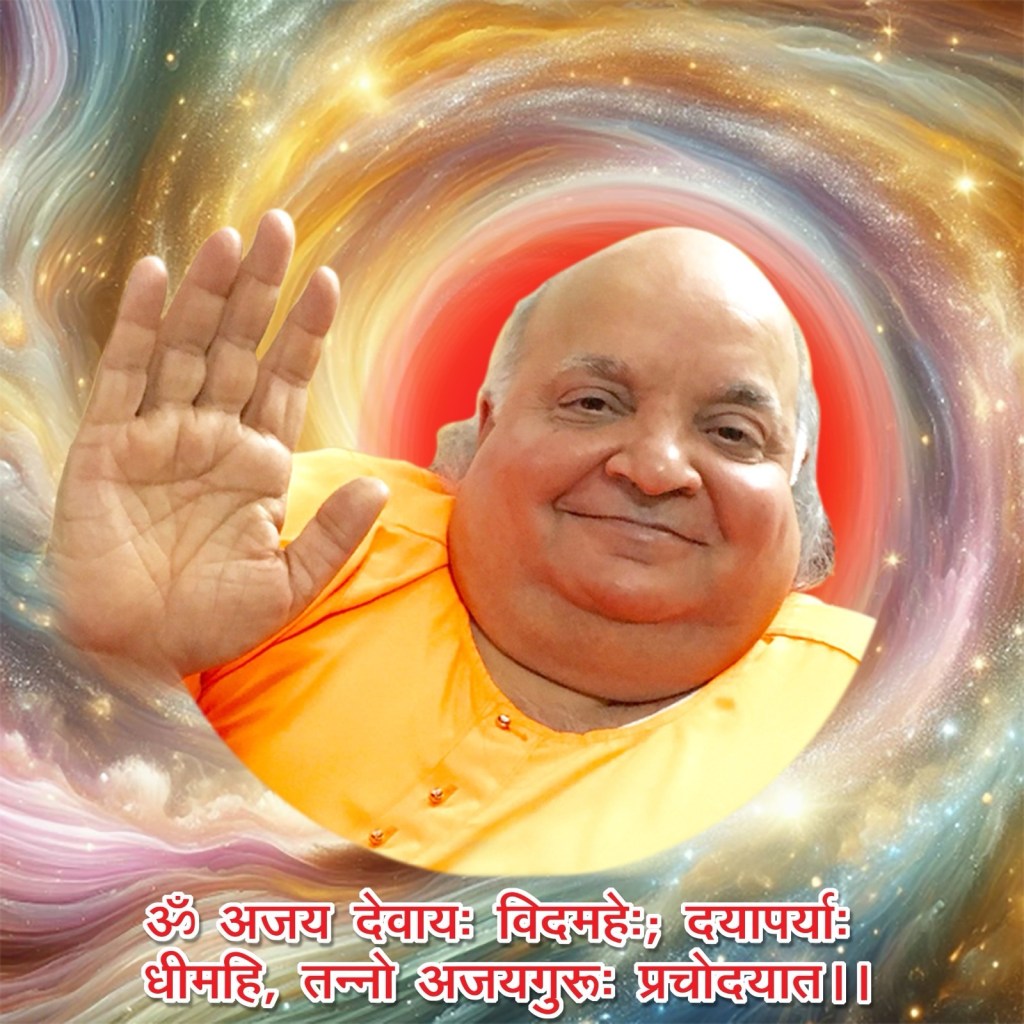
Swami ji said…
Do we ever consider and reflect on the kind of surroundings ; or at what time of the day ; or in the presence of which people – is it – that we have mostly found ourselves to be happiest or most joyful ? The chances, most probably, are – that there is no such common thread to be found. There is no particular place ; no particular time of the day ; or season ; no particular person’s presence ; no physical conditions which could have guaranteed a permanent and long lasting positive effect – on our mood ; our state of mind. We can be happy in the sweltering heat of the sun, and, be sad in the cool environs of our home. We can be exuberant in solitude, and , be depressed in the presence of even our loved ones. Even the opposite of these hold true.
Yet, inexplicably, we , still live life with this almost singular approach – to obtain that – which we think will make us happy. “If I could go on a holiday there, I will then be happy !” “If I could buy a house there, I will be happy then !” “If I could buy this watch, this car, then , I will be happy !” “If only he or she would listen to me, I would then be happy”. There are always these numerous terms and conditions – which we set for ourselves needlessly – the ownership of which once accessed – we make our ourselves believe – alone will guarantee our happiness. And, more often than not, we spend a lot of time and energy focussing on making these things happen, and, do not even allow ourselves to be happy otherwise.
But, that is not how God made us ; that is not meant to be our sole purpose. Man’s sense of hunger was meant only to indicate a sign – that he was hungry – to eat food, ; and his thirst was an indicator – that he had to drink water. With a full stomach and quenched thirst, he , was meant to be content physically, and, could then address his mind. But, now, man, hungers for things like status, wealth and power – mistaking them as his needs. Without these, there is no relief in his mind ; and , even with these – there is none. Such struggles and labour – are eventually, going to be futile , if , we are looking for ‘pure’ contentment and ‘genuine’ happiness. For , there will be no ‘true’ happiness found at the end of such journeys.
Yes, we , need physical comforts. We need homes, jobs, decent living conditions etc. We all have to strive to obtain these. But , that does not mean that everlasting happiness is dictated by them ; can be obtained by them. Does not happiness arise from the heart? And , if , we were to be realistic , we would understand that it is actually the smallest of things that make the heart happy ; and this is what we mostly miss out on.
Can we not enjoy a cup of tea in the morning – without stressing about the tasks of the day ahead ?Can we not have a light hearted laugh with the shopkeeper we buy our groceries from, or, with our colleague at work? Or , bring a smile to our children’s faces with a funny joke?Can we not be grateful to God when we are able to eat a nice hot meal at home? Can we not take out just a few minutes in a day to help someone out with a task?
Does not such a life already seem to be filled with happiness ? Would leading such a life not guarantee that one has a day – with the occasional spark of joy? With such an attitude – the problems, trials and tribulations of life will be met with a smile. All endeavours will be made – not with the tension and pressure of having to succeed, but , with confidence and a smile on one’s face.
The spiritual seeker must learn to untangle the threads of the sensory world, societal expectations – from those of the spiritual world. He must learn the simple truth that – he ‘is’ joyous and cannot be ‘made’ joyous. One ‘is’ sad, and cannot be ‘made’ sad. The mind, its perspective – with effort can be tamed. It can be made to not just see a glass as half full, but , also see how good a thing it is – for it to be half full. The spiritual seeker must strive to become a ‘happy’ man who goes to work’, and ‘not a man who goes to work to become happy’. He must seek paradise not in the world outside, but , in the ‘world’ within him. It is only when he strives for this in earnest will he begin to lead a ‘blissful life’. Such a person will not ‘go to heaven’, but , would rather have ‘found heaven within’ already, and will take it with him wherever he goes.
 Dedicated to Swamiji Ajay Jain ji