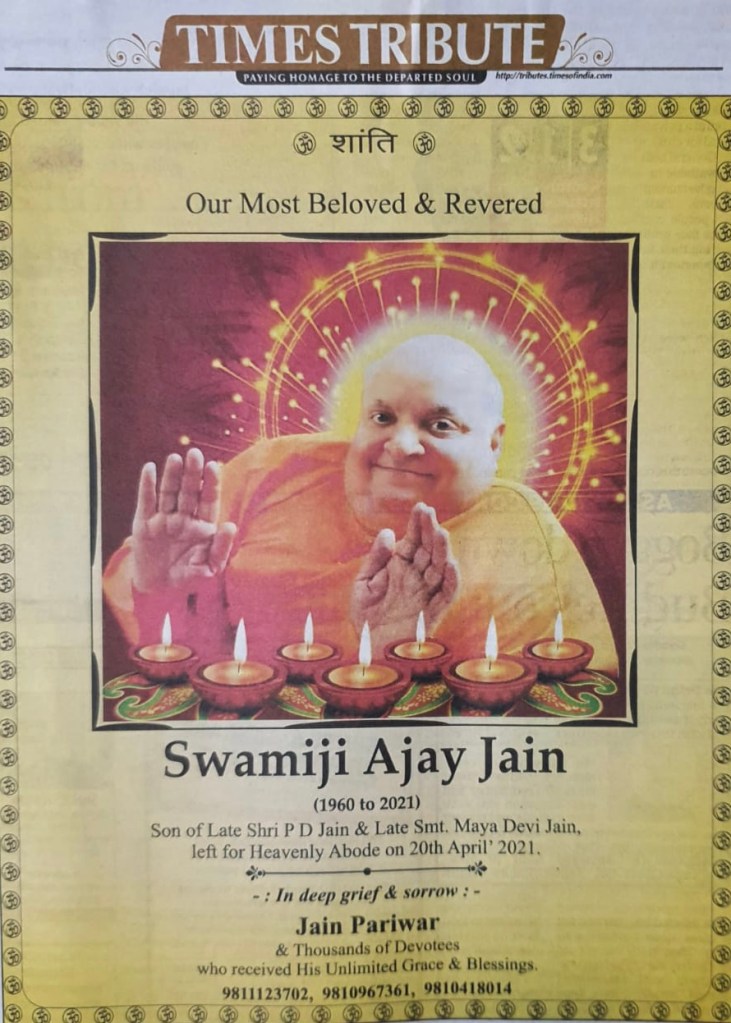
Swamiji said …
” ‘Hum ‘rishton’ ki dor mein uss क्षण se bandh jaate hain jis क्षण hum janm lete hain!’ Life is all about relationships. The filial relationship that we share with our mother who brings us into this world and loves us from the core of her being; with our father who shoulders our responsibility with sincerity; elder siblings who are protective about us. Relatives and extended family, too, come within the gamut of loving relationships, and since this bond appears to be the fulcrum of our existence, we are convinced that our relationships, loved ones and we, will live forever. But, since, we are mortal, all these relationships which are limited to flesh and blood, will perish one day, and each one of us, too, will either be cremated or buried one day.”
” However, the one and only one ‘rishta’, ‘sambandh’ that transcends all physical barriers; goes beyond flesh and blood ; is the ‘guru – bhakt’ relationship.This sacrosanct relationship is the divine connection between the souls of an enlightened, self realised ‘Guru’ and a ‘saccha bhakt’; and since the soul is eternal ; the spiritual connect between the ‘Guru’ and devotee remains unbroken, intangible even in the physical absence of the ‘guru’ ; when a ‘guru’ sheds His physical being… ‘jab unka shareer ‘panch tatva’ mein vileen ho jaata hain !”
” The incarnations of the Almighty; be it Bhagwan Ram or Krishna; Jesus Christ or Prophet Muhammad ; the greatest spiritual guides and ‘gurus’; founders of religions had to shed their ‘material’ bodies one day, as they too were ruled by the laws of nature – प्रकृति ; of suffering and ageing that is applicable to all physical bodies, once they had descended from their divine abode, to live among us; like us; as normal human beings. Yet, it is natural that those left behind – the followers and disciples – must have been deeply saddened and frightened, wondering what they would do without the ‘guiding light’ that had directed them towards a purposeful life in all aspects; physical, mental and spiritual.”
“An enlightened, self realised ‘guru’, a ‘saccha sant’ is nobler than a parent; more giving and loving than a mother; more sacrificing than a father and more caring than one’s brothers and sisters…and He continues to be the same, even after his ‘gross’ body is consumed and reduced to ashes in the funeral pyre. He remains connected with his devotees in a way like never before.”
“Each ‘saccha bhakt’, devotee, shishya or sadhak, is filled with dread at the thought of losing his ‘Guru’ one day. The passing away of a ‘Guru’ makes the disciple feel like a lost lamb ; helpless without the reassuring, guiding presence of the shepherd – fearful of traversing the rest of its life alone, without a trustworthy guardian to lead it onto the right path.”
“However, a Guru is neither a shepherd nor are the disciples sheep; for a Guru does not discourage his devotees from thinking logically, and encourages them not to be dependent on Him forever. A ‘Guru’ shares his knowledge, ज्ञान, to enable us to live happily and blissfully; and it is through the knowledge imparted to his disciples that a ‘Guru’ lives on, even after leaving his physical form. ‘Mrityu’ bhi itne pavitra, oonche aur atoot rishtey ka ant nahi kar sakti hai ! Apne shareer ko tyaag ne ke baad bhi …’ an ‘adhyatmik ‘guru’s’ watchful eye observes every action made by His ‘shishyas’. He looks out for them, every moment of the day and night, and alleviates their suffering and difficulties. All that the disciple needs to do is to remember his ‘guru’ at all times; recollect, and devotedly apply his guru’s teachings in day to day life situations.”
” Didn’t Jesus’ Apostles continue to spread His teachings all over the world after His crucifixion? Did Hanuman stop singing praises of Shri Ram after Lord Ram had returned to बैकुंठ? It is said that when Shri Krishna left this ‘karmabhoomi’, only twelve fortunate souls knew that he was God. But do not millions today narrate His glory and feel blessed by just taking His name and worshipping Him?”
” We must remember the story of Eklavya, who became the greatest archer of his time, by worshipping and imbibing the basics of archery from a ‘guru’ who was never physically present to teach him. In retrospect, we must consider ourselves very fortunate to have experienced the live presence of a ‘guru’ and to not have been as hapless as the unfortunate Eklavya.”
” It is natural for us to mourn and grieve the ‘passing’ away of the ‘Guru’ ; but we must understand that He hasn’t gone anywhere, as He is omnipresent in us – spiritually. Rather, we should be in a state of thankfulness to Him for having blessed us by allowing us to sit in His…God’s chosen representive’s presence itself ! Has ‘he’ not taught us , by His example, the ways of living a happy, fulfilling and meaningful life? Why then must we feel lost and abandoned?
Life is a constant struggle; and even for a ‘Guru’, ‘death’ is but a relief from bodily pains and difficulties of everyday life.True devotees would never begrudge their Master, freedom from the world of ‘maya’; as liberated from His ‘sthool’ shareer, He, in future, will be able to focus all His energy on His children – his disciples through his ‘sukshma’ shareer…His Real ‘Self’.”
” Thus, once the last rites are over; the flesh and bones have turned to ash, the tears must be wiped and memorable, enriching moments of every divine interaction with the ‘guru’ should be recalled, relived ; and motivated we should continue on the path towards spiritual enlightenment – because at the end of the tunnel, the ‘Guru’ is waiting,eagerly, to enclose His child in His arms forever.”
 Dedicated to Swamiji Ajay Jain ji