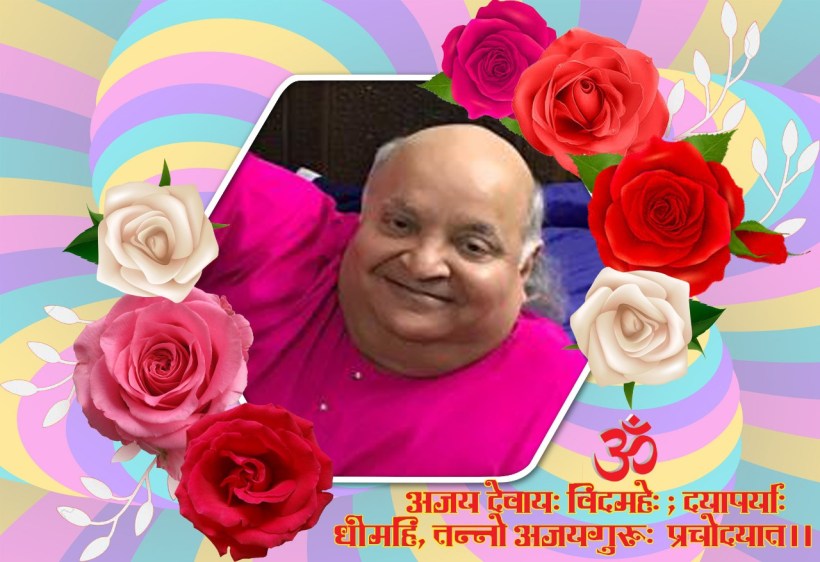
 Swamiji says …
“The physical form; our outer being; the body that we love and cherish, means everything to us, as it enables us to experience life in all its glory; enjoy its enthralling, giving nature one day; and question its unpredictable, mystifying element the very next. At the same time we also get busy and involved with our routine activities, from which we try to take out some time to serve God – ‘Hum ‘Narayan’ seva mein aur doosron ki seva mein ‘tan, mann aur dhan’ laga dete hain …’ and are filled with a sense of satisfaction – ‘ Achche, nek karam kar ke, rituals kar ke, punya kar ke! ‘ – as we feel that we have done all that is possibly required to serve , both, God and man, in this lifetime.”
“It is excellent to have such noble and pure intentions, but at the same time, wouldn’t it be wonderful if we were to understand the deeper and divine purpose for which we have been blessed with this life and body – which is to attain ‘moksha’. ‘Jab tak insaan, spiritual marg mein nahi chalta hai , tab tak usey ‘moksha’, ‘mukti ‘ nahi mil sakti!’ We have to understand that the body not only serves as a robe and encasement for the ‘soul’ that resides in it, but should also be utilised to make an earnest, honest endeavour so that – ‘Insaan – apne shareer aur atma, dono mein, parmatma ki lau jalaye! Aur aisa karne ke liye, woh apne shareer ka upyog, atma ko ‘bhagwan’ mein leen honay ke liye karay ! ‘Bhakti’ hi woh marg hai joh insaan ko ‘moksha’ dilwa sakti hai !’
” Very often we hear people talk about their good karma …’ Log apne kiye huey bahut achche, aur nek karmon ke baarey mein batatey hain … ‘ and undoubtedly they must have selflessly served God, observed the required rituals with great piety, donated large amounts in charity and extended a helping hand to those suffering from disease and poverty. The good ‘karma’ accumulated by them for their selfless service to God and innumerable acts of charity will not go unnoticed by Him, and they will most certainly be awarded by Him for their commendable and praiseworthy acts. One can most certainly take birth in a wealthy, reputed family – ‘Woh achche kul mein paida ho sakta hai! Raja, maharaja ya samrat ban sakta hai, apne pichley janam ke achche karmon ki vajeh se …’ He could be born with a silver spoon in his mouth, taste success of an unprecedented level, enjoy a position of power and status – but attaining ‘moksha’ purely, by having done such noble deeds alone, is not possible !”
“All saints and great religious Teachers – whether they were kings or ordinary individuals – had to walk the path of ‘bhakti’ – deep devotion, unswerving faith and implicit trust in God, by leaving the comfort and confinement of their palace and home and spending hours in ‘tapasya , dhyan aur sadhna mein… Unn sab ko ‘bhakti’ ke raastey pay hi jaana pada !’ Their fervent desire to seek the Truth made them oblivious to the rigors that their body had to bear as they chanted ‘mantras’ while in ‘tapasya’, with their minds fixed on God. Their material, gross body did not mean anything to them. Their yearning and unsuccessful attempts for the divine darshan of the Omnipresent brought tears to their eyes, but they shed not a single tear when they turned their back on their kith and kin, as they considered them to be the greatest distractions during their ‘dhyan’, and thus they renounced them… and the valuable time spent in loving ‘sadhna’ of God…created ‘nek vichar aur unki shareer aur atma ki shuddhi hui.’ What mattered to them was ‘bhakti’ of the highest level ! We too must strive to devote, at least, half an hour, out of the twenty four hours that we have in a day in ‘tap, jap, dhyan aur sadhna … joh ki saare nek kaarya hain…’ which will give us an opportunity to be completely immersed in God and experience spiritual bliss – pure and divine.”
“Similar to the joy that we experience on seeing a once parched area of land – green and replete with a yield of golden crop, later…the soul, too, dances with glee on seeing its bearer, put in his time and energy in purifying it, cleansing it of the layers of impurities, ignorance and darkness in which it was enmeshed … by reaching a point when ‘parmatma’ allows it to merge with Him. When one meditates on Him and repeats His name, he should do so reverentially, with humility and without a trace of pride and arrogance in his being …’Bhagwaan ka naam lete samay abhimaan aur ahankaar nahi hona chahiye ! Apne andar jhanko …and look beyond your body. You are much more than the body… Apne shareer aur atma dono ko jhukao … aur sampoorna tarah se samarpit kar do unhey, bhakti aur spirituality ke marg par!’ There has to come a point in time when after having comprehended the significance of rituals, one needs to find a way out of this cycle of life and death that can only be discovered by walking the spiritual path.”
” A spiritual ‘guru’, a ‘saccha sant – ek maadhyam hota hai, apne shishya ko ‘parmatma’ ki lau se milwane ke liye … un mein merge karwane ke liye ! ‘Guru’ ek raasta hota hai janam maran se chhutkara dilwane ke liye ! Once we develop a spiritual bent of mind we understand clearly that the body has to be used by us for our spiritual growth and mundane issues like ‘dukh aur sukh’ humarey liye ek saman ho jatey hain!’ ‘Ek ‘sadguru’ apne devotees ki adhyatmik unnati ko khoob badhava detey jaatey hain…’ and makes us aware that once we have fulfilled our ‘kartavya’ and major responsibilities towards our family, etc.we owe it to ourselves to give topmost priority – ‘ apni ‘ruh’ ko pure karne ke liye aur sampoorna roop se aagey badhtey badhtey, ek samay aaye jab hum uss sey hi jud jaain…’ and we finally realise that the sole purpose of our ‘janam uss sey lau laganey ke liye mila hai !”
 Dedicated to Swamiji Ajay Jain ji