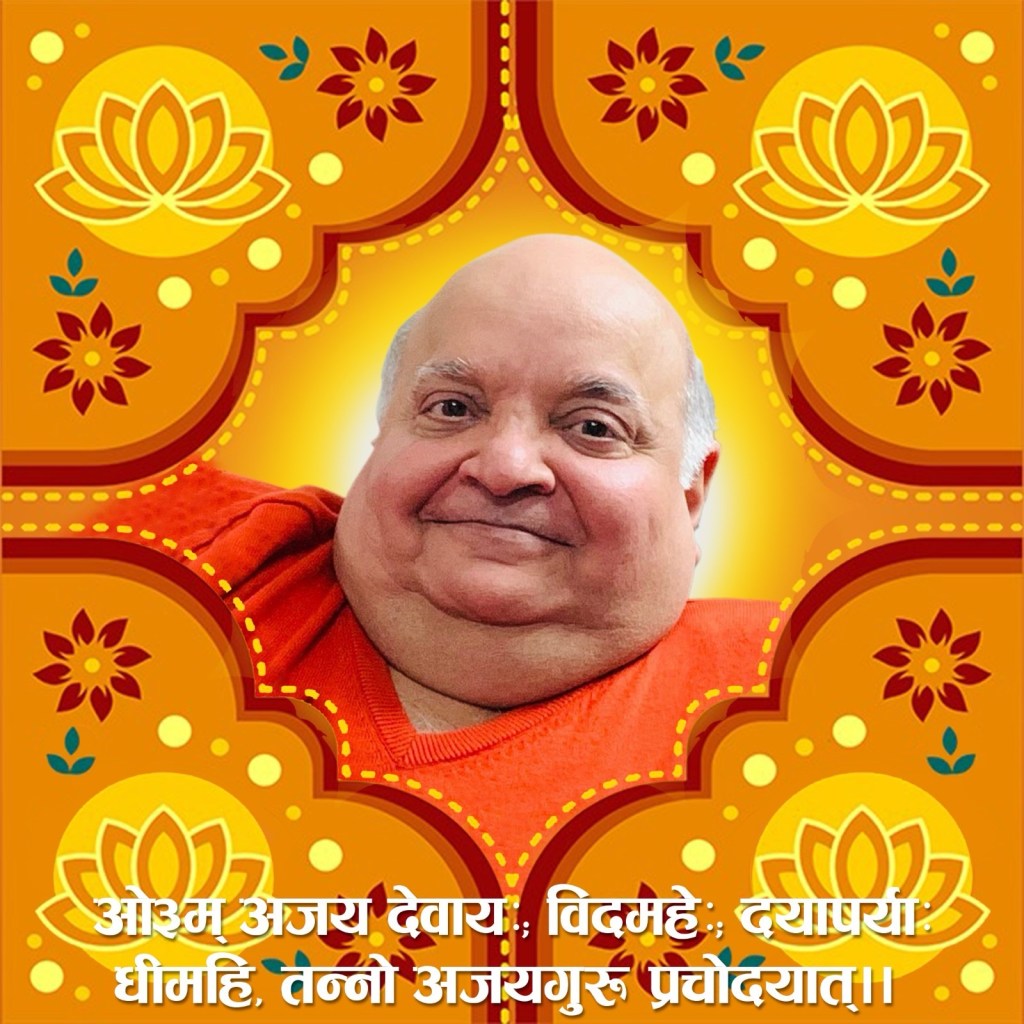
Swami ji’s Sandesh- “हमें बीच-बीच में अपना ‘आत्म-विश्लेषण’ भी ज़रूर करना चाहिए…”

Swami ji said…

One of our favourite passtimes is to ‘talk’ about people we know—or might not even know. We may have just seen them somewhere, yet, we tuck their image away in some corner of our mind. And, then, the moment we recall their face—or the slightly inappropriate manner in which they may have presented themselves before us — we feel qualified to judge them and to give our opinion about them.

We seem to enjoy discussing others, and, at times, even debating about them angrily—especially when we feel that we are not gaining enough support in belittling them. Why is it that we take no time at all to form a one-sided opinion about others and find nothing wrong in making it known to everyone? How we love to analyse others—doing so with single-minded focus—dissecting every action of theirs and every word they speak, as though it were our birthright.

But then why are we—rather hypocritically—so shy, so hesitant, and so weary of being at the receiving end – when others attempt to analyse us? The same ‘we’ who so eagerly record every “unpardonable” act of others in our memory – are quick to produce a hundred excuses when someone voices a negative opinion about us. We defensively say, “That is not what I meant…” or “Normally, I am not like that! Something must have happened that day!”

Have we given ourselves the right to comment freely on others, to think whatever we wish about them, yet deny that same right to anyone else regarding ourselves? Have we vested ourselves with a power -“जो हमें इजाज़त देता है दूसरों पर टिप्पणी करने की, उनके बारे में कुछ भी सोचने का हक़ देता है — परंतु अगर कोई हमारे बारे में कुछ कहे, तो वो हमें बर्दाश्त नहीं होता है…”
When we can be such cowards in accepting the verdict of others—can we truly muster the courage to judge ourselves honestly and critically? “हमें स्वयं का आत्म-निरीक्षण भी तो कभी- कभार कर लेना चाहिए…”

Why do we have such double standards? If we can be so brazenly brave in ‘surveying’ others, why can we not accept an honest analysis about ourselves with the same courage? But, since we have already concluded in our mind that we are perfect in every way, we, tell ourselves that we do not need to undergo any ‘self-analysis’ at all. We conveniently reassure ourselves: “There is nothing wrong with me—why should I reflect?” But, this refusal to examine ourselves keeps us exactly where we are—unchanged, untested, and unevolved.

समय समय पर ‘आत्म-विश्लेषण’ करना — must become our habit. For only when we are honest with ourselves, and, willing to see and hear uncomfortable truths, through our inner voice – about our own actions – do we truly grow. It is always good to question ourselves occasionally – “Am I selfish or selfless ?” “Am I kind to all ?” “Do I stand by others during their difficult days?” “Am I an honest person?” This would be a good way to know where we stand – if we give honest answers.

The true spiritual seeker must maintain constant self-vigil. He must be critical only of himself and his behaviour—for it is only criticism of himself and being conscious of his behaviour, his attitude, his ‘karma’ – and not of others – that will be of any real use to him.

It is only those, who have the courage to see and acknowledge themselves for what they truly are – are the ones closest to taking the next steps towards ‘self-improvement’. Only when we recognize our own faults – can we rid ourselves of them and make ourselves worthy of receiving God’s grace.

Did not Ravan fall prey to such blindness? What did he lack—power, knowledge, strength? And, yet, he was blind to his own weaknesses of nursing a huge ego and senseless pride. It was this blindness that ultimately caused his downfall.

‘Self-reflection’ is the key to gaining control over our ‘कर्म ‘. “स्वयं का आत्म विश्लेषण और ‘आत्म निरीक्षण’ करने से – we become aware of our ‘self ‘, of our actions, conscious of the importance of choosing right over wrong, of forming good habits, not succumbing to desires, of being truthful and honest – all of which shape us into better human beings. This is often – the very first step that takes us towards truly knowing God.

Swami ji’s Sandesh… “ बिना सोचे- समझे कुछ भी बोल देने से नुकसान हमारा ही होता है …”

Swami ji said…

The ability to speak, to talk is a gift that God has blessed most of us with — and we have made the most of this gift – as talking with others, about others is something that we enjoy greatly. We talk with gusto, with energy, with passion — about anything and everything under the sun. Be it about the weather in a formal setting, or, gossip in an informal one – we simply want to partake in conversation. Some of us are guilty of slipping into monologue, caring little for others, just as long as we are heard.

But, herein lies the catch. While we are in a great hurry to speak first, to answer quickly, to convey a point, or , to say something — anything at all — to anyone, do we pause for even a moment to ask ourselves: “हम अपनी ज़ुबान पर लगाम लगा रहे हैं या नहीं ?”

Do these words of wisdom urge us to place gentle restraints on our tongue, making us pause before we speak and consider the weight and consequence of our words? We would benefit greatly if we remembered that every syllable we utter carries the power to shape, sculpt, and script the very reality of our lives.

It may not be difficult for us to recall those moments when, in anger, frustration, or , retaliation, we might have spoken negatively or pessimistically to someone — only to later see those very words take a definite form before our eyes – filling us with regret for having said those fateful words…“हमने अपनी ज़ुबान को ऐसा कहने से रोका क्यों नहीं?” we lament.

Once we understand that the tongue is powerful and its power cannot be dismissed — as time and again it has been proved that its effects are real and immediate — it becomes essential for us to be careful and cautious before speaking. Many times, when asked about our welfare, we respond by saying we are unhappy or depressed. In doing so, we unknowingly give strength and permanence to those feelings. It is said that physical wounds can heal, but, the scars borne by the soul — on hearing words of hate, humiliation, or contempt — may never be erased…“शब्द बाण हैं, निकलते ही लगते हैं, लौटते नहीं…”

The words we speak set in motion a chain reaction, affecting not just those who hear them, but, also our own minds and hearts. Thus, controlling the tongue is an act of controlling one’s ‘karma’. Words are action. They can injure, and they can inspire. What our words do — what mark they leave on the world — is entirely under our control. Words spoken thoughtfully, with kindness and care, create a positive impact all around. Those spoken mercilessly, with the intent to hurt, are like drops of acid rain that destroy everything they touch.

The spiritual seeker — who struggles against the mind — must always be observant of what and how he speaks. If he finds that he speaks before he thinks, then he has a long way to go on the path of spirituality. For the ability to be silent, to resist the urge to argue or justify, is the mark of one who has begun to gain control over the mind.

Words must not come cheap to us. They must be measured and valued. But how can we do this – that is the question? Just as a lamp shines brightest in the dark, just as the rains break after the scorching heat of summer — our words, too, must arise after deliberate and mindful silence. And, not just any silence, but, the silence of meditation and reflection.

Just as gold emerges from the blacksmith’s blazing furnace, so too must words emerge from the depths of thought and patient consideration. And, just as the blacksmith hammers away impurities to create something beautiful and radiant, we, too must remove every trace of bitterness, anger, or , malice from our speech before presenting it to the world.

Swami ji’s Sandesh… “ क्या हमने कभी सोचा है कि हमारी लड़ाई अपनों से किस बात पर होती है?”

Swami ji said…

Can any of us deny hearing the deeply profound words: “हम खाली हाथ आए थे और खाली हाथ जाएंगे?” We cannot. For we have heard this eternal truth spoken around us many times—sometimes in a sombre mood, sometimes in a matter-of-fact manner, and at times even in jest. Yet, somehow, we shrug off the hidden, hard-hitting significance of these words. We pay little heed to their core message— perhaps because we lack courage, or, because we fear detaching ourselves from the love and fascination that we hold for material objects.

“ ये ही तो ‘मायाजाल’ है…” And, since we convince ourselves that the chief purpose of our lives is to become entangled in this web, we, pursue it with fierce determination, making it the sole goal of our existence. So much so, that very often, we hear people in the twilight years of their life expressing their worry about their homes, their wealth, their assets with deep emotion – “मेरे जाने के बाद मेरी संपत्ति,मेरे घर का क्या होगा?”

At this self-created juncture, many of us find ourselves trapped. Our attachment to property—mere structures of concrete—has cemented our hearts and made them hard, unfeeling, and indifferent. Anything can be sacrificed when it comes to matters of wealth and assets. Years of trust, understanding, and respect are easily forgotten — when the issue concerns paper —currency, or, documents stamped with large denominations and symbols of value.

“आजकल लड़ाइयाँ जो रिश्तेदारों और लोगों के बीच होती हैं, वे किसी महत्वपूर्ण, विशेष कारण से नहीं होतीं, बल्कि छोटी-मोटी, बेमतलब की चीज़ों के कारण होती हैं…” Everything that is said or left unsaid to us by others – seems to affect us. We take it all personally and hold it close to our hearts. “उसने मुझसे किस तरह से बात की? वह मेरे बारे में क्या सोचता है?” “What was he saying about me?” All these baseless, insignificant matters that are magnified all the more by our mind – ignite further bitterness for others – even those who should matter the most. Soon battle lines are drawn. Sibling love, once pure in the days of innocence, is overshadowed by rivalry. Competition hardens hearts, and, no one knows where to draw the line. Quite often these conflicts are created not because of principles or noble causes, but, because of trifles and illusions—mere shadows of ‘माया’.

We must shed the manipulation, the deceit, the bitterness that we, unnecessarily, carry in our heart – all the while planning to lay our hands on ‘more’ and ‘more’ of everything – of which not a single particle can be carried by us – when we bid farewell to the world.

In fact, if, we pause and reflect, we realise that no dispute is truly worth the unease it leaves behind. The materials and things we guard so fiercely will one day slip away and wither — for nothing in this world is permanent—yet the hurt caused in moments of anger can linger far longer. Peace does not come from acquiring more, but, from softening the heart and loosening one’s grip. When we choose love over hate, understanding over pride – space opens for trust to return, and, in that quiet space the mind begins to rest. And, it is there, in stillness and harmony, that we draw closer to God.

So rather than focussing on –
“उन चीजों पर है जो हम अपने साथ ले जा नहीं सकते…” – let us work on harboring a good relationship with one and all. Let us be conscious of our ‘karma’, of all that we think – when we are all alone. What will we get by plotting someone’s downfall ? Let us cleanse our ‘soul’ of the impurities that we have allowed to form layers over it and instead purify it to such an extent that God is left with no other choice but to allow us to merge with Him.

Swami ji’s Sandesh… “ ‘तन’ को ही नहीं, ‘मन’ को भी शुद्ध और पवित्र रखना अत्यन्त आवश्यक होता है…”

Swami Ji said…

The market, today, is flooded with glossy, luxury products displayed on shiny shelves, enticing us with mind – boggling promises of miraculous transformation— for our skin, hair, and nails— to name just a few. We are spoilt for choice. Most of us, being particular about cleansing our external being, do not hesitate to spend a small fortune on the most expensive and promising product that beckons us to indulge. We remind ourselves that appearances matter. When one product does not satisfy us, we readily shift to another, often unmindful of the expense, yet , eager for that elusive sense of fulfilment.

Since childhood, we were taught by our mothers about the importance of cleanliness: “अपने शरीर को साफ़-सुथरा रखना हमने बचपन से अपनी माँ से सीखा था…” She would lovingly remind us to use soap while bathing, and to wash our hands before and after meals, thereby encouraging us to develop habits of hygiene and neatness.

Thus, in our pursuit of presenting our ‘external’ being – in a manner most perfect – we do everything possible within our means. We seek to look well groomed, well turned out to smell fresh and pleasant. We reassure ourselves: “What is the harm in pampering ourselves? Are we not entitled to it? Our body is a temple that needs to be always clean and tidy.”

But, surely, the body alone is not enough. Just as we protect and purify our ‘तन’- it is even more essential to purify our ‘मन’.
It is only when we rid ourselves of many faults—cleansing the heart of jealousy and greed, and, removing the dirt of lustful thoughts and material worries from the mind—that we can become deserving of seeing God and His miracles around us. Do we make an honest effort to gradually reduce the burden that our heart bears by removing all the grudges, the ill- will and negativity that it holds for others ?

The spiritual seeker will often find that his heart is his most powerful foe in the journey towards God. At times it is in disarray; at times extremely jubilant—all because of issues related to his family, money, health, and so on. It is always on a roller coaster, distracting him from his focus on God. Some thoughts fuel anger towards others; others give rise to fear.

In such moments, it is the spiritual seeker’s duty to always remember ‘Guru’ and God. He must remind himself that these negative emotions almost always arise from things beyond his control—other people’s actions, the uncertainties of the future, or the weight of the past. But, he has to be firm in not accommodating any sullied emotion or thought in his heart but allow only love for God and others to grow in Him.

Only in this way does the spiritual seeker gradually learn to gain control over how the mind behaves. The mind then begins to focus on God and on his Guru’s teachings. Even in the most uncertain of times, it remains steadfast, recalling the Guru’s words. That is how purification of the mind begins. On directing his heart to respond to the pure thoughts of his mind – he succeeds in evicting hatred, greed and anger that he was holding within him and replaces it with love, magnanimity and
calmness – which makes him feel truly rich.

Acceptance to God’s will and complete surrender to Him, form the foundations of this cleansing. Slowly, the seeker begins to seek all that is pure and good. One wishes to be in noble company, to speak of all that is pleasing in God’s eyes, to adhere to the ‘truth’ and to be as dutiful as possible. In this way, the mind becomes purified.

Just as it is unhygienic to use a vessel that has not been cleaned inside first, and, just as it is difficult to clean a house that remains dirty within, so, too, it is tedious for the ‘soul ‘ to exist where the heart and mind are unclean. The ‘soul’ suffers where the mind lives under the भ्रम of ‘माया’. Just as the courtyards and inner rooms of a temple are washed and cleaned rigorously everyday, we must not only treat the ‘body’ – but also regard the ‘heart’ as a temple — and strive to cleanse it of all impure thoughts and emotions so that God may happily come to reside in it.

Swami ji’s Sandesh… “हमें बेमतलब, बेकार चीज़ों का बोझ उठाकर क्या मिलेगा ? उन्हें महत्त्व मत दो…”

Swami ji said…

How many of us truly wake up each morning with a happy mindset—a smile on our face—ready to welcome the new day? How many of us rise with calmness in our hearts, eager to face whatever lies ahead—unknown to us but known to Him? When our faith rests in the Divine, every challenge becomes a natural occurrence, not something to flap about. When we have no expectations from life – we learn to simply be glad to be alive—grateful for the opportunity to remember Him, to bow our heads in gratitude to Him.Yet, most of us stubbornly refuse to let go of the burdens of life — for instance of ‘pain’— whether physical or mental—that life has handed us and which was suffered by us. We convince ourselves that life cannot be painless, that suffering is inseparable from existence and torment ourselves with negative thoughts about how much pain we will have to bear in future.

Is it possible for any one of us to live a life without making a mistake? “इंसान कोई गलती न करे, ऐसा हो ही नहीं सकता। परंतु अगर हम बस पछतावा करते रहें और जीवन में आगे न बढ़ें, तो ऐसे जीने में कोई फायदा नहीं होगा।” If we live only in ‘regret’, never learning from past mistakes, never moving forward, then our growth and evolution will remain out of reach.

Haven’t we developed a habit of living in a state of constant ‘fear’? How much fear can one endure? Fear of the next step, fear of the future, fear of losing loved ones. If we give fear easy access to our mind, it will destroy our calm thinking in an instant.

Do we wake up filled with ‘anger’—aimed at no one in particular, yet directed at everyone in general? Anger at life, at the world, at individuals. Anger blinds us and makes us refuse to see reason. Anger never benefits anyone. It only harms, often in irreversible ways. In a fit of rage, we may speak words that shatter years of friendship, create cracks in relationships and cause wounds that can never be healed.

And then the ‘hatred’ that is nurtured silently within us, allowed to grow unchecked by us. Without realizing it, we let it eat away at our very core, damaging ‘us’ – more than anyone else. Still, we keep busy justifying why someone deserves to be on our hate list.

And, then of course, ‘guilt’— another heavy chain that binds us. Guilty of having done something wrong which we haven’t been able to share with anyone ; that is known only to our conscience. Guilty of wishing someone’s downfall. We need to sit with someone who understands us and confess about our wrong – doings and only then will we feel truly liberated.

Unfortunately, we continue to allow our minds to accumulate these unnecessary burdens. Do we ever question ourselves –
“इतनी सारी बेफ़िज़ूल की चीज़ों को हमने क्यों अपने भीतर इकट्ठा कर रखा है? इन सब बेकार चीज़ों का बोझ ढोकर हम कैसे कुछ अच्छा कर सकते हैं, और कैसे अच्छा सोच सकते हैं?”

We must ask ourselves honestly – “Are we truly happy with the way we live—with our questionable mindset and with our debatable attitude towards life?” And if not, are we going to do anything about it at all? If the answer is in the affirmative, then how do we rid ourselves of these burdens?

The answer is simple. Surrender. Surrender the good, the bad, and the ugly—everything of the past—at God’s feet. Accept Him wholeheartedly as your one and only caretaker. Live in such a way that it pleases Him, and Him alone. In this state, you will begin to appreciate what He does for you. You will see how and why you are better off, and, you will realize that things could have been much worse if not for His grace. You will cultivate gratitude for all that He has given you. This gratitude will dissolve resentments and grudges of the past. Even those whom you once thought had wronged you will appear merely as instruments of God, guiding you to where you are today.
You will understand that, irrespective of how the world seems to function, it is not the world’s rules but God’s grace that governs your life. Gradually, you will come to believe that He will ensure you never lack what you truly need, and, that you will always have enough at the right time.Then, you will experience the bliss of contentment, the certainty of true faith, and become a witness to His miracles. The fear of the future will vanish. Your mind will be free—focused solely on God and His greatness.

In the end, the choice rests with us. We can either continue to carry the needless weight of fear, anger, hatred, guilt, and regret—or we can decide to lay it all down at His feet and walk lighter, freer, and closer to Him.
Life is not meant to be a constant struggle under burdens we ourselves refuse to release. It is meant to be a journey of remembrance, surrender, and gratitude. When we let go of the unnecessary, we make space for the essential—for His love, His grace, and His peace.