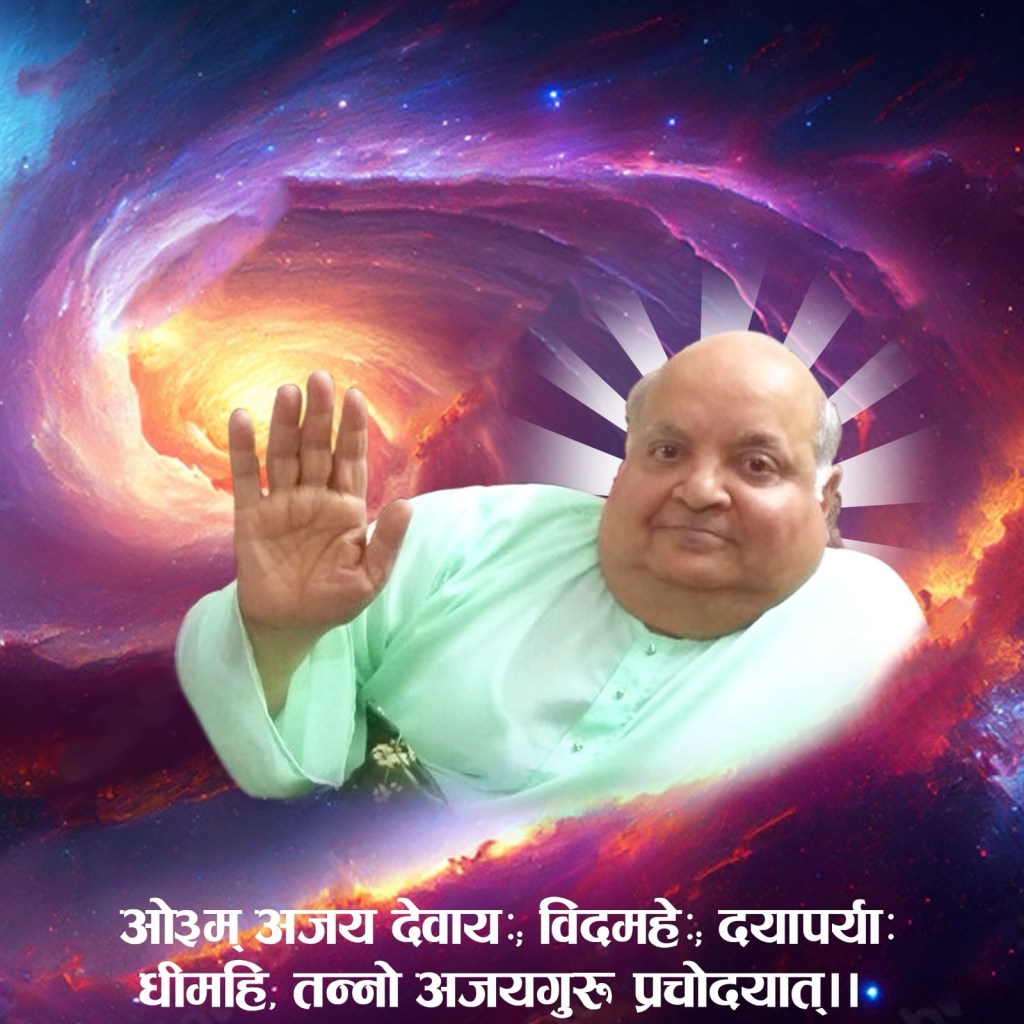
” ‘गुरु’ हमारे जीवन को ‘ज्ञान’ के प्रकाश से उज्जवल करते हैं…”

Swami ji said…

‘ Who am I? What am I? Where have I come from? What is the purpose of my life ? ‘ These are the numerous questions that man’s intellect grapples with , at times. Even when he is completely immersed in this illusionary world, trapped in ‘माया’, there is always a small part in him that asks him these questions.

In some ways, subconsciously, our actions ; our way of living ; our way of expressing ourselves – all seem to arise from the internal quest to understand who we truly our. Since we are unable to understand our ‘true’ nature in this material world – we fill in this void by trying to make an ‘outward’ identity for ourselves. Instead of embarking on an internal journey of ‘self-realization’, man begins an outward struggle – trying to ‘see’ himself through the eyes of others – which is why we often find ourselves concerned about what others think of us and how they perceive us. From our looks, to our standing in society – we are constantly trying to maintain an ‘image’ of ourselves. And, man’s ego, takes further pride in this false sense of identity. ‘I am a professor’, ‘I am rich’, ‘I am a businessman’, ‘I have power’ – He declares all these identities to one and all with pride ; with an inflated chest. It is ironical that the entire duration of time during which he remains pre – occupied in trying to achieve these identities and the actions involved in pursuing them –
are in no way linked to his soul ; the ‘आत्मा’.

While, of course , such materialistic pursuits will never reveal to us the ‘true’ nature of our ‘self’ ; nonetheless, it appears that even throughout our engagement with this world, we are ultimately trying to fulfil, though erroneously, our one true obligation in life – that is to realise who we are ! Such actions and behaviour, however, are not to be passed judgement upon. How can one who is unenlightened know where to begin this journey of self-realization? How can anyone expect him to look inward – living in a world that is appealing to all his ‘senses’ ? There truly is little chance of salvation for man, if , he is to understand all this on his own.

How, then, can one escape this darkness and come into the light of self-realization? What help and assistance can one get ? Who can make his mind, mired in the trap of ‘माया’ – experience beyond the ‘senses’? Who can bring man to the right and righteous path?

The answer to this is – a ‘guru’, an enlightened soul – one who knows the way out of the cycle of life and death and is benevolent enough to show others the Right Path – with His ‘ज्ञान’ and divine powers. It is this kindness ; this love for others in a few enlightened souls – that keeps the path open for others to discover their true selves and escape from the misery of human existence.

Without a ‘guru’s guidance, it is nearly impossible for any one of us to establish trust in the spiritual journey that we seek to embark upon – which otherwise appears to be long, demanding and mysterious. It is a ‘guru’ who tells us what to do in the present time – which He knows will lead us to the destination – earmarked for us in this lifetime. A ‘guru’ understands us individually – the way each one of us is – and tells us specifically what we need to do to develop spiritually. He takes it upon himself to guide us at every step of our spiritual growth…”ताकी हम ऐक दिन मोक्ष के द्वार तक पहुंच जाएँ…”

But , do we truly value the significance of the presence of a ‘saccha sant’ in our lives ? Do we make a genuine attempt to transform ourselves into better versions of ourselves ?Are we aware of the subtle way in which He opens new paths for us ; the path on which we are destined to travel; removes obstacles from our life which we had thought we were incapable of ever surmounting?
Are we aware of the gradual awakening of our soul due to the ‘guru’s Hand on our head – the cleansing of which starts guiding us to walk on – ‘सत्य’ के मार्ग पर , अच्छे ‘कर्म’ करने के लिए उत्साहित करते हैं , ‘ईश्वर’ पे ध्यान केंद्रित करवाते हैं और खुद को जानने की इच्छा – ‘ मैं कौन हूं ?’ ‘मैं’ कहाँ जाऊँगा ?’ – जगाते हैं … हमारा साथ सब छोड़ सकते हैं ,परन्तु एक ‘सच्चे संत’ अपने भक्तों का साथ कभी नही छोड़ते हैं … मुश्किल वक़्त का सबसे बड़ा सहारा होते हैं एक ‘गुरु’, जब वो हमें , हमारा खोया हुआ विश्वास दिलाते हुए कहते हैँ – “सब अच्छा होगा… मैं हूँ ना … तुम चिंता क्यूँ करते हो…”

” सम्मान “

Swami ji said…

Coal and diamonds, both come from mines ; both are made of the same matter. Yet, coal we are hesitant to touch with our bare hands – but , diamonds – we move heaven and earth to get our hands on. And , the difference in our behaviour does not end there itself. While on the one hand – coal powers the very houses we live in – we never stop once to think of and appreciate the coal miner who works day and night, endangering his life – to bring us this precious commodity. But, it is the one who wears diamonds ; comes across as affluent and
wealthy – he is the one who is looked at with great respect by us. It is sad but true – that the coal miner might not even exist for most of us – but, the image of that person, laden with precious stones could flash through our mind again and again – with us secretly desiring to look like that person.

” क्या हम लोगों का सम्मान उनकी हैसियत देख कर करते हैं ? वो कितने धनी हैं ? उनके पास कितनी पूंजी है ? इंसान की इंसान होने की कोई कीमत नहीं है क्या आजकल हमारी आंखों में ? We have always been told that we are God’s children and He loves all of us equally and treats us in a just and fair manner – then who are we to be selective in deciding on the different treatment that we will mete out to people – to those who matter to us and those who are of no significance to us. Disdain, disrespect and distaste for all those who we feel are of no consequence to us and thus look through them ; make them feel like worms – but , at the same time , treat all those who matter to us with respect , awe and deference. To say that we are not aware of how we treat others ; speak with them and behave with them – as and when it suits us – would be a blatant lie.

This is the bitter truth of the society in which we live today. Respect – सम्मान – has become a currency for us. Spent only when we can get something for it. Gone are the days when we respected the man ; the person himself. Now , we, only respect a man for what he is in society ; the position he holds ; what he has to offer us in the present time and what he can do for us in the future.

When Lord Shiva went as a bridegroom to Ma Parvati’s abode – to be married to her – He went with his tribe of ‘ganas’. With matted hair, ash strewn across His body and tiger skin as His garment – He appeared before Mainavati –
His mother-in-law to be. Seeing Lord Shiva in this terrifying form of His , Mainavati – was so frightened and scared – that she fainted out of fear. Later she felt betrayed and was angry – on thinking that her daughter would be marrying someone devoid of the divine physical appearance of Lord Vishnu or other ‘devtas’. Her agitation at this was so great that she rejected Lord Shiva as Parvati’s husband in that particular form of His. Lord Shiva had to change His form – to a more pleasing one – and could only then marry Parvati. Didn’t ‘Sati’ self – immolate Herself when her father, Daksha, humiliated Lord Shiva?

It is this behaviour that manifests in our behaviour and nature too. We respect what we are able to see ; and, thus, value it superficially and materialistically – only. We fail to understand that what actually deserves respect is not always wealth or power, but – the unique individuality of others and their virtues.

The hard working vegetable vendor who stands in the streets – be it summer or winter – providing us with vegetables near our homes – he deserves our respect – and, certainly not the tones of superiority that we use while haggling with them over a penny. The domestic help who make our life easier by working for us – they deserve respect for doing all those chores that we find too tedious to do.The waste picker who cleans our streets ; the delivery boy who brings home the products and food we need – they all deserve respect for doing their work sincerely and honestly. To think that just being
compensated
monetarily by us for their work is enough – is a mistake to begin with.
Remember, we all are dependent on each other in someway or another.Thus, we must express our appreciation for one another. We must make it a habit to respect everyone around us – irrespective of our standing in society or in the eyes of people.

” हमें याद रखना चाहिए कि … दूसरों का अपमान करना किसी की आदत हो सकती है , उनका स्वभाव हो सकता है – पर सब का सम्मान करना – चाहे वो छोटा हो या बडा – हमरा संस्कार होना चाहिए…”

” बिना स्वार्थ के सेवा करने मेँ आलौकिक आनंद मिलता है … “

Swami ji said …

The epic – ‘Ramayan’ tells us that on realising that Ma Sita had been abducted, Shri Ram was distraught and worried. When His efforts to find Sita Ma turned futile, He was overcome with immense grief and sorrow. Surely, all of us can relate with such emotions ; with such a reaction. An occurrence such as this would paralyse any man ; make him feel beyond helpless.

Yet, the enormity of the situation that was being faced by Shri Ram at that moment – did not prevent Him from doing whatever He could do for those who sought His help ; wanted Him to fulfil their wishes – and it is this quality of His that teaches us greatly about service to others.When Shri Ram begins His search for Ma Sita, He comes across various beings – some demons ; some benign and saintly souls – and many of them have requests, wishes of their own – which they wanted Him to fulfil.

So touched was Shri Ram by the demi god – ‘Jatayu’s’ sacrifice to save Sita – that He personally carried out the funeral rites of ‘Jatayu’ – when he is killed by Ravan.
Similarly, the demon,
Kabandha, who initially had tried to devour Ram and Lakshman, also requested Shri Ram to perform his last rites to free him from this world – and Shri Ram did so dutifully. Sugriv needed Shri Ram’s assistance in killing Bali and becoming the King of Kishkindha.
Shri Ram stood by Him in his hour of need.

All these, and, many more such requests – which were just and fair – did Shri Ram try to fulfill – while He was still looking for His beloved Sita. Never once did He ask anyone as to what could they do for Him in return. He simply did whatever He could for all those who came to Him in need.

Can one imagine such selfless behaviour in today’s world ? Can we even think of ignoring an emergency at our or at our family’s end ; cause any delay in attending to them – and , instead put someone else’s immediate desperate appeal for help before our own needs ? Even, if, we did behave in such a way, would not our own family, friends and loved ones call us foolish for doing so?

Why then did Shri Rama do this? What made Him the way He was ? The answer to this lies in the fact that He knew that service to others is service to God. If we truly love God, we must also love His children. And, if we want to serve God, what greater service could there be for Him – than taking care of His children. Helping those who are weak ; assisting
those who are in need – is the greatest service to God. Shri Ram, thus, in His own eyes – was only doing His duty ; worshipping God through every sefless act of His.

We too, thus, must strive to see service to others through the lens of duty, There are many times when such opportunities to serve others present themselves to us. And, we , often, ignore these out of laziness, discomfort or by simply thinking – ‘ What good is in it for me? ’ When such thoughts come to our mind – we must immediately tell ourselves – ‘Our hands, our body are not meant only for enjoyment, but , to also assist others.’ We must tell ourselves – ‘God is giving us a specific task to do. He wants us to do something on His behalf and that in itself should be more than enough to give us the strength to do us. The bliss and joy that we experience on helping someone selflessly has a divine element to it.

‘ हम जब भी किसी की सेवा करते हैँ, तब हम में स्वार्थ का भाव बिल्कुल नही होना चाहिए’…’ The
entire purpose of serving someone -‘ किसी की सेवा करना , मदद करना’ – is lost entirely the minute we expect anything from them in return…’ सेवा सबकी करो , मगर आशा किसी से मत रखो , क्योंकि सेवा का सही मूल्य भगवान ही दे सकते हैं इंसान नहीं …’

We just need to keep serving everyone without expecting anything in return because the immeasurable
value of our service to anyone can only be determined by God – not by man. Let us continue to serve people selflessly with a pure heart and mind and feel His presence in us.

” दूसरों की समीक्षा करने के बजाय खुद की समीक्षा करो…”

Swami ji said…

If we were to ask the wise men of old – what would be the cornerstones of a good and happy life – one of the answers could be – to
to be critical of only oneself ; to be honest with others and
have patience with God’s plans for us. Indeed, if , one could lead a life based on this ‘mantra’, or , build one’s life on these principles, that person indeed would find Heaven – both on Earth and beyond.

But, somehow , we caused some confusion for ourselves and seem to have lost our way while trying to follow these simple requirements to live a simple and happy life.
Nowadays, even during the most basic interaction with others – we tend to observe them keenly ; form one – sided opinions about them, and, are either dismissive of them, or , admire them at an instant. Our interaction with others is highly superficial at times. Very rarely do we talk openly and honestly about ourselves. But, we have the most discerning ear – while listening to others or hearing about others. What we actually think of them – and how we make them feel while communicating with them – could be completely different. But, more often than not, such behaviour only leaves us feeling lonely and isolated.

So critical are we of others, that we rarely develop any true friendship or a feeling of kinship with them. How then, can we ever even know what others are truly going through ? How can we ever hope to develop spiritually – if we continue to only judge others – rather than – accept the differences that will always be found in each one of us ? Will it be possible for us to befriend and empathise with our fellow beings, if , our only aim is to study them and analyse them ? Passing judgment on others – inhibits us from accepting them as others are ; the way they are ! In such a world, man is bound to suffer from loneliness.

Isn’t it rather strange, that this policy of judgement, that we profess to adhere to – seems to be solely reserved for judging others ? Rare is the man who sees his true self in the mirror and criticises himself unsparingly. Patience is our greatest virtue – when it comes to dealing with ourselves. Anything that is wrong with our behaviour, our thinking – we give ‘time’ aplenty – to change. The same is unacceptable while dealing with others imperfections. This ‘patience’ that we show ourselves – is highly dangerous. We should be hawk – eyed while analysing our own ‘कर्मा ’. We must immediately correct any misbehaviour or mistakes on our part. Only then will we see a marked improvement in our own lives , or else, leniency in disciplining ourselves, will only lead to stagnation – where we will not see any scope for further personal or spiritual growth.

And lastly, the ‘patience’ that we have for ourselves – seems to lack the most – when we talk about God or think of Him. In our ignorance, we, either , keep on directing God to do things for us, or , blame Him for what He has not done for us. Very rarely do we experience the bliss of being alive by placing our faith and trust in Him. When we pray to Him – we expect instant results from Him. Don’t we ? We are always on the look out for what He has done for us or is doing for us. Just like a child finds peace in his mother’s embrace, we, too, should seek to experience His embrace around us and find peace in it. And , this can only be felt – ‘जब हम में इश्वर के लिए नि:स्वार्थ प्रेम भाव हो…’

Let us remember the way Shri Ram lived a life based on these strong principles. He was only focussed on analysing His own actions. He gave great thought to everything that was said or done by Him. Even in the most stressful of situations, He, always remained calm and collected ; never uttered a word that was not weighed and vetted by Himself first. Even when Sugriv seemed to have forgotten his promise to help Him – Shri Ram, did not react and retaliate in an angry manner. He possessed patience of a kind that was noteworthy, exemplary and impossible to emulate. Whenever Laxman ji would get agitated – और दूसरों की समीक्षा करने की कोशिश करते थे … Shri Ram would always chide Him gently and remind Him not to talk about anyone in a disrespectful manner.

” हम सब इश्वर की संतान हैं … फ़िर इतने अलग क्यूँ ? “

Swami ji said…

“We all are one … We all are children of God …” – is the declaration made repeatedly by the wisest; the greatest religious founders and teachers – as they spread the message of God. The divine beauty underlying this Gospel Truth, should inspire us to live a life – filled with love, compassion and understanding for every one around us. We need to remember that – “ We are one and the same”.. “हम सब एक हैं औऱ एक जैसे भी हैं…” We all laugh, we all cry ; we all fret and fume. We share similar emotions; react in very much the same way to different life situations.

And, yet, we come to the same point again – “If we are all one, then why are we still so different? What is it that makes us different from each other ? Separates us from each other ?” The answer to this question wouldn’t be very difficult to find – if we were honest with ourselves.

It is our ego, fears and beliefs that separate us from each other. Life can be lived in a congenial manner ; taking everyone along with us ; being happy and spreading happiness; avoiding conflicts and verbal disagreements. But, instead of creating happy situations for ourselves – we have nurtured our ‘egos’ – which makes us take everything personally; allowed our ‘fears’ to loom large over us and held on to our ‘beliefs’ with rigidity – whether we are right or wrong in doing so – is something that stops mattering to us – as we get so caught up in our own way of thinking.

Doesn’t a ‘self-realised Guru’ accept all those who come to Him to understand – what life is all about? Does He make any distinction between His devotees ?
Never does he differentiate between them – as He knows that – “उनके सारे शिष्य, उन्हीं परमपिता, नीली छत्रीवाले के बच्चे हैं…” The ‘Guru’ loves His devotees in equal measure and believes that the teachings and instructions He imparts to His devotees will be imbibed and implemented by them. In fact, He believes that His devotees will become distinctive – as they will stand by all those who need their support in difficult times… ” लोगों को मुश्क़िल समय में सहारा देंगे, सत्य के मार्ग पे चलके सबको प्रोत्साहित करेंगे और नेक कार्य कर के सबको नेक रास्ते पर चलना सिखाएँगे…” The ‘Guru’ develops faith in His devotees too over a period of time and knows that once He has given a certain duty to a certain devotee – that devotee will abide, obey and follow the ‘guru’s’ directive – till the moment He tells him otherwise.

There are instances when devotees have meandered from the main source, the true fountain of knowledge, from where they were receiving ‘सत्य का ज्ञान ‘- from their ‘गुरु’ – to another enlightened soul – for reasons known only to them. But , the ‘Guru’ who has been abandoned by the devotee will never abandon the devotee, nor, harbour ill – will against him. The ‘Guru’ who has mastered His senses – will not allow His false ego to overwhelm and overpower Him – but accept it as ‘ईश्वर की इच्छा’ – and continue to bless such wayward devotees.

Our fears are greatly misplaced. They are created by our insecurities and complexes – which in turn are created by our lack of faith in ourselves. Our egos make us feel that we must be at the
centre of power for every little thing that happens in life; that we must be appreciated and cheered for the simplest of things being done daily. Wouldn’t we be foolish to develop an attitude like that ?

A spiritual seeker must drop his ego. He must have faith in others. He must live with the belief that all that is happening with him , to him – was supposed to happen, and , that how others behave and act with him – is in accordance with God’s will. Instead, he must develop compassion. Even when others behave in an ungainly manner with him, treat him unfairly – he must not immediately react , but , try to put himself in the other person’s shoes. He must reflect as to why and what made the other person behave in an irate way with him. It is only through such practice – that he will begin to gradually see the ‘soul’ – as being a distinctive part – from the human form that can be seen by him. He will begin to see his own imperfections and understand them. He will also see those very flaws in others, but , instead of judging them, he will be more understanding.He learns to simply acknowledge that others too are struggling to grow out of the shackles of their ego and fears – and these are flaws which have nothing to do with the purity of the soul.